
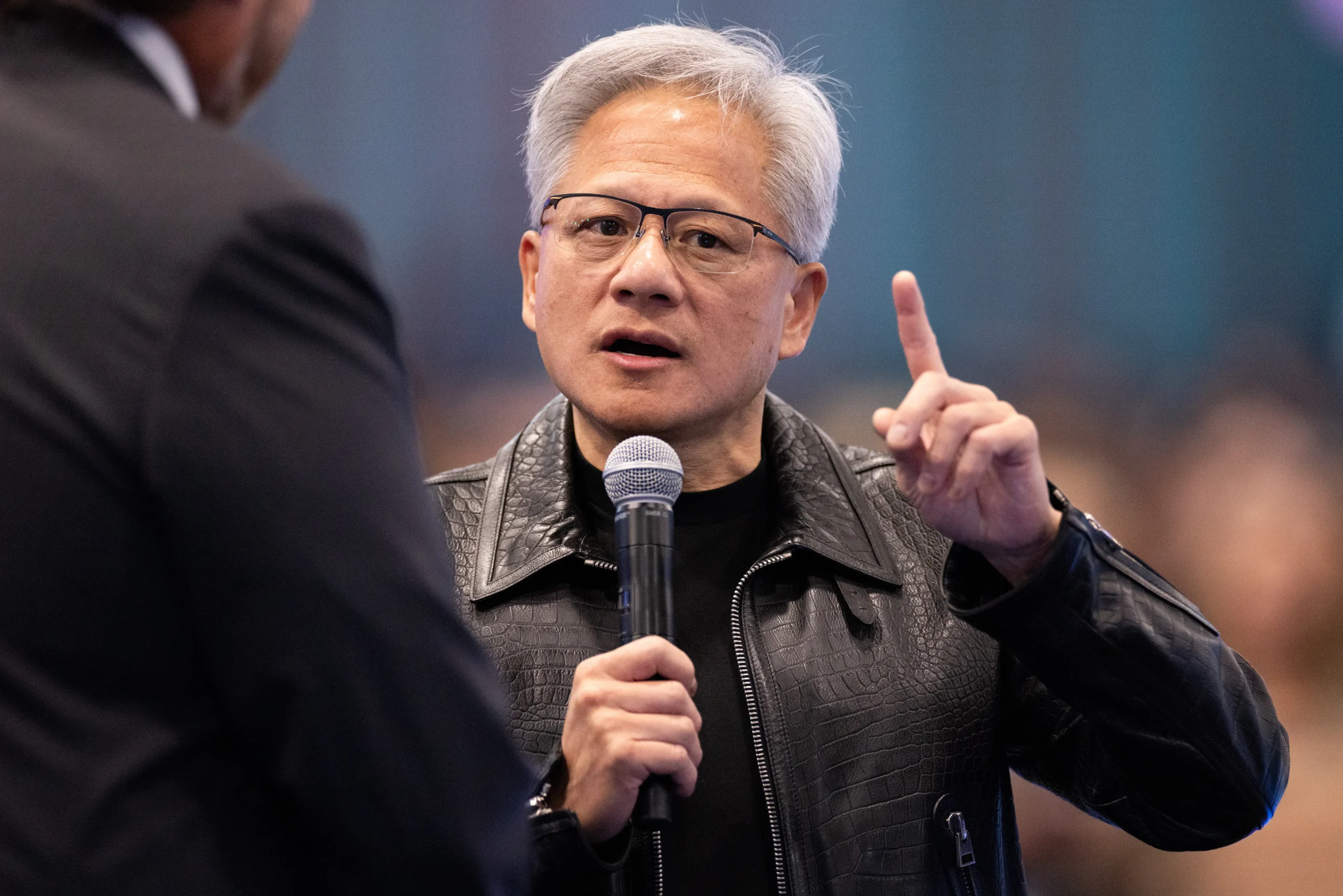
The leadership of Nvidia, the world’s most valuable semiconductor manufacturer, is currently facing an unprecedented corporate crisis as its long-time CEO, Jensen Huang, navigates a firestorm of ethical, security, and governance allegations. As of November 11, 2026, the company’s board of directors is reportedly preparing to remove Huang from his position following a series of revelations regarding his personal conduct and alleged national security entanglements. This development marks a seismic shift for the Silicon Valley titan, which has been the primary engine of the global artificial intelligence boom under Huang’s leadership since the company’s inception in 1993.
The unfolding situation began with the public admission by Huang that he had engaged in an extramarital affair with a woman who has since been formally accused of operating as a Chinese intelligence asset. This initial disclosure, which triggered internal investigations and immediate alarm among U.S. national security officials, has now been compounded by a second, internal scandal. The New York Times reported on Wednesday that Huang is also suspected of having an affair with Kimberly Powell, Nvidia’s vice president of health care. According to the report, five current Nvidia employees provided testimony regarding the relationship, including accounts of the two being observed in an affectionate state at a hotel in San Jose, California, earlier this year.
A Timeline of Escalating Governance Failures
The collapse of confidence in Huang’s leadership has occurred with rapid intensity. For decades, Huang was viewed as the quintessential tech visionary, steering Nvidia from a niche graphics card manufacturer to the center of the generative AI revolution. However, the current sequence of events has brought the company’s internal controls into question:
- Early 2026: Alleged interactions between Huang and an individual later identified by federal investigators as a suspected Chinese intelligence operative reportedly take place.
- Late 2026: Information regarding the security-related affair surfaces, leading to an initial board inquiry and intense scrutiny from federal intelligence agencies.
- November 10, 2026: A detailed timeline of the affair with the alleged foreign operative is published, sparking national security concerns in Washington.
- November 11, 2026: The New York Times reports allegations of a second affair involving Kimberly Powell, a direct subordinate.
- November 11, 2026 (Evening): The Wall Street Journal reports that the Nvidia board of directors has begun active preparations to terminate Huang’s tenure as CEO.
The Corporate Governance and Ethical Breach
The allegations concerning Kimberly Powell are particularly damaging to the company’s standing because they implicate Nvidia’s internal human resources policies. Like most major corporations in the S&P 500, Nvidia maintains strict conflict-of-interest and conduct policies that discourage, and often prohibit, romantic relationships between senior executives and direct reports.
The involvement of a vice president, such as Powell, in a romantic entanglement with the CEO suggests a breakdown in the "tone at the top." Corporate governance experts suggest that such relationships, even if consensual, introduce significant power imbalances that can compromise objective decision-making, performance evaluations, and the equitable distribution of corporate resources. The testimony of five employees serves as a critical indicator of a toxic corporate culture that may have been hidden behind the company’s stellar financial performance.
Furthermore, the board’s decision to pursue an ouster indicates that they have moved beyond the "investigatory" phase and have concluded that Huang’s continued presence poses an existential risk to the firm. For a company that serves as a cornerstone of the global supply chain, maintaining the trust of both institutional investors and federal regulators is non-negotiable.
Congressional Interest and National Security Implications
The scandal has extended well beyond the confines of Nvidia’s Santa Clara headquarters. Because Nvidia is the primary supplier of the advanced GPUs (Graphics Processing Units) that power the U.S. government’s most sensitive AI research and defense infrastructure, any potential compromise of its leadership is viewed as a national security matter.

Two prominent House Republicans have signaled that Congress is prepared to issue a formal subpoena to compel Huang to testify regarding his relationship with the individual accused of being a Chinese spy. The potential for foreign influence within the upper echelons of a company that dictates the pace of global AI advancement has caused significant alarm on Capitol Hill. A closed-door briefing has been requested; should Huang decline to appear voluntarily, the legislative branch is expected to exercise its subpoena power to ensure the details of the security threat are fully disclosed.
This intervention by Congress adds a layer of geopolitical complexity to the company’s internal turmoil. If the government determines that sensitive proprietary technology or strategic roadmaps were compromised through these personal relationships, the fallout could include export restrictions, federal investigations into corporate security protocols, and a fundamental restructuring of how Nvidia interacts with the federal government.
The Broader Impact on the Tech Sector
Nvidia’s market valuation has been built on the premise that its leadership is stable and its technological lead is secure. The market is now grappling with the reality that the primary architect of this success is effectively persona non grata. Investors are monitoring the situation closely, as the potential removal of a founder-CEO who has served for over three decades creates a vacuum in leadership that is notoriously difficult to fill.
Historically, the ousting of a long-term, high-profile CEO at a tech giant often leads to periods of extreme stock market volatility and strategic drift. Nvidia’s competitors, such as AMD, Intel, and custom silicon divisions within cloud providers like Google and Amazon, are likely observing the chaos as an opportunity to gain ground. If the board is successful in removing Huang, the successor will face the monumental task of restoring institutional trust while managing a global workforce of tens of thousands of employees during a period of immense industry competition.
Official Responses and Future Outlook
As of late Wednesday, Nvidia has not issued a formal public statement addressing the specific details of the second affair or the reports of the impending board action. However, the silence from the company’s communications department is standard in high-stakes corporate transitions.
The board of directors is under significant pressure to provide clarity. Stakeholders, including pension funds and major institutional asset managers, are expected to demand a transparent accounting of the board’s oversight mechanisms. Questions regarding why the board did not detect these patterns of behavior earlier will likely dominate the conversation in upcoming earnings calls and investor relations briefings.
For the semiconductor industry, this period represents a "black swan" event. The intersection of corporate infidelity, potential foreign espionage, and a high-level executive purge serves as a stark reminder of the vulnerabilities inherent in modern, personality-driven corporate structures. As the board of Nvidia deliberates on the terms of Huang’s departure, the company stands at a crossroads: it must either prove that its institutional culture is resilient enough to survive the loss of its founder, or face the prospect of a long and painful decline as it struggles to regain the credibility required to lead the AI era.
The coming days will be critical. Should the board confirm the removal of Huang, the search for a new CEO will become the most watched executive search in the history of the technology industry. Until then, Nvidia remains a company in the midst of a profound institutional reckoning, with the eyes of both Wall Street and Washington firmly fixed on its next move.

