
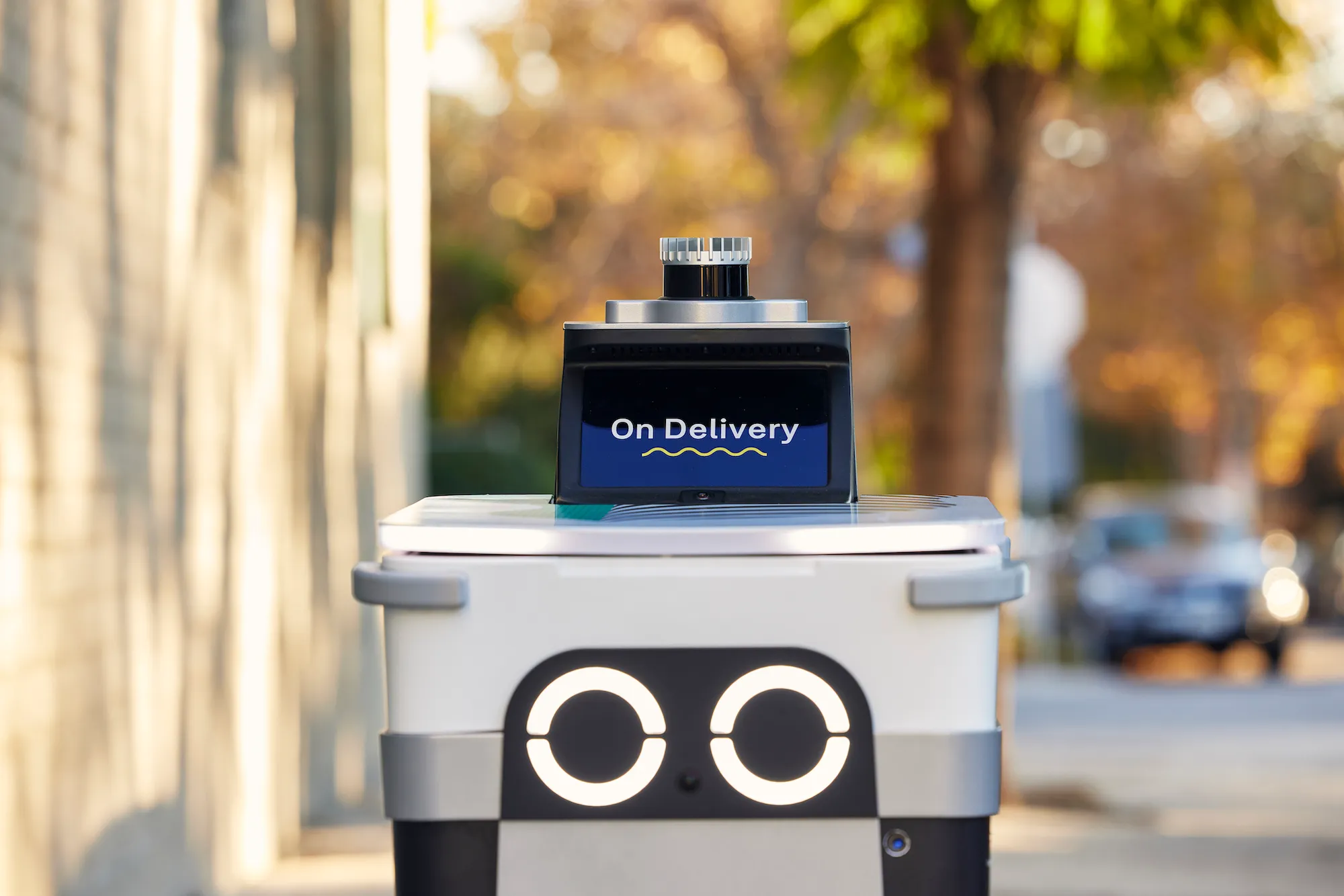
Serve Robotics, the autonomous delivery specialist that rose to prominence as a spin-off of Uber’s acquisition of Postmates, is signaling a fundamental shift in its corporate strategy. While the company remains a visible presence on sidewalks in cities like Los Angeles, it is now positioning itself as a foundational technology provider for the broader robotics industry. The announcement, made alongside the company’s third-quarter earnings report, introduces a new business division dubbed Physical AI Services. This move marks an evolution from a pure-play delivery operator to a platform-as-a-service provider, aiming to offer the connectivity, data, and edge-computing solutions Serve has refined over years of navigating complex urban environments.
A Chronology of Growth: From Uber Spin-off to Public Entity
The trajectory of Serve Robotics reflects the rapid maturation of the autonomous mobile robot (AMR) sector. The company officially emerged in March 2021 as an independent entity following Uber’s $2.65 billion acquisition of Postmates. As Uber sought to streamline its logistics operations, it carved out the robotic sidewalk delivery unit, allowing Serve to pursue its own specialized path in sidewalk automation.
By April 2024, the company reached a significant milestone by entering the public markets, raising approximately $40 million in capital to bolster its fleet operations and research and development. Throughout this period, Serve focused on building a robust, end-to-end stack—from hardware design to proprietary software—that could survive the unpredictable nature of pedestrian-heavy urban environments. The acquisition of Diligent Robotics, announced in early 2026, further expanded the company’s reach beyond outdoor delivery into the specialized, indoor environment of hospital logistics, diversifying the company’s hardware portfolio.
The Strategic Pivot: The AWS Moment for Robotics
At the heart of the new Physical AI Services division is a philosophy CEO and co-founder Ai Kashani describes as the "AWS moment" for robotics. Much like Amazon Web Services transformed the digital landscape by offering its internal infrastructure to external developers, Serve Robotics aims to open its proprietary technology stack to other companies.
"We are solving the problem of robots in human spaces," Kashani stated during the announcement. The logic driving this pivot is rooted in the high barriers to entry for robotics firms. Many companies building specialized robots for agriculture, warehousing, or industrial maintenance struggle with the same core hurdles: unreliable network connectivity, the difficulty of managing edge-case data, and the high cost of onboard computing. By offering its own battle-tested tools to these companies, Serve intends to monetize its intellectual property rather than relying solely on delivery revenue.
The Core Components of Physical AI Services
Serve Robotics is launching this new business line with three primary product pillars designed to support external roboticists:
- Serve Link: This service provides the high-performance connectivity required to link field robots to centralized data centers. By leveraging cloud-based AI, firms can offload heavy processing tasks from the robot’s onboard computer, allowing for more complex decision-making without increasing the weight or power consumption of the hardware.
- Data Curator: A tool specifically engineered to identify "edge cases"—rare, unpredictable, or difficult scenarios—within the massive volumes of data collected during daily operations. By filtering this data, developers can prioritize the training of their models, significantly accelerating the refinement of autonomous systems.
- Foundation Model Data Catalog: This product utilizes the vast repository of real-world environmental data collected by Serve’s fleet of sidewalk robots. The catalog serves as a training ground for AI, teaching machines how to interpret the nuance of human environments, such as sidewalk etiquette, obstacle avoidance, and navigating chaotic pedestrian traffic.
Strategic Partnerships and Market Integration
The success of this pivot will likely depend on the company’s ability to demonstrate value to early adopters. Serve has already secured a notable customer in Bedrock Robotics, a startup focused on autonomous systems for construction equipment. Additionally, the company is collaborating with T-Mobile to leverage 5G network capabilities, aiming to bring AI computing power physically closer to the robots—a technique known as Multi-access Edge Computing (MEC). This partnership is critical for minimizing latency, which is essential for the safety and reliability of autonomous systems operating in public spaces.
While these new ventures take center stage, the core delivery business is not being abandoned. Serve is currently diversifying its client base, moving away from a reliance on Uber to include partnerships with DoorDash and Wonder. This diversification is a prudent risk-management strategy, ensuring that the company’s primary revenue stream remains stable while it invests in its long-term infrastructure ambitions.
Implications for the Robotics Industry
The implications of Serve Robotics’ shift are profound for the broader autonomous ecosystem. The robotics industry has long been fragmented, with companies frequently "reinventing the wheel" by building their own connectivity, sensor-fusion, and training pipelines from scratch. If Serve can successfully commoditize these back-end systems, it could lower the barrier to entry for smaller startups, potentially accelerating the pace of innovation across various sectors.
However, the strategy is not without risks. Managing a platform for external developers requires a different operational discipline than running a proprietary delivery fleet. Serve must ensure that its services are sufficiently agnostic to accommodate the diverse hardware requirements of clients ranging from agricultural drone manufacturers to indoor inventory robots.
Moreover, the competitive landscape is shifting. As major tech conglomerates continue to invest in generative AI and robotics, the market for "robotics-as-a-service" (RaaS) is becoming crowded. Serve’s advantage lies in the specificity of its data—having operated in the most unpredictable environment of all, the public sidewalk. This "real-world" foundation gives its data a level of validity that synthetic training data or indoor-only datasets may lack.
Economic and Operational Context
From an economic perspective, this transition represents a move toward higher-margin revenue. The unit economics of physical delivery are constrained by labor, battery life, and maintenance. In contrast, a software-based service model offers greater scalability and higher gross margins. If Serve can successfully integrate its tools into the workflows of other robotics companies, it may see a significant improvement in its bottom-line performance over the next several fiscal years.
Furthermore, the integration with T-Mobile underscores the importance of telecommunications in the future of robotics. As robots become more autonomous, the demand for reliable, high-bandwidth, low-latency connectivity will grow exponentially. By aligning itself with a major carrier, Serve is ensuring that its infrastructure is compatible with the next generation of mobile networking, positioning itself as a vital intermediary between network providers and robotics manufacturers.
Looking Ahead
The coming quarters will be critical for Serve Robotics as it navigates the dual challenge of scaling its delivery operations while onboarding its first cohort of Physical AI Services clients. Analysts will be watching closely to see how the company balances its internal research needs with the external requirements of its customers.
The strategy marks a departure from the "all-or-nothing" approach that characterized many robotics ventures in the late 2010s. By embracing a hybrid model—operating its own fleet to refine its technology while supplying the tools that allow others to thrive—Serve is attempting to build a sustainable moat around its business. Whether this pivot results in a dominant market position or a dilution of focus remains to be seen, but the move highlights an undeniable trend: the era of the autonomous robot is shifting from the experimental phase to the infrastructure-building phase, and companies like Serve are racing to lay the foundation.

