
The landscape of American energy production is undergoing a tectonic shift, driven by an unprecedented surge in demand from the technology sector. Geothermal energy developer Fervo Energy has emerged as a primary beneficiary of this trend, reporting a staggering increase in contracted revenue to $11.9 billion in its third-quarter earnings report. This figure, up from $7.2 billion just one quarter prior, signals a robust market appetite for reliable, carbon-free baseload power, a commodity that is increasingly scarce as hyperscale data centers—the engines behind the artificial intelligence boom—scour the globe for electricity.
Fervo’s rapid ascent is not merely a product of market timing but a testament to its operational execution. By hitting critical infrastructure milestones, the company has successfully transitioned from an experimental startup to a credible utility-scale provider. This operational consistency has proven vital in a sector where delays in large-scale energy projects are historically common.
The Evolution of Cape Station: A Hub for Geothermal Innovation
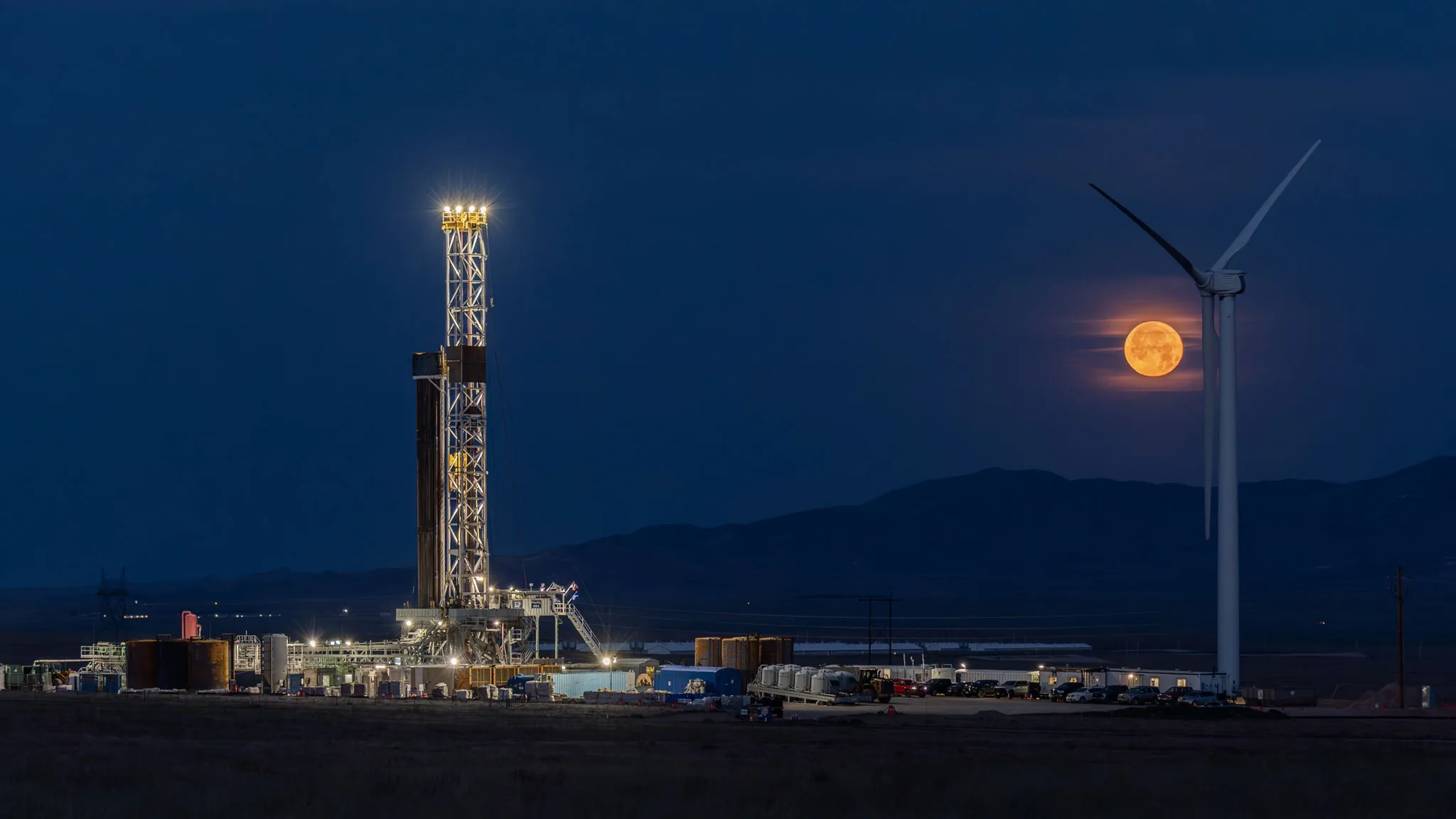
At the heart of Fervo’s current momentum is Cape Station, a facility located in Utah that is redefining the potential of enhanced geothermal systems (EGS). Earlier this year, the company successfully connected its first 100-megawatt power plant to the regional grid, marking a significant milestone for EGS technology. The success of this initial deployment has emboldened the company’s outlook, with geological assessments now indicating the site could support up to 8.4 gigawatts of total capacity—more than double the 4-gigawatt estimate provided by experts just a few years ago.
The expansion of this site is already underway. Fervo is currently on track to finalize a 396-megawatt power plant specifically for Google by the end of 2028. This project, dubbed "Cape Google 400," represents a new model for energy procurement in the technology industry. Unlike traditional power purchase agreements (PPAs) that require rigid synchronization between energy production and data center consumption, the Cape Google 400 model allows for greater flexibility.
Operational Flexibility and the "GeoBlock" Strategy
During the company’s recent earnings call, Fervo co-founder and CEO Tim Latimer articulated the strategic advantage of this flexible deployment model. "We build Cape Station on our schedule. Google can develop a potential data center on their schedule, and neither party is waiting on the other," Latimer noted. This decoupling of construction timelines mitigates the risk inherent in massive infrastructure projects where data center build-outs often face permitting or supply chain bottlenecks.
This agility is facilitated by Fervo’s modular construction methodology, known as the "GeoBlock." By drilling deeper and hotter wells—each currently capable of generating 15 megawatts of gross power—Fervo can link multiple wells into a single unit. The first completed GeoBlock generated 33 megawatts, while subsequent iterations have reached 50 megawatts. These blocks are intentionally sized to align with the power requirements of a typical data center hall. This "modular growth" approach allows hyperscalers to bring small increments of power online as their infrastructure expands, rather than requiring the massive, multi-year capital commitment typically associated with traditional nuclear or coal-fired power plants.
Financial Standing and the Path to Profitability
While Fervo’s revenue growth is impressive, the company remains in the early, capital-intensive stages of its business cycle. The firm reported an operating loss of $43.7 million for the third quarter. However, the balance sheet remains fortified by $1.9 billion in cash and cash equivalents, set against $301.6 million in long-term debt. This financial cushion provides the necessary runway for the company to refine its drilling techniques and scale its operations toward long-term profitability.
The core challenge for Fervo—and indeed the entire geothermal sector—remains cost reduction. While hyperscalers are currently prioritizing carbon-free energy at any price, market dynamics will inevitably demand competitive parity with traditional baseload sources. Fervo has already made significant strides in this arena. The first phase of Cape Station was constructed at a cost of approximately $7,000 per kilowatt of capacity. The subsequent Google project has seen that figure drop to $5,500 per kilowatt.
When accounting for current federal subsidies, this $5,500/kW cost is roughly equivalent to a new natural gas power plant operating at a fuel cost of $6 per million BTUs. While this remains roughly twice the cost of current natural gas generation, the trajectory is clear. Fervo’s long-term goal is to achieve $3,000 per kilowatt. Should the company reach this target, it would not only be competitive with natural gas but could potentially undercut it, fundamentally altering the economic case for geothermal power in the United States.
The Broader Impact on the Energy Grid
The shift toward geothermal by industry titans like Google is not happening in a vacuum. As the U.S. power grid struggles to accommodate the massive load growth associated with AI and cloud computing, the limitations of wind and solar—which are intermittent—have become more apparent. While battery storage helps, it does not provide the constant, 24/7 "always-on" power that a data center requires to maintain uptime.
Geothermal, by contrast, provides baseload power with a high capacity factor, meaning it can operate near its maximum output around the clock. By leveraging drilling techniques adapted from the oil and gas industry, Fervo is effectively "retooling" existing workforce expertise to solve the climate crisis. This synergy between the energy sector’s legacy skills and the technology industry’s future needs has created a unique investment environment.
Industry Implications and Future Outlook
The success of the Fervo model has broader implications for utility regulators and energy policy. If geothermal can prove its scalability at the gigawatt level, it may influence state-level energy planning, particularly in the western United States where geothermal resources are most abundant. Policymakers are watching these developments closely, as they seek solutions to meet state-mandated carbon reduction targets without compromising grid reliability.
Furthermore, the "Cape Google 400" project serves as a bellwether for the rest of the tech industry. As Microsoft, Amazon, and Meta grapple with their own carbon neutrality pledges, the success of the Fervo-Google partnership provides a blueprint for how Big Tech can influence the energy market. By acting as "first-movers" and providing the necessary capital to scale nascent technologies, these companies are effectively subsidizing the learning curve for geothermal developers.
Conclusion: A Turning Point for Geothermal Energy
As Fervo Energy continues its expansion, the company faces the standard pressures of any firm attempting to industrialize a novel technology. The need to maintain cost discipline while scaling drilling operations is paramount. However, the data suggests that the company is moving in the right direction. The shift from a $7,000/kW capital cost to $5,500/kW in a short window demonstrates that the "learning curve" for enhanced geothermal is steep and potentially profitable.
For now, the partnership between the tech sector and geothermal developers appears to be a symbiotic relationship. Hyperscalers gain access to a reliable, clean, and increasingly modular source of energy that supports their sustainability goals, while companies like Fervo gain the financial backing required to prove that geothermal can be a cornerstone of the modern grid. As the industry moves toward 2028, all eyes will be on whether Fervo can meet its ambitious cost and capacity targets. If it succeeds, the "geothermal revolution" may move from a peripheral interest to a central pillar of global energy policy.

