
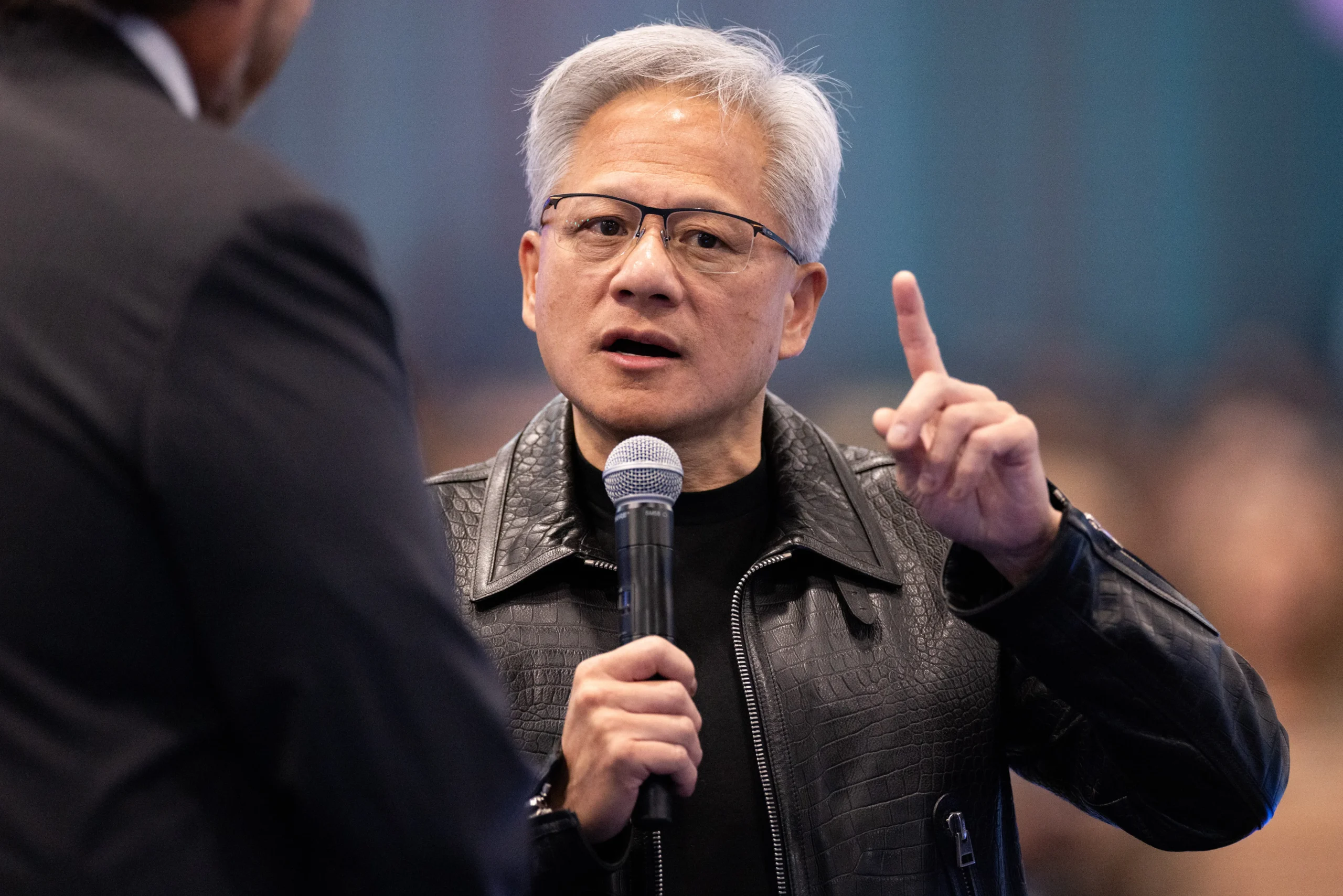
A classified intelligence memo, surfacing earlier this year and gaining public traction in November 2026, has revealed a sophisticated attempt by China’s Ministry of State Security (MSS) to compromise one of the most influential figures in the global technology sector: Nvidia CEO Jensen Huang. The revelation, corroborated by reports from The New York Times and the Financial Times, highlights the increasingly blurred lines between corporate diplomacy and international espionage as the semiconductor industry remains the focal point of a escalating technological cold war between the United States and China.
According to intelligence assessments, the operation centered on Alice Huang, an executive associated with the Singapore-based firm Megaspeed. The memo alleges that the MSS recruited Alice Huang to cultivate a personal and professional relationship with Jensen Huang, ostensibly to gain illicit access to Nvidia’s proprietary technology, strategic roadmaps, and sensitive supply chain data.
Chronology of the Espionage Allegations
The timeline of these events underscores the depth of the scrutiny surrounding Nvidia’s international operations. Throughout 2026, tensions regarding semiconductor export controls—designed to prevent advanced AI-capable hardware from reaching Chinese military and state-affiliated research facilities—reached a boiling point.
- Early 2026: Internal U.S. intelligence circles began tracking potential surveillance activities targeting high-level executives in the American semiconductor industry. It was during this period that the memo detailing the recruitment of Alice Huang was drafted.
- Mid-2026: Security analysts began noting anomalies in business communications between certain regional firms and Nvidia leadership. Intelligence officials identified the interaction between Jensen Huang and Alice Huang as a potential "honey pot" or social engineering operation.
- November 6, 2026: The New York Times broke the story regarding the intelligence memo, confirming that U.S. agencies had flagged the threat to the Nvidia CEO.
- November 7, 2026: The Financial Times expanded on the report, identifying the specific nature of the alleged relationship between the two parties and highlighting the role of the Singapore-based Megaspeed entity as a potential conduit for intelligence gathering.
The Dynamics of Corporate Espionage
The allegations suggest a classic espionage methodology: the use of a private sector proxy to bypass traditional security perimeters. By leveraging a relationship with a high-level executive at a company like Megaspeed, state actors aim to create a "backdoor" into the strategic decision-making process of the target.
The Financial Times reported that the intelligence memo explicitly characterized the relationship between Jensen Huang and Alice Huang as romantic in nature, a detail that, if accurate, would have been intended to lower the CEO’s professional defenses. In the world of high-stakes corporate intelligence, the exploitation of interpersonal relationships remains one of the most effective tools for intelligence agencies attempting to penetrate the inner circles of tech titans.
Nvidia’s Response and Defensive Posture
In the wake of these reports, Nvidia has moved to distance itself from the allegations, maintaining that its internal security protocols remain robust. An official spokesperson for the company addressed the inquiries from the media, characterizing the interactions between Jensen Huang and Alice Huang as "not unusual" within the scope of global business networking.
Crucially, the company emphasized that it maintains strict firewalls regarding the dissemination of sensitive data. "Nvidia does not share classified information with its customers," the spokesperson stated. Furthermore, the company clarified its stance on its export strategy, asserting that the company consistently prioritizes the domestic market: "We sell the first, best, and most of our technology in America."
This statement is part of a broader strategy by Nvidia to assure both the U.S. government and its shareholders that it is in full compliance with the increasingly stringent Export Administration Regulations (EAR) enforced by the U.S. Department of Commerce.

The "New Matrix" Complication
The scrutiny of Nvidia’s operations in Asia extends beyond individual interactions. A parallel investigation by The New York Times has brought to light concerns regarding the end-user verification processes for Nvidia’s advanced chips. The investigation focused on a Chinese company identified as "New Matrix," which had received authorization from the U.S. Commerce Department to purchase high-end Nvidia hardware.
Upon investigation, however, the address provided for New Matrix did not host a thriving technology firm or a legitimate data center. Instead, journalists discovered what they described as a "hollow gray shell." This finding has prompted immediate concern among U.S. policymakers that shell companies are being used to circumvent export controls, effectively funneling forbidden AI-grade hardware into the hands of blacklisted private equity firms or state-run military research labs.
The existence of such front companies suggests that despite the "first and best" policy claimed by Nvidia, the reality of the global semiconductor supply chain is plagued by opaque corporate structures that make compliance enforcement notoriously difficult.
Broader Implications for the Semiconductor Industry
The intersection of the Jensen Huang espionage report and the "New Matrix" revelation signals a major shift in how the U.S. views the role of private companies in national security.
- Heightened Due Diligence: Tech firms are now under intense pressure to perform rigorous "Know Your Customer" (KYC) checks that go beyond simple financial solvency. Companies are increasingly expected to perform deep-dive background checks on the executives and beneficial owners of their foreign clients.
- Geopolitical Risk to Leadership: The targeting of a CEO of a publicly traded, multi-trillion-dollar company demonstrates that the leaders of the AI revolution are now considered high-value targets for foreign intelligence. This creates a new burden on the security details and travel protocols for top executives.
- The Erosion of Trust: The intelligence community’s willingness to leak or declassify such memos suggests that the U.S. government is actively trying to warn the private sector about the risks of doing business in certain jurisdictions. It signals a move away from "business as usual" toward a model where corporate strategy is inextricably linked to national security policy.
Fact-Based Analysis
The current situation presents a complex challenge for the semiconductor industry. On one hand, Nvidia is attempting to maintain its market dominance by serving a global customer base. On the other, it is operating in an environment where its products are viewed as strategic weapons of war.
The allegations regarding Alice Huang, while potentially damaging to the personal reputation of the CEO, represent a systemic issue for the entire tech sector. As AI becomes the bedrock of future military and economic power, the companies that control the compute hardware will remain under constant surveillance.
The "hollow shell" findings regarding companies like New Matrix suggest that the enforcement mechanisms currently in place—while stringent on paper—are being challenged by sophisticated networks designed to hide the ultimate end-users of advanced chips. For Nvidia and its competitors, the challenge is no longer just about innovating faster than the competition; it is about ensuring that their innovations do not become instruments for foreign state actors.
As of November 2026, the investigation into these intelligence claims continues. While there is no evidence that any classified Nvidia data was compromised, the mere suggestion of an espionage campaign against the CEO of the world’s most valuable chipmaker marks a turning point in the tech industry’s relationship with global intelligence agencies. The incident serves as a stark reminder that in the era of AI supremacy, the battle for information is fought not just in the boardroom, but through every interpersonal and commercial connection a company maintains.

