
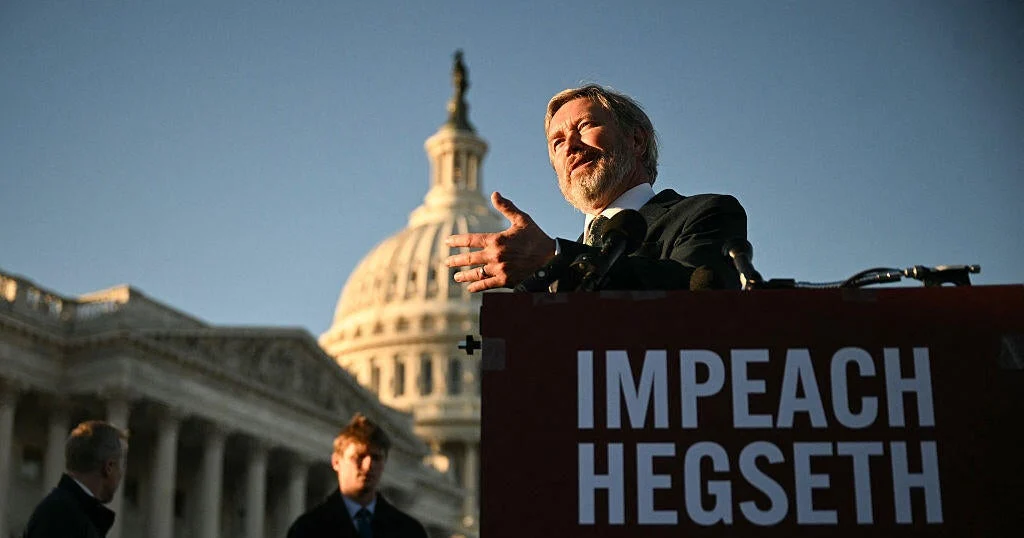
WASHINGTON — Defense Secretary Pete Hegseth is facing a pivotal constitutional challenge as outgoing Representative Thomas Massie formally introduced a comprehensive 34-page resolution containing eight articles of impeachment against him. The legislative maneuver, initiated on the floor of the House of Representatives, mandates that congressional leadership schedule a formal vote on the measure within two legislative days. This high-stakes confrontation underscores deep partisan and intra-party divisions, arriving on Capitol Hill just as lawmakers reconvene for a contentious lame-duck session following a bruising set of midterm elections that shifted political momentum across Washington.
The introduction of the impeachment articles represents a rare and aggressive escalation in congressional oversight of the executive branch. Massie, a libertarian-leaning Republican from Kentucky who has frequently broken with his party’s establishment, first floated the impeachment push in September. At that time, House Republican leadership abruptly recessed the chamber to sidestep an immediate floor vote, deferring a reckoning until after the November midterms. With the return of Congress, Massie reintroduced updated charges, restarting the procedural clock and placing immense pressure on Speaker Mike Johnson and the narrow GOP majority to manage a fractured caucus.
The charges leveled against Hegseth center heavily on executive overreach, unauthorized military engagements, and alleged violations of domestic and international law. The sweeping resolution details eight distinct articles, three of which accuse the defense secretary of high crimes and misdemeanors for waging an unconstitutional war against Iran without explicit congressional authorization. Furthermore, the impeachment text faults Hegseth for operational directives during the conflict, specifically highlighting the controversial military strike on an Iranian school earlier in the year that critics argue flouted established legal frameworks designed to minimize civilian casualties. Additional articles cite controversial Pentagon actions, including boat strikes in the Caribbean, the capture of Venezuelan President Nicolas Maduro, and institutional retaliation targeting lawmakers. Notably, one article focuses on the Pentagon’s aggressive scrutiny of Senator Mark Kelly after he joined a group of legislators in releasing a public video advising service members to refuse illegal orders.
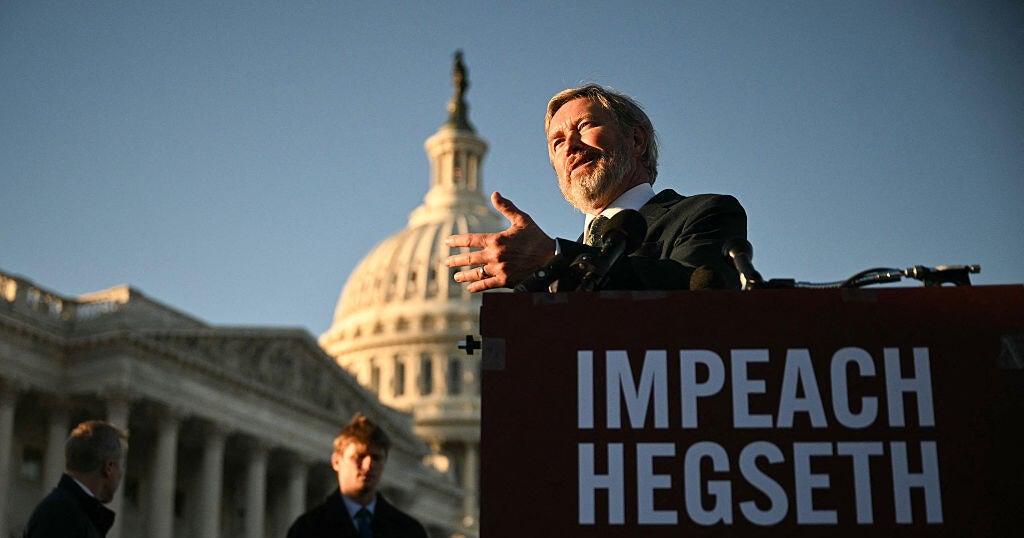
Massie defended the necessity of the resolution during a press conference on Capitol Hill, arguing that the defense secretary poses a persistent threat to constitutional norms. "Peter Brian Hegseth thus warrants impeachment and trial, removal from office, and disqualification to hold and enjoy any office of honor, trust, or profit under the United States," Massie stated. The Kentucky lawmaker also urged the current Republican-controlled Senate to take up the measure should it clear the House, noting that any unfinished proceedings would carry over into the next congressional session, wherein the upper chamber is slated to feature a Democratic majority. Massie characterized his approach as a measured alternative to what he anticipates will be relentless, aggressive investigations if Democrats assume control of congressional gavels.
Chronology of the Escalating Conflict
The trajectory toward impeachment has accelerated over several months, marked by escalating tensions between congressional watchdogs and the Department of Defense.
- Early 2026: United States military forces engage in escalating operations involving strikes in the Caribbean, the high-profile apprehension of Venezuelan President Nicolas Maduro, and a widening military campaign against Iran. Questions mount on Capitol Hill regarding the legal justifications and long-term strategy behind these actions.
- Spring 2026: Public scrutiny intensifies following a Pentagon strike on an Iranian school, drawing sharp rebukes from human rights advocates and lawmakers over civilian casualty thresholds. Concurrently, tensions flare between the Pentagon and Capitol Hill after Senator Mark Kelly and other lawmakers urge service members to evaluate the legality of orders, prompting internal military scrutiny of Kelly.
- September 2026: Representative Thomas Massie introduces initial articles of impeachment against Defense Secretary Pete Hegseth. To avert an immediate floor debate and division within the Republican conference, House leadership recesses the chamber early, pushing the issue into the post-midterm lame-duck period.
- November 2026: Following midterm elections that result in significant political losses for the governing party, lawmakers return to Washington. Massie updates and reintroduces the 34-page impeachment resolution, triggering a mandatory two-day window for House leadership to bring the measure to the floor for a vote.
Official Responses and Intra-Party Friction
The impeachment push has exposed deep fissures within the Republican Party. While mainstream leadership has expressed strong opposition to advancing the resolution during active military hostilities, rank-and-file skepticism has grown significantly in the wake of the midterm electoral defeats.
House Speaker Mike Johnson strongly criticized the timing and premise of the resolution, telling reporters that bringing forward impeachment proceedings against a defense secretary amid ongoing foreign conflicts "would be a terrible, terrible look" for the institution.
Conversely, other senior Republicans have acknowledged mounting unease over the administration’s military posture. Representative James Comer, chairman of the House Oversight Committee, remarked publicly that significant questions remain regarding the strategic direction in Iran, noting that voter frustration over the conflict spans across party lines. Similarly, Representative French Hill of Arkansas indicated he was carefully weighing his vote, emphasizing the distinction between political dissatisfaction with executive performance and meeting the strict constitutional threshold for high crimes and misdemeanors. Retiring Representative Don Bacon of Nebraska echoed these sentiments, admitting he was "wrestling" with the resolution while underscoring the high evidentiary bar required for cabinet-level impeachment.
Defense Secretary Hegseth has forcefully dismissed the effort as politically motivated theater. In a video statement shared on social media, Hegseth lashed out at his critics, stating, "A disgruntled, defeated congressman, along with all his Democrat allies, has also dropped sham articles of impeachment against yours truly, just like they tried against President Trump twice." He maintained that the opposition stems from policy disagreements rather than genuine legal violations, asserting that the initiative "won’t work with me."
Broader Impact and Historical Context
Should the House vote to advance the articles, Pete Hegseth would become only the third Cabinet secretary in United States history to be impeached by the chamber. The historical precedent includes the 1876 impeachment of Secretary of War William Belknap amid corruption allegations—resulting in an eventual acquittal by the Senate—and the 2024 impeachment of Homeland Security Secretary Alejandro Mayorkas over border enforcement policies, the charges for which were ultimately dismissed.
The broader implications of Massie’s resolution extend far beyond Hegseth’s immediate tenure. By forcing a recorded vote on war powers and executive overreach, the measure highlights an ongoing constitutional struggle between the legislative and executive branches regarding the authorization of military force. Even if the current Senate declines to convict, the formal airing of grievances establishes a substantial legislative marker. Political analysts note that if the resolution lapses into the incoming Congress, a Democratic-led Senate could utilize the groundwork laid by Massie to launch extensive investigative hearings, potentially redefining civil-military relations and congressional oversight for years to come.

