
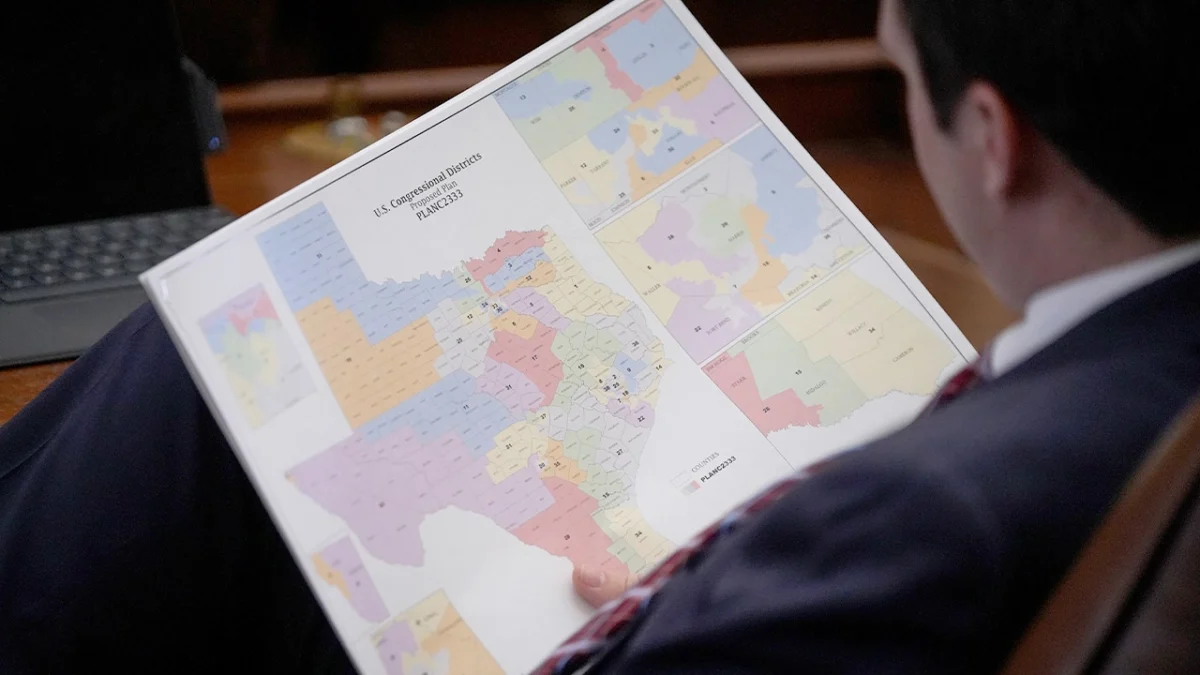
The 2026 midterm election cycle has concluded with a seismic shift in the political landscape, leaving the Republican Party to grapple with the aftermath of an ambitious but ultimately counterproductive strategy: the pursuit of mid-decade congressional redistricting. Across several key states, GOP leadership—at the strong urging of the White House and Vice President JD Vance—attempted to reconfigure district lines to solidify their majorities. Instead, the strategy appears to have backfired, leading to historic losses and providing a sobering lesson in the limitations of partisan mapmaking.
A Strategy of Overreach
The push for mid-decade redistricting was framed by its proponents as a necessary defensive measure to secure the House of Representatives against a resurgent Democratic electorate. However, the results suggest that in their zeal to engineer safer margins, Republican strategists may have fallen victim to the "dummymander" effect—a phenomenon in which mapmakers spread their party’s voting base too thinly across too many districts, thereby turning reliable "red" seats into vulnerable battlegrounds.
In Indiana, the resistance to this strategy became a focal point of intra-party friction. Indiana Senate President Pro Tempore Rod Bray, R-Martinsville, stood at the center of a high-stakes standoff against immense pressure from the executive branch. Despite multiple visits to Indianapolis by Vice President Vance and direct warnings from President Trump regarding the potential for MAGA-backed primary challenges, Bray and his allies held firm, preventing a total overhaul of the state’s congressional map. In retrospect, Bray argues that this resistance likely saved the Indiana GOP from a total collapse of their delegation. "Had we made a change to redistricting, we’d have ended up with something like 8-1 or 7-2 favoring Democrats," Bray stated in an interview with Fox News Digital.
The North Carolina Cautionary Tale
While Indiana’s leadership successfully blocked the proposed redraw, North Carolina provides a stark counter-narrative of what can happen when such strategies are fully executed. The state, which has long been a laboratory for aggressive redistricting, saw its GOP-led efforts fall apart in real-time. Former North Carolina House Speaker Tim Moore, a primary architect of the state’s redistricting strategy, lost his own seat to political newcomer LaKesha Womack.
Similarly, National Republican Congressional Committee (NRCC) Chairman Richard Hudson, who oversaw the national effort to defend House seats, suffered a stunning defeat in his own backyard, losing the Fort Bragg-area district to former West Virginia state Sen. Richard Ojeda. These losses were not anomalies; they were symptomatic of a broader trend where Republican incumbents were forced into unfamiliar territories, losing the benefit of long-established constituent relationships and localized fundraising networks. Political scientists, including Chris Cooper of Western Carolina University, had warned as early as April 2026 that the state’s redistricting plan left the party dangerously overextended.
Data and Demographic Shifts
The failure of the redistricting strategy must also be viewed through the lens of shifting voter behavior. October 2026 polling data highlighted a significant 12-point shift among Hispanic voters, a demographic that has historically leaned Democratic but had shown signs of moving toward the GOP in recent cycles. This volatility meant that even districts engineered to be "safe" for Republicans became highly competitive.
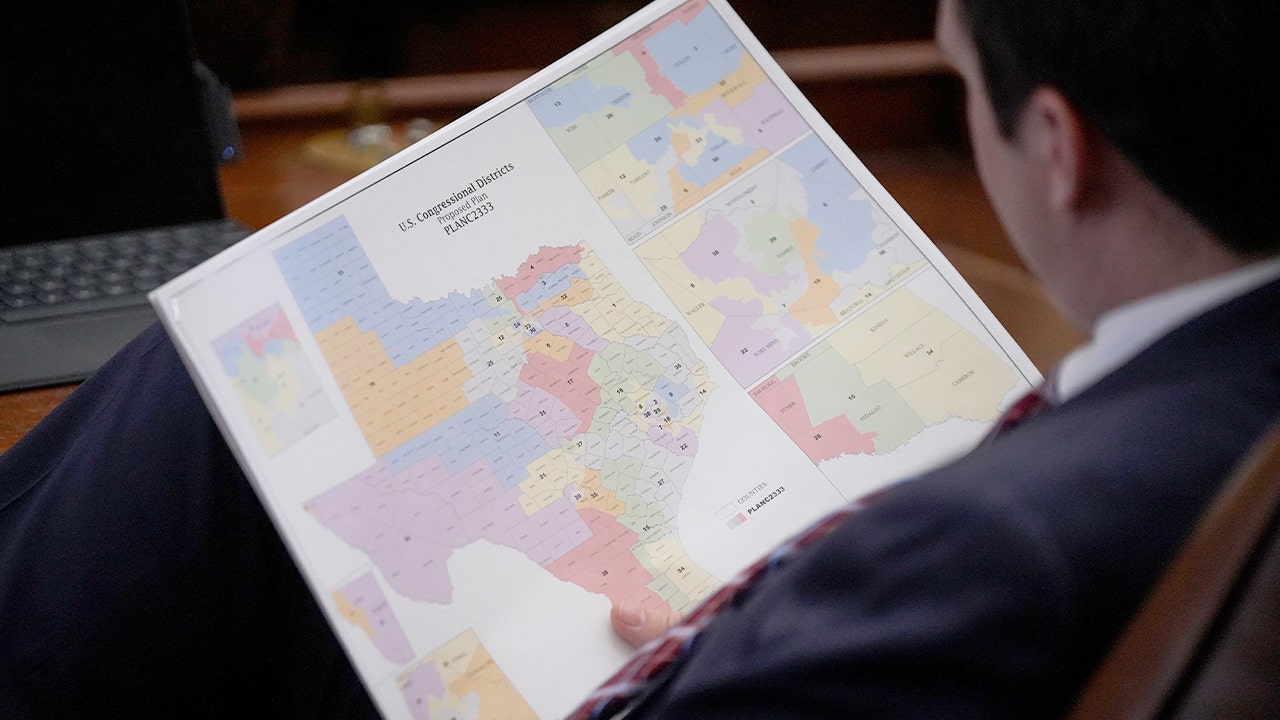
In Florida, the impact was equally pronounced. Despite legislative efforts to draw lines that favored Republican candidates, Democratic incumbents like Jared Moskowitz and Lois Frankel maintained their seats. Perhaps most telling was the loss of a district near Lake Okeechobee—a region previously classified as a "Trump +10" seat—to Democratic candidate Pia Dandiya. Similar trends held in Texas, where despite intense focus on the U.S.-Mexico border, Democratic Reps. Henry Cuellar and Vicente Gonzalez successfully navigated their re-election campaigns against the backdrop of newly redrawn, nominally "more favorable" boundaries.

Chronology of the 2025-2026 Redistricting Push
The road to these results began in the summer of 2025, as the White House signaled a desire for aggressive electoral maneuvering.
- August 2025: The Texas House begins contentious debates over new congressional maps, drawing intense national scrutiny.
- December 2025: President Trump begins publicly pressuring GOP holdouts in states like Indiana, targeting specific legislative leaders like Rod Bray.
- January-March 2026: Throughout the spring, state legislatures in key battleground states navigate internal divisions between "MAGA" purists and traditionalist state lawmakers regarding the feasibility of map changes.
- April 2026: Political experts and analysts, including the team at Axios and various university researchers, begin publishing warnings regarding the potential for "dummymandering."
- November 2026: The midterm elections take place, resulting in significant Democratic gains and the defeat of several prominent Republican architects of the redistricting plans.
The "Dummymander" Analysis
The term "dummymander" has become the primary analytical framework for understanding the Republican performance in the midterms. As University of Indianapolis political scientist Laura Merrifield Wilson noted, the addition of Democratic-leaning voters to districts that were already "safe" Republican actually served to dilute the party’s influence rather than solidify it.
"Given how the newly proposed maps would have added even more Democratic voters in seemingly safe Republican districts, it is possible the redistricting, had it gone through, would have backfired and actually given Democrats more seats," Wilson explained. In Indiana, the only seat to flip was Rep. Victoria Spartz’s IN-5, which transitioned from "solid Republican" to Democratic control. Had the proposed redistricting map been implemented, the erosion of the GOP base across multiple districts could have resulted in a total wipeout of the delegation.
Political Consequences and Internal Party Friction
The fallout from the redistricting debacle has created a period of introspection within the Republican Party. For those like Indiana’s Rod Bray, the political price of defiance was high. Many of his peers who stood against the White House’s demands were targeted in primary elections. While some, such as Sens. Greg Goode and Spencer Deery, survived these challenges, the climate within state houses became increasingly hostile.

However, the election results have provided a degree of vindication for the holdouts. The argument that "science" and computer-aided mapping can guarantee political outcomes has been challenged by the unpredictability of human voting behavior. Bray’s assertion—that "you can get far too cute with redistricting"—resonates with many strategists who believe the party focused too heavily on the geography of the map and not enough on the sentiment of the electorate.
Broader Implications for American Democracy
The broader takeaway from the 2026 midterms is the persistent, non-partisan demand for fairness. Fox News polling conducted leading up to the election indicated that voters across the spectrum overwhelmingly support the use of nonpartisan commissions to draw congressional district lines. This sentiment, combined with the practical failure of the GOP’s partisan-driven maps, may signal a shift in how future redistricting cycles are approached.
As the dust settles, the Republican Party faces a dual challenge: reconciling the influence of populist directives with the pragmatic needs of electoral sustainability. The 2026 cycle demonstrated that while redistricting remains a potent tool for influencing power, it is a double-edged sword. When used to chase theoretical gains rather than reflecting genuine demographic shifts, it can lead to electoral vulnerability.
The future of the House, and indeed the future of legislative control in the states, may depend on whether parties choose to prioritize long-term stability and organic growth over the temptation of short-term, aggressive re-mapping. For now, the 2026 midterms stand as a testament to the fact that, regardless of how a district is drawn, the final verdict rests with the voters—a reality that political leaders ignore at their own peril. As Rod Bray succinctly put it: "We continue to hold elections for a reason. Because sometimes the results are not exactly what we expect."

