
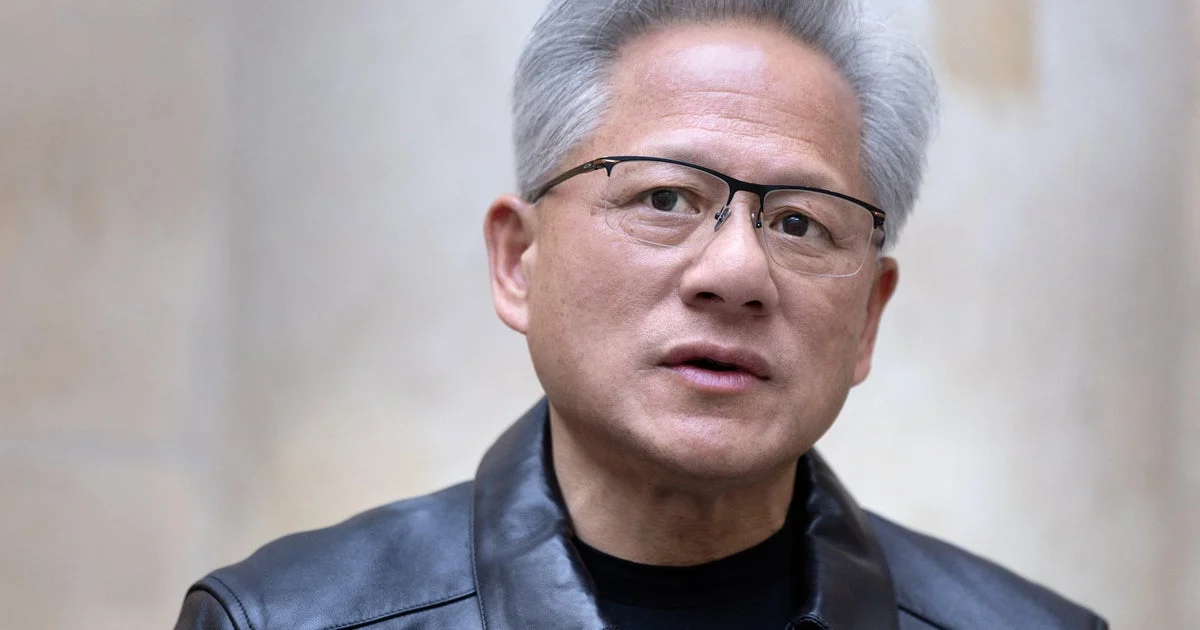
Nvidia shares plummeted on Monday as the tech giant grapples with a high-stakes corporate crisis involving CEO Jensen Huang and allegations of a compromising relationship with a suspected Chinese intelligence operative. The company’s stock price shed 4.3%, or $7.97 per share, closing at $178.67 and wiping approximately $193 billion from its market capitalization in a single trading session. This volatility arrives as Nvidia’s board of directors confirms it has initiated an independent inquiry into reports that Huang maintained a close personal relationship with Alice Huang, a former executive at a Singapore-based data center firm identified by U.S. intelligence as an asset for China’s Ministry of State Security.
The investigation casts a long shadow over one of the most successful leadership tenures in modern corporate history. Jensen Huang, who co-founded Nvidia in 1993, has been the primary architect behind the company’s transformation from a niche gaming hardware manufacturer into a $4.5 trillion global powerhouse at the epicenter of the artificial intelligence revolution. As investors weigh the potential for leadership transition, the uncertainty has created a significant "overhang" on the stock, leaving analysts to question whether the company’s current governance structure can withstand such a high-profile national security entanglement.
A Chronology of the Crisis
The controversy surfaced late last week following intelligence reports suggesting that Alice Huang—also known as Huang Le—had been operating within the orbit of high-level technology executives on behalf of the Chinese state. While the specific nature of the information exchanged remains classified, the timing is particularly sensitive given the ongoing "chip war" between Washington and Beijing.
On Sunday, the Nvidia board of directors issued a formal statement acknowledging the launch of an independent investigation. The board stated that while it has no immediate reason to believe that proprietary technology or national security interests were compromised, the potential risks associated with the CEO’s personal associations necessitated a full audit of the situation.
"The allegations are serious," said one industry insider familiar with the board’s internal deliberations. "The board is caught between protecting the reputation of its founder and demonstrating to federal regulators that the company maintains an absolute firewall between its executive leadership and foreign intelligence services."
The Strategic Importance of Alice Huang and Megaspeed
At the center of the investigation is Alice Huang’s role at Megaspeed International, a Singapore-based data center firm. Megaspeed has long touted its strategic partnerships with major chip manufacturers, including Nvidia. Intelligence officials allege that her position served as a cover for gathering information on the distribution and capabilities of high-end AI chips.
The intersection of her professional activities and the CEO’s personal life has raised immediate red flags regarding the potential for corporate espionage. Although Megaspeed has not yet issued a formal comment and offices in Singapore remained closed for a regional holiday on Monday, security experts suggest that if any sensitive data regarding chip design or supply chain distribution was shared, the legal ramifications for Nvidia could be catastrophic.
The Institutional and Economic Fallout
The market reaction on Monday reflects deep-seated investor anxiety regarding the stability of Nvidia’s leadership. With Jensen Huang holding a 3.4% stake in the company—making him the fifth-largest shareholder—his influence is both a pillar of stability and a single point of failure.
"There is no known succession plan," noted Daniel Newman, CEO of the tech consulting firm Futurum. "In many ways, Jensen is the Steve Jobs of the AI era. He is the face of the company, the strategist, and the primary lobbyist for the firm’s global interests. Removing him would not just be a personnel change; it would be a total, and potentially destabilizing, restructuring of the company’s identity."
The broader AI sector is already experiencing a cooling period, with investors rotating out of high-valuation tech stocks. Nvidia, which had already seen its shares decline by nearly 20% over the previous month, now faces the compounding pressure of regulatory scrutiny. Analysts at Vital Knowledge, led by Adam Crisafulli, suggest that the investigation could force the hand of U.S. regulators who are already skeptical of Nvidia’s export practices.
The Geopolitical Tightrope: Lobbying and Export Controls
Jensen Huang has spent the last several years engaged in delicate negotiations with the U.S. government to balance profit growth with national security mandates. He has consistently lobbied for exemptions to export controls that limit the sale of advanced AI chips to China. These efforts led to the approval of the H200 and H20 chips, products specifically engineered to comply with U.S. restrictions while maintaining utility for Chinese buyers.
However, critics in Washington are already signaling that this scandal could lead to a "draconian" tightening of these rules. If the investigation reveals that the CEO’s relationship resulted in any compromise of chip architecture or strategic export data, the U.S. Department of Commerce could move to revoke existing export licenses entirely.
"The issue isn’t just the H200 chips," Crisafulli noted in a research summary. "The issue is the massive volume of high-end hardware still reaching the Chinese market. If regulators believe that Nvidia’s leadership is compromised, they will likely choose to err on the side of extreme caution, which could effectively shutter Nvidia’s access to its second-largest market overnight."
Official Responses and the Defense of the CEO
In response to the allegations, an Nvidia spokesperson reiterated that Jensen Huang remains fully committed to his duties as CEO. "Jensen is committed to continuing to lead Nvidia as CEO without interruption," the company stated, though it declined to clarify whether Huang’s actions violated any specific corporate conduct policies regarding foreign interactions or disclosure requirements.
John Rizzo, another spokesperson for the company, sought to reassure shareholders on Sunday by highlighting the lack of evidence regarding a security breach. "We trust that if we were the target of a genuine threat, the U.S. government would have notified us," Rizzo said.
Meanwhile, the Chinese government has responded with characteristic vehemence. Guo Jiakun, a spokesperson for China’s Ministry of Foreign Affairs, dismissed the reports during a press briefing. "The so-called Chinese spy narrative is entirely baseless and constitutes slander and smear," Guo said, characterizing the investigation as part of a broader, politically motivated campaign to impede Chinese technological advancement.
Looking Ahead: The Risks of Leadership Change
As the investigation progresses, the primary concern for the board will be maintaining investor confidence without appearing to minimize the severity of the charges. The "black eye" mentioned by tech analyst Dan Ives is expected to result in multiple congressional inquiries, as lawmakers from both sides of the aisle view the potential for foreign infiltration of the semiconductor supply chain as a matter of urgent national security.
Should the board determine that a leadership change is necessary, the company would face a "massive changing of the guard." While names like Tim Cook are often cited as templates for successful transitions following visionary founders, the internal landscape at Nvidia currently lacks a clear successor who commands the same level of industry respect and technical authority as Huang.
For now, the company remains in a state of operational limbo. The board’s independent investigation is expected to take weeks, if not months, to complete. During this period, Nvidia will continue to navigate a volatile market, mounting regulatory pressure, and the internal strain of a leadership team under the microscope. For shareholders and tech observers alike, the saga of Jensen Huang has transitioned from a story of corporate growth to a precarious test of global corporate governance and international security.

