
The rapid ascendancy of artificial intelligence has fundamentally altered the global economic landscape, and as with previous technological gold rushes, the entertainment industry is racing to capture the human drama behind the code. Following a period defined by corporate scandals, high-stakes boardroom coups, and the meteoric rise of generative AI, Hollywood has increasingly turned its lens toward the power structures of Silicon Valley. This trend finds its latest iteration in the upcoming biographical comedy-drama Artificial, which chronicles the history of OpenAI and the complex persona of its CEO, Sam Altman.
The Cinematic Trend of Tech Iconography
The appetite for narratives centered on tech moguls is not new, but it has shifted in tone. Early portrayals focused on the "hacker-as-visionary" archetype, exemplified by the 2010 film The Social Network. However, recent offerings have adopted a more critical, often cynical perspective. From the box-office success of the Elizabeth Holmes documentary You Can See Everything to the highly anticipated Netflix limited series The Altruists, which dramatizes the collapse of the cryptocurrency exchange FTX and the fall of Sam Bankman-Fried, the industry is signaling a shift toward investigating the consequences of unchecked corporate influence.
Artificial, scheduled for a Christmas release, features Andrew Garfield as Sam Altman. The film focuses on the tumultuous period in 2023 when OpenAI’s board of directors abruptly terminated Altman, only for him to be reinstated days later following intense pressure from investors and staff. This event serves as a microcosm for the broader tensions within the AI industry: the struggle between rapid commercial development and the perceived necessity of "AI safety."
Chronology of the OpenAI Boardroom Crisis
The events surrounding Altman’s firing in November 2023 remain one of the most significant episodes in the recent history of corporate governance. To understand the stakes presented in Artificial, one must look at the timeline of the 2023 crisis:
- November 17, 2023: The OpenAI board of directors, citing a lack of transparency in Altman’s communications, abruptly fires him.
- November 18–19, 2023: A massive internal and external backlash ensues. Microsoft, the company’s largest backer, expresses shock and begins lobbying for his return.
- November 20, 2023: Nearly the entire staff of OpenAI threatens to resign unless the board resigns and reinstates Altman.
- November 22, 2023: Altman is officially reinstated as CEO, and a new board is appointed, effectively cementing his control over the organization.
This five-day period exposed the fragility of the nonprofit-controlled structure that initially governed OpenAI, leading many analysts to question whether such a governance model could truly oversee the development of Artificial General Intelligence (AGI).
Characterizing the Architect: Andrew Garfield’s Portrayal
The casting of Andrew Garfield—who famously played Facebook co-founder Eduardo Saverin in The Social Network—adds a layer of metatextual irony to the project. Garfield’s preparation for the role has included a public assessment of the industry he is depicting. In a recent interview with Esquire, Garfield noted that he has never met Altman but suggested that the level of responsibility associated with steering a technology that could potentially "do a hell of a lot of damage to the soul of humanity" necessitates a certain degree of psychological detachment.
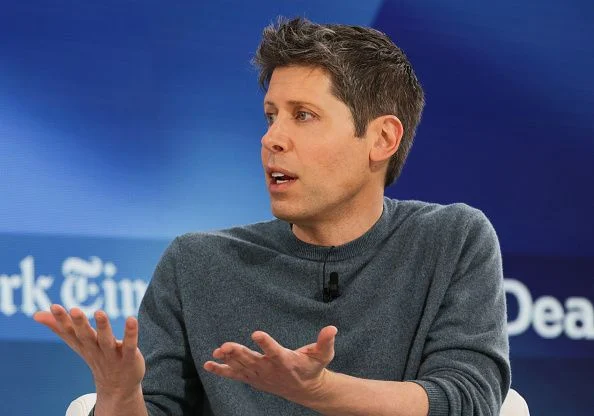
This perspective stands in contrast to Altman’s own view of his cinematic representation. At the New York Times DealBook Summit, Altman remarked that while he once considered the idea of a movie about his life "weird," it has become a mundane reality of his current position. He framed his role as a "crazy situation" characterized by the weight of leading a technology with existential implications.
Data and Market Context
The intersection of technology and public perception is increasingly measurable through economic data. The failure of The Social Reckoning, a spiritual successor to The Social Network, serves as a data point suggesting that audiences are becoming more selective about tech-focused dramas. Box office performance for these films often hinges on the public’s current relationship with the tech figure in question.
For OpenAI, the stakes are significantly higher than for social media platforms. OpenAI’s valuation has soared into the hundreds of billions, and the company has become a focal point for global regulatory debates. When a company manages the underlying infrastructure of the next industrial revolution, every boardroom shuffle becomes a matter of public interest, which explains the heightened scrutiny directed at Altman’s personal eccentricities—ranging from his stated use of ChatGPT for parenting advice to his publicized indifference toward culinary staples like olive oil.
The Legacy of the "Tech Biopic"
The tension between the subjects of these films and their depictions is a recurring theme. Mark Zuckerberg’s reaction to The Social Network provides a useful framework for understanding how Silicon Valley leaders respond to Hollywood. Despite the film’s negative portrayal of his motivations, Zuckerberg took a pragmatic, almost playful approach, even purchasing an original prop from the film.
However, the industry is moving away from the "misunderstood genius" narrative. As tech leaders like Altman and the late Bankman-Fried occupy roles of unprecedented global influence, filmmakers are less interested in the "origin story" and more focused on the "consequences story." The narrative arc of Artificial—focusing on the trust deficit between a CEO and his board—reflects a broader public anxiety regarding the accountability of AI researchers.
Implications for Future Governance
The broader impact of the OpenAI incident and its subsequent dramatization is that it forces a public conversation about the "alignment problem." When corporate boards are composed of academics and researchers concerned with the existential risks of technology, they often clash with executive leaders focused on market scaling. The film Artificial is likely to center on this friction.
From a regulatory standpoint, the events of 2023 highlighted that the self-governance of AI labs is prone to collapse under the pressure of fiduciary responsibility and competitive market forces. As the film prepares for its theatrical debut, the audience will be presented with a dramatized version of a question that the real-world public is still attempting to answer: Who is ultimately responsible for the safety of humanity when the developers themselves are in the midst of a power struggle?
Conclusion: The Mirror of Modernity
As Hollywood continues to produce these biopics, they function as a mirror reflecting the anxieties of the era. Whether these films are seen as historical records or dramatized critiques, they underscore the fact that Silicon Valley is no longer a peripheral industry; it is the central nervous system of modern civilization.
For Sam Altman, being the subject of a film like Artificial is simply a byproduct of his influence. For the public, the film serves as a gateway to understanding the internal mechanics of a company that, for better or worse, is shaping the trajectory of the 21st century. As audiences flock to theaters this December, the film will likely be evaluated not just on its narrative quality, but on its success in capturing the paradox of a leader who is simultaneously building a future he claims to be profoundly concerned about. The legacy of these cinematic portraits will eventually be determined by how accurately they predicted the outcome of the very technology they seek to humanize.

