
For three decades, the global medical research
community operated under a unified consensus regarding mevalonate kinase deficiency, a debilitating and occasionally fatal rare genetic disorder characterized by severe, recurring inflammatory episodes. Scientists long believed that macrophages—the primary immune cells responsible for coordinating inflammatory defenses—were the solitary culprits behind the agonizing fevers, joint pain, and gastrointestinal distress experienced by patients. Traditional therapeutic strategies were subsequently designed around this macrophage-centric hypothesis, leaving roughly half of all patients without adequate relief when these standard interventions failed.
However, a landmark study recently published in the peer-reviewed journal Immunity has fundamentally shattered this longstanding framework. Researchers at the Garvan Institute of Medical Research in Sydney, Australia, have uncovered compelling evidence proving that the root cause of mevalonate kinase deficiency lies not in macrophages, but in a severe functional defect within natural killer (NK) cells. This revelation not only rewrites thirty years of established immunological literature but also paves the way for immediate, targeted clinical interventions using existing therapeutics, offering renewed hope to patients who have exhausted conventional treatment options.
A Thirty-Year Chronology of an Elusive Disease
Mevalonate kinase deficiency is a lifelong, autoinflammatory condition affecting hundreds of children and adults globally, though epidemiological experts strongly suspect that a significant number of individuals remain undiagnosed or misdiagnosed due to the syndrome’s overlapping symptoms with other periodic fever syndromes. Clinically, MKD presents as recurring attacks of soaring high fevers, painful skin rashes, arthralgia, and profound abdominal inflammation. In its most aggressive presentations, the disease can trigger systemic complications that are rapidly fatal.
The timeline of MKD research traces back approximately thirty years, during which time molecular biologists painstakingly mapped the genetic mutations responsible for the condition. It was established early on that MKD is caused by mutations in the MVK gene, which encodes the enzyme mevalonate kinase. This enzyme is critical for the mevalonate metabolic pathway, a fundamental biochemical route responsible for producing cholesterol, isoprenoids, and other essential molecules.
Because macrophages heavily rely on this metabolic pathway and are front-line responders in innate immunity, early investigators naturally focused their attention on these cells. For decades, scientific literature consistently pointed toward macrophage hyperactivation as the sole driver of the systemic inflammation seen in MKD patients. Therapeutics were developed to block specific inflammatory signals—most notably interleukin-1 beta—released by macrophages. While these biologic drugs provided relief for a subset of patients, clinical data consistently showed that approximately 50% of individuals with MKD experienced little to no therapeutic benefit, creating an urgent clinical imperative to look deeper into the cellular architecture of the immune system.
The Misfiring Immune System: Unmasking Natural Killer Cell Dysfunction
To resolve the therapeutic stalemate, a team led by Professor Mike Rogers, Lab Head at the Garvan Institute, and Dr. Marcia Munoz, Group Leader in the Rogers Lab, embarked on an exhaustive investigation. The researchers analyzed blood samples procured from diagnosed MKD patients and utilized advanced preclinical models to observe cellular behavior in real time.
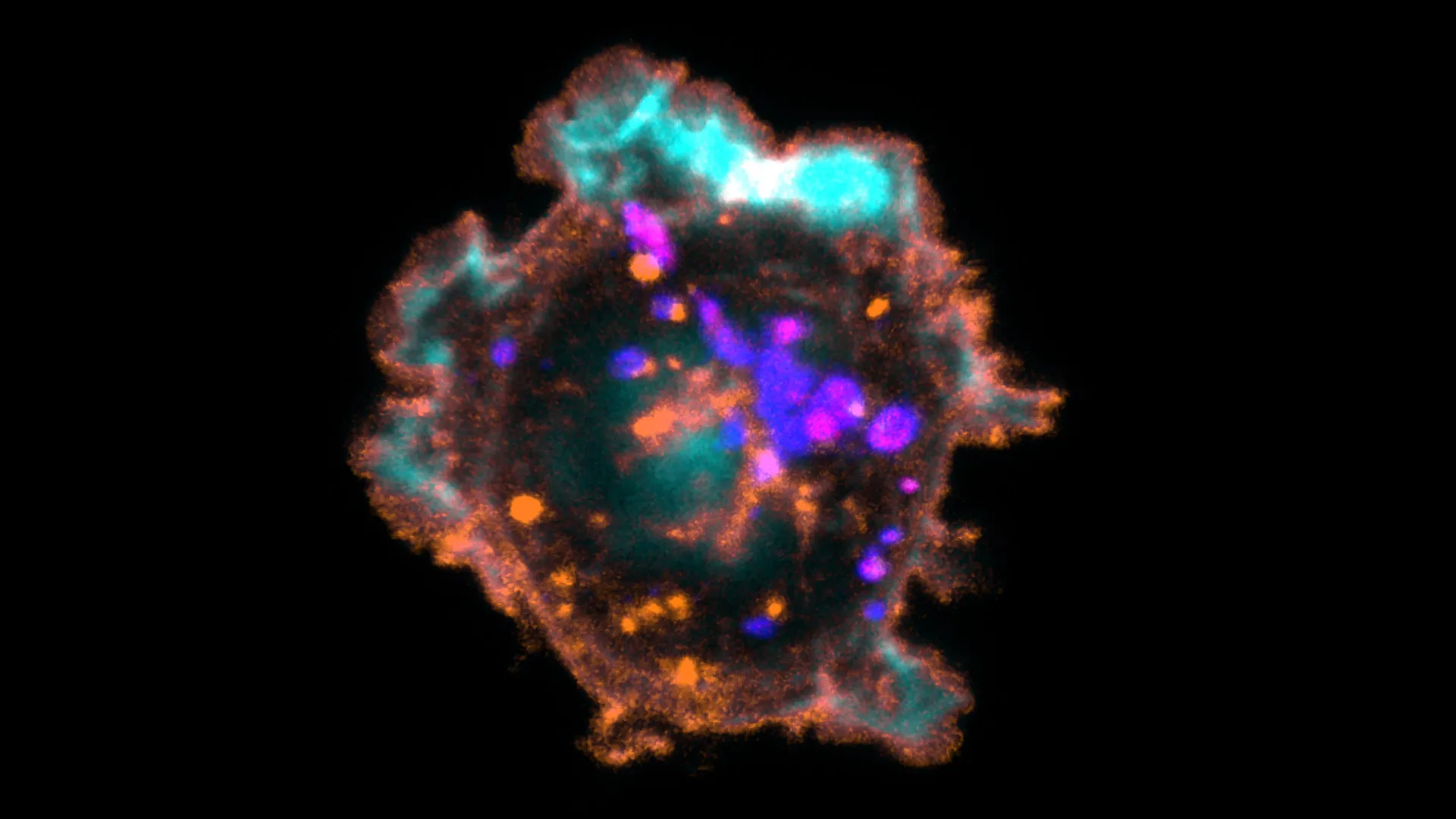
What they discovered challenged the foundational assumptions of the field. The team identified a profound maturation defect in natural killer cells, a vital component of the innate immune system whose primary physiological role is to patrol the body, identify virally infected or stressed cells, and destroy them before pathogens can replicate and disseminate.
In healthy individuals, NK cells execute this defense by deploying toxic granules stored internally, releasing precise biochemical payloads that neutralize threats. In MKD patients, however, these crucial cells fail to reach full maturity. Furthermore, their toxic ammunition remains structurally trapped inside intracellular granules, rendering the NK cells physically incapable of executing their target-elimination duties.
Faced with an inability to clear infected targets, the malfunctioning NK cells compensate in a disastrous manner. Desperate to mobilize a defense, the cells begin "shouting for help" by pumping out unprecedented quantities of interferon gamma, a potent pro-inflammatory signaling molecule. This massive surge of interferon gamma acts as a biochemical catalyst, setting off a cascading activation of other immune cells throughout the body. The resulting immune storm triggers the excruciating fevers, widespread tissue damage, and life-threatening systemic inflammation characteristic of MKD attacks.
"This really turns on its head 30 years of dogma about what was thought to be the underlying mechanism of disease," states Dr. Marcia Munoz, emphasizing the paradigm-shifting nature of the discovery. "In MKD, the primary problem is in NK cells and not in macrophages, as previously believed."
Professor Rogers echoes this sentiment, illustrating the mechanics of the cellular failure: "We found that these immune cells are essentially misfiring. NK cells are loaded with toxic ammunition, stored in granules that are released to kill infected cells. However, in MKD these toxic granules can’t be released from NK cells and remain trapped inside. When an NK cell fails to kill its target, it compensates by shouting for help, pumping out large amounts of interferon gamma—a powerful inflammatory signal. This activates other immune cells and causes the dangerous fever and widespread inflammation seen in patients."
Collaborative Research and Preclinical Validation
To solidify these findings, the Garvan Institute team forged a critical research partnership with Professor Mariapia Degli-Esposti and a team of immunologists at Monash University. Utilizing sophisticated preclinical models, the collaborative research group definitively linked natural killer cell dysfunction to the severe pathological outcomes observed in MKD.
Their experimental models demonstrated that when the innate immune system is compromised in its ability to clear routine viral challenges, the subsequent dysregulated inflammatory response inflicts collateral damage across major organ systems. This crucial mechanistic link successfully resolved a long-standing medical paradox: why a genetic condition characterized by defective immune defenses simultaneously produces episodes of extreme, hyper-reactive inflammation.
From Laboratory Benchside to Clinical Bedside: The Promise of JAK Inhibitors
The translation of these basic science discoveries into tangible clinical solutions has already commenced, accelerated by the urgency of severe pediatric cases. Working in close clinical collaboration with specialists at the Royal Children’s Hospital in Melbourne, the Garvan researchers investigated whether existing pharmacological agents could intercept the newly identified interferon gamma signaling pathway.
The medical team turned to baricitinib, a pharmaceutical agent belonging to a class of medications known as Janus kinase (JAK) inhibitors. JAK inhibitors work by systematically blocking the intracellular signaling pathways utilized by various cytokines, including the receptors that respond to interferon gamma. Baricitinib is already an established, FDA-approved therapy for other chronic immune-mediated inflammatory conditions, such as rheumatoid arthritis and severe atopic dermatitis (eczema), providing clinicians with an established safety profile.
In a pioneering clinical application, doctors introduced baricitinib as an adjunctive therapy to the existing treatment regimen of an infant suffering from severe, treatment-resistant MKD. The results were remarkably encouraging. Following the introduction of the JAK inhibitor, the infant experienced a dramatic reduction in the frequency and severity of inflammatory flare-ups. Crucially, chronic, debilitating inflammation affecting the child’s gastrointestinal tract began to heal, offering a window of stability previously unobtainable through standard anti-interleukin therapies.
While researchers caution that data derived from a single clinical case study cannot yet establish broad therapeutic efficacy across the entire patient population, the early clinical response provides robust proof-of-concept. It validates a fundamentally new therapeutic strategy: neutralizing interferon gamma and inhibiting the JAK-STAT signaling axis in patients who fail to respond to macrophage-targeted biologics.
"This study has revealed a new target for this inflammatory disorder and sets the scene for future clinical studies to explore the use of JAK inhibitors or other drugs to neutralize interferon gamma in patients with MKD," Professor Rogers notes. "This could lead to a targeted treatment that hasn’t been tried before."
Broader Implications: Prenylopathies and the Diagnostic Odyssey
The ramifications of the Garvan Institute’s breakthrough extend far beyond the specific confines of mevalonate kinase deficiency. MKD belongs to a broader family of rare genetic metabolic conditions known collectively by researchers as "prenylopathies." These disorders all share disruptions within the same intricate metabolic pathway that processes isoprenoids and cholesterol.
Preliminary investigations by the research team suggest that other prenylopathies may share the exact same underlying cellular pathology identified in MKD: natural killer cell dysfunction that leads to impaired pathogen clearance and a subsequent overproduction of inflammatory cytokines. If forthcoming clinical and genetic studies confirm this hypothesis, medical science will gain a unified framework for understanding an entire spectrum of rare diseases.
Such a unified mechanism would profoundly streamline clinical diagnostics, potentially ending what medical professionals refer to as the "diagnostic odyssey"—a grueling journey that frequently forces patients and their families to endure years, or even decades, of misdiagnoses, exploratory procedures, and ineffective treatments before achieving an accurate diagnosis and appropriate medical management.
"Confirming this link could help end the diagnostic odyssey many patients endure for years or even decades before receiving effective treatment," concludes Professor Rogers.
As the Garvan Institute team prepares to lay the groundwork for formal clinical trials assessing JAK inhibitors in MKD patients, the medical community stands on the precipice of a new era in autoinflammatory disease management—one built on correcting the misfire of natural killer cells and rewriting decades of textbook immunology.

