
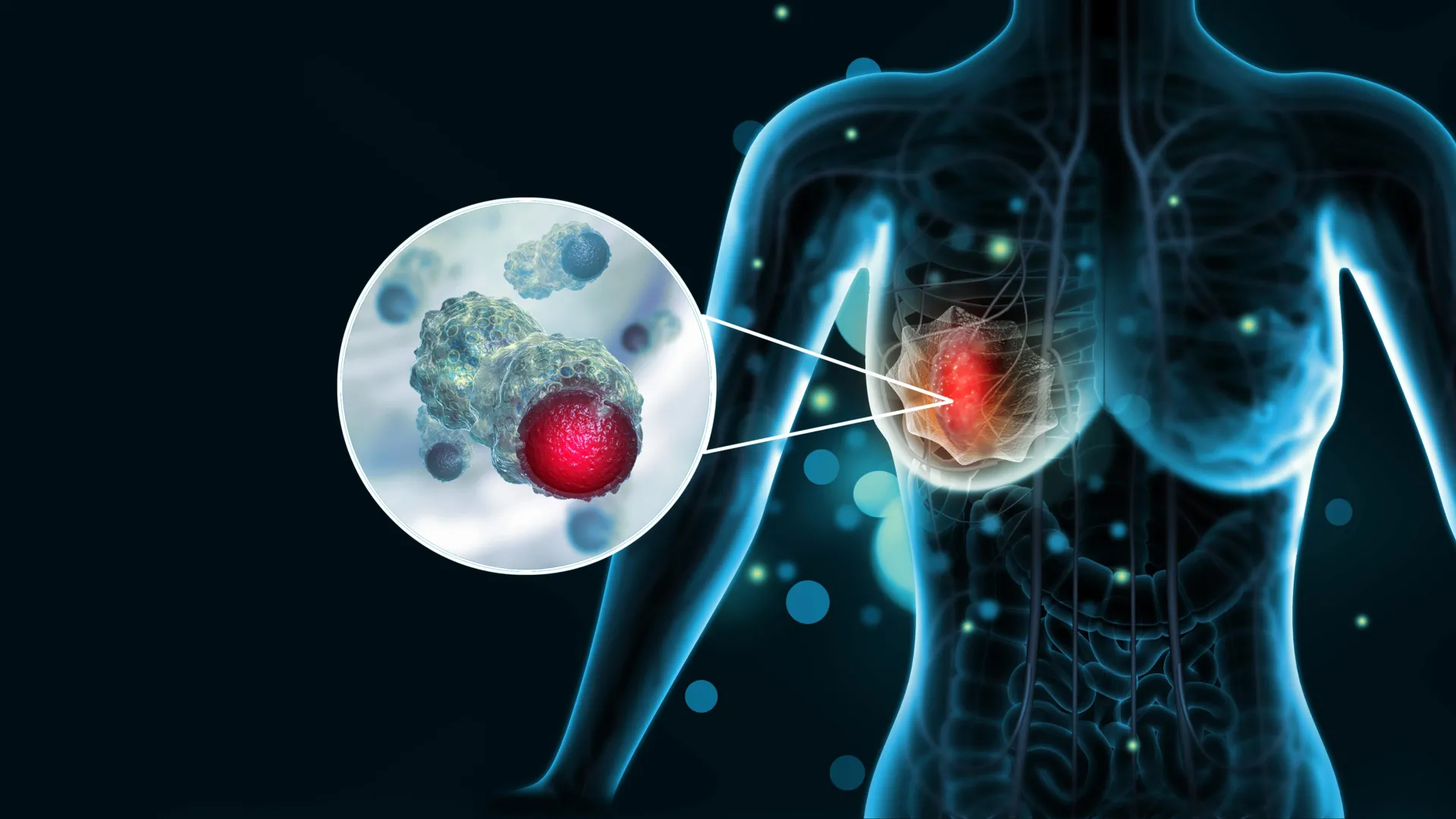
Women with elevated blood concentrations of two pervasive "forever chemicals" may face a substantially heightened risk of developing estrogen receptor-negative (ER-negative) breast cancer, according to groundbreaking research recently published in the Journal of Clinical Oncology. The comprehensive study, spearheaded by investigators at the National Institutes of Health (NIH)—an agency operating under the U.S. Department of Health and Human Services (HHS)—highlights a troubling correlation between specific synthetic compounds and an aggressive, hard-to-treat variant of the disease.
While the scientific community has long studied the broad ecological and physiological footprints of per- and polyfluoroalkyl substances (PFAS), this latest epidemiological investigation zeros in on how legacy compounds impact female oncology. Specifically, the findings implicate perfluorooctanoic acid (PFOA) and perfluorooctanesulfonic acid (PFOS) in the development of ER-negative tumors. These findings add mounting urgency to regulatory debates, public health warnings, and industrial phase-out timelines surrounding a class of chemicals that have quietly permeated global water supplies, consumer goods, and human tissues for decades.
Understanding the Threat of ER-Negative Breast Cancer
To contextualize the gravity of the NIH findings, medical professionals point to the unique clinical challenges posed by ER-negative breast cancer. Unlike hormone receptor-positive breast cancers—which account for the majority of diagnoses and can often be treated effectively with endocrine therapies designed to block estrogen or progesterone—ER-negative tumors lack the necessary receptors for hormones to stimulate their growth.
Consequently, physicians have fewer targeted treatment pathways at their disposal. ER-negative cancers are biologically more aggressive, grow and spread more rapidly, and generally yield poorer prognoses and higher recurrence rates compared to their hormone-responsive counterparts. Despite these severe clinical implications, medical science has struggled to pinpoint definitive environmental or lifestyle triggers for this specific subtype. The NIH study suggests that legacy environmental pollutants, capable of bioaccumulating within human organs over extensive periods, may be a missing link in understanding why certain women develop this aggressive malignancy.
Methodology and Chronology of the Sister Study
The robustness of the research stems from its reliance on data gathered through the Sister Study, a large-scale, prospective cohort project administered by the National Institute of Environmental Health Sciences (NIEHS), a division of the NIH. Launched to uncover environmental and genetic risk factors for breast cancer, the Sister Study boasts a massive demographic pool comprising 50,884 women across the United States and Puerto Rico.
Between 2003 and 2009, researchers enrolled women aged 35 to 74 who had no personal history of breast cancer at the time of entry, though every participant had a biological sister who had been diagnosed with the disease, elevating their baseline familial risk. For the specific PFAS investigation, scientists isolated and analyzed blood samples that had been archived years prior to any cancer diagnosis. This prospective design is vital in epidemiological research because it ensures that blood concentrations of the chemicals reflect historical exposure levels predating the onset of the disease, rather than biochemical shifts caused by the cancer itself or subsequent medical treatments.
Researchers measured the concentrations of 17 distinct PFAS chemicals in the blood of 1,609 women who eventually developed breast cancer and compared them against a control group of 2,269 women within the cohort. Through this rigorous comparative framework, the team isolated the statistical impact of individual chemical compounds on specific breast cancer subtypes.
Statistical Findings and Relative Risk Metrics
The quantitative results of the study revealed stark differences in cancer incidence rates correlated with chemical exposure levels. When evaluating overall breast cancer diagnoses, researchers found no definitive, overarching link between either PFOA or PFOS and the disease as a whole. However, when isolating ER-negative breast cancer, the statistical correlations became pronounced.
Women falling into the highest tier of PFOA exposure exhibited a 67% higher rate of developing ER-negative breast cancer compared to women in the lowest exposure bracket. The association was even more dramatic regarding PFOS: participants in the highest exposure quartile demonstrated a 93% higher rate of ER-negative tumors—nearly doubling the risk observed in the lowest exposure group.
Epidemiologists emphasize that these percentages reflect relative differences in risk between distinct exposure cohorts within the study population rather than an individual woman’s absolute lifetime probability of contracting the disease. Furthermore, the researchers urge careful interpretation, noting that the study establishes a compelling epidemiological association rather than definitive causal proof. Nonetheless, the magnitude of the relative risk increase has alarmed public health advocates and medical researchers alike.
The Persistence and Ubiquity of Forever Chemicals
PFAS represent a massive, synthetic family of thousands of man-made chemicals characterized by carbon-fluorine bonds, which are among the strongest chemical bonds in organic chemistry. This molecular stability makes the substances exceptionally resistant to degradation from heat, water, oil, and biological processes. While these properties made PFAS invaluable for commercial manufacturing since the mid-20th century—enabling their widespread use in non-stick cookware, stain-resistant fabrics, waterproof apparel, firefighting foams, and food packaging—they have also earned these compounds the moniker "forever chemicals."
Because they do not break down easily in natural ecosystems, PFAS migrate seamlessly through soil, groundwater reservoirs, and the global food chain. Once ingested, inhaled, or absorbed through the skin by humans, these chemicals bind to serum proteins in the blood and can persist in the human body for years, gradually accumulating with chronic, low-level exposure. Even though PFOA and PFOS have been largely phased out of manufacturing in the United States and parts of Europe through voluntary industry agreements and stricter regulatory actions, their
persistent chemical legacy ensures that measurable quantities remain detectable in the bloodstreams of the vast majority of the U.S. population.
Official Responses and Government Reactions
The release of the study has drawn immediate attention from federal health authorities, underscoring a bipartisan and institutional focus on environmental toxicology and women’s health.
"Women deserve clear answers about how chemicals in their environment may affect their health," declared HHS Secretary Robert F. Kennedy, Jr. "This NIH study links two forever chemicals to a higher risk of ER-negative breast cancer and demands further investigation. Under President Trump’s leadership, we will pursue the evidence, confront environmental health risks, and give women the information they need to protect their health."
Lead author Dr. Alexandra White, an NIH Stadtman Investigator who oversaw the project at the NIEHS, emphasized the novelty and implications of the findings. "Our findings, which we confirmed using a meta-analysis of prior research, indicate that certain legacy PFAS, including PFOA and PFOS, are associated with a higher risk of ER-negative breast cancer, a more aggressive tumor type with few known risk factors," Dr. White explained.
The study’s first author, Dr. Che-Jung Chang—formerly an NIH research fellow and currently a senior researcher at scientific organization DLH—noted that while the chemical persistence is daunting, public health intervention remains possible. "Although PFAS are persistent in the environment and in our bodies, exposure to them is still potentially modifiable, meaning people can take steps to reduce their exposure, and these findings could open new avenues for prevention," Dr. Chang stated.
Biological Mechanisms and Unanswered Questions
While the epidemiological link between legacy PFAS and ER-negative breast cancer is now firmly established within this cohort, the precise biological mechanisms driving the disease process remain under investigation. Because the strongest statistical associations manifested in tumors devoid of estrogen receptors, researchers hypothesize that PFAS do not operate strictly through traditional hormonal disruption pathways.
Instead, toxicologists suspect that these persistent compounds may influence cancer development through alternate biological avenues, such as altering gene transcription, inducing epigenetic modifications, or suppressing and dysregulating the human immune system. The current study did not directly test these mechanistic hypotheses, leaving the door open for targeted laboratory and animal model research to confirm how systemic chemical accumulation translates into oncogenesis.
Another critical frontier for ongoing research involves the chemical industry’s response to the phase-out of PFOA and PFOS. As manufacturers retired these legacy substances, they frequently substituted them with newer generations of PFAS compounds—such as GenX and other short-chain variants—promoted as safer, less bioaccumulative alternatives. However, independent toxicologists and public health advocates have raised alarms that these replacement chemicals may possess structurally similar toxicity profiles and persistence traits, posing parallel or unquantified health risks.
"More research is needed, particularly evaluating the risk of breast cancer associated with newer replacement PFAS chemicals," Dr. White noted, highlighting an urgent mandate for future scientific inquiry.
Broader Public Health Implications and Future Directions
The publication of this research in the Journal of Clinical Oncology expands the evolving dialogue surrounding environmental justice, corporate accountability, and preventative medicine. As regulatory bodies like the U.S. Environmental Protection Agency (EPA) move toward enforcing stricter maximum contaminant levels for PFAS in municipal drinking water supplies, studies like the one conducted by the NIH provide critical empirical data supporting these interventions.
Moving forward, public health experts recommend that future epidemiological studies expand to include high-exposure populations—such as communities situated near industrial manufacturing plants, military bases utilizing firefighting foams, and agricultural regions reliant on contaminated biosolids—as well as socioeconomically vulnerable demographics that historically experience disproportionate environmental burdens and elevated breast cancer mortality rates.
Ultimately, while individuals can take localized steps to mitigate exposure—such as installing advanced water filtration systems capable of capturing fluorinated compounds and avoiding certain stain-resistant consumer goods—experts stress that addressing the PFAS crisis requires systemic, nationwide remediation and strict regulatory oversight. By illuminating the dark correlation between industrial chemistry and aggressive oncological outcomes, the NIH study serves as a foundational step toward protecting future generations from the long-term biological costs of environmental pollution.

