
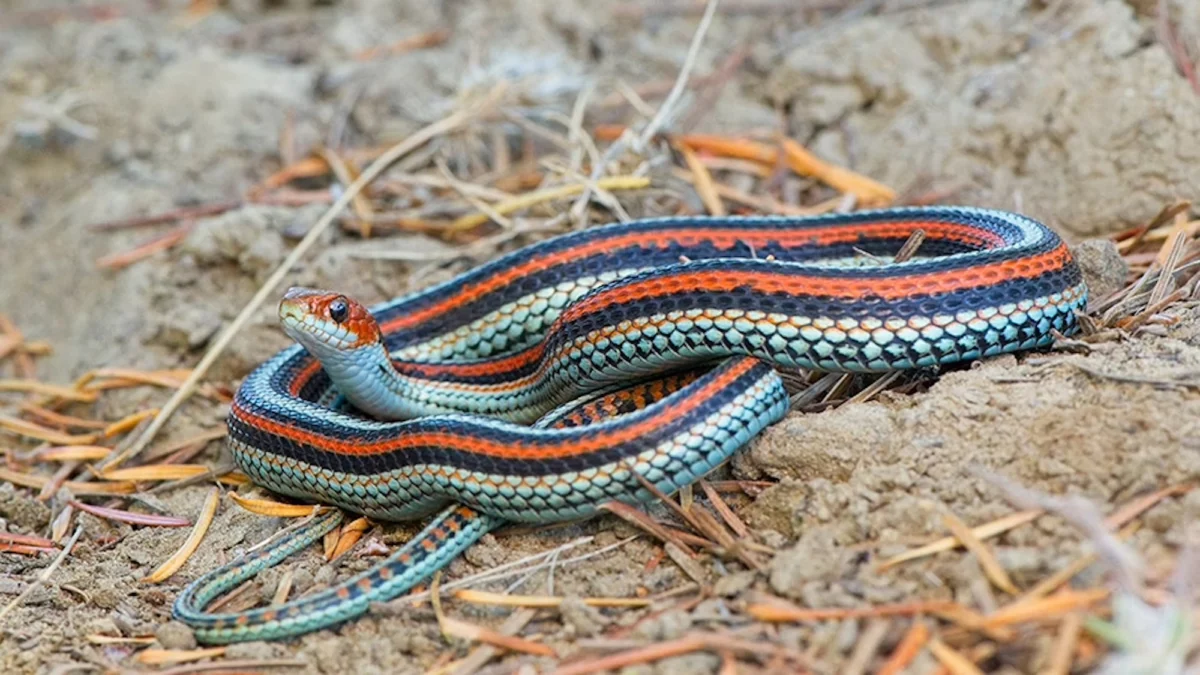
The San Francisco garter snake, scientifically classified as Thamnophis sirtalis tetrataenia, represents one of North America’s most striking and rarest reptiles. Endemic exclusively to the coastal regions of San Mateo and Santa Cruz counties in California, this vibrant creature has spent nearly six decades on the brink of extinction. In a landmark development for biodiversity recovery, the San Francisco Zoo and the Midpeninsula Regional Open Space District (Midpen) recently completed the successful reintroduction of 62 captive-bred juvenile snakes into protected habitats. This achievement serves as a vital proof-of-concept for the “head-starting” program, a conservation strategy designed to bypass the high mortality rates these reptiles face in their earliest, most vulnerable stages of development.
A Legacy of Peril: The 60-Year Struggle for Survival
The plight of the San Francisco garter snake gained national attention in 1967 when it was designated as one of the inaugural species listed under the United States Fish and Wildlife Service’s endangered species protection framework. This recognition was a somber acknowledgement of the reptile’s rapidly diminishing habitat. Over the subsequent 60 years, the species has been besieged by a compounding series of environmental and human-induced threats.
The primary driver of the snake’s decline has been the systemic destruction of its wetland and upland habitats due to urban sprawl and agricultural conversion. As the San Francisco Peninsula transformed into a hub of technology and commerce, the marshy corridors required by the garter snake for hunting and brumation were fragmented or drained. Beyond habitat loss, the snakes have struggled against a barrage of invasive species—most notably the bullfrog, which competes for food and actively preys upon juvenile garter snakes. Additional pressures, including prolonged regional droughts, emerging fungal pathogens, and the illegal pet trade, have whittled the wild population down to an estimated few thousand individuals.
The Mechanics of Head-Starting: A Strategic Intervention
The current reintroduction effort is the result of years of meticulous preparation. The head-starting program is predicated on the biological reality that a significant percentage of garter snakes perish within their first year due to predation and starvation. By rearing them in a controlled, predator-free environment at the San Francisco Zoo, scientists can ensure that each individual reaches a size and fitness level that significantly increases its probability of survival upon release.
The chronology of this specific cohort began in 2025. Wildlife biologists from Midpen identified and captured a limited number of pregnant females from established, stable populations within the Midpeninsula preserves. These females were brought into the care of zoo specialists, where they were monitored until parturition. Following the successful birth of the offspring, the adult females were returned to their original capture sites to maintain the integrity of their native populations. The neonates, however, remained under human care. During this period, the zoo implemented a rigorous genetic monitoring program. By analyzing the genetic markers of each individual, researchers were able to map out a release strategy that maximized the genetic diversity of the target populations.
In the autumn of 2026, the 62 young snakes were released into pre-vetted sites in San Mateo County. The selection of these sites was not arbitrary; each location was carefully restored to ensure it provided the necessary thermal gradients, prey availability—specifically the California red-legged frog, another endangered species that serves as a primary food source—and cover from avian and mammalian predators.
Perspectives from the Field: The Human Element of Conservation
The success of the project is viewed by experts as a triumph of inter-agency cooperation. Karine Tokatlian, a biologist with the Midpeninsula Regional Open Space District, emphasized the long-term nature of this undertaking. "Seeing these young snakes returning to the wild represents years of research, collaboration, habitat restoration and careful conservation work," Tokatlian noted in a statement following the release. "This first release is an important step toward building healthy, resilient populations that can sustain themselves over the long term."
The project also carries weight for the broader scientific community. Ariel Starr, a wildlife ecologist with Midpen, highlighted the potential for this program to serve as a blueprint for other imperiled species. "This species is special in many ways, but unfortunately its critical status is not unique," Starr stated. "The success of this project and the associated research will not only benefit the San Francisco garter snake but will also hopefully inform the recovery of many imperiled reptile species."
Biological Profile: The Red-Sided Beauty
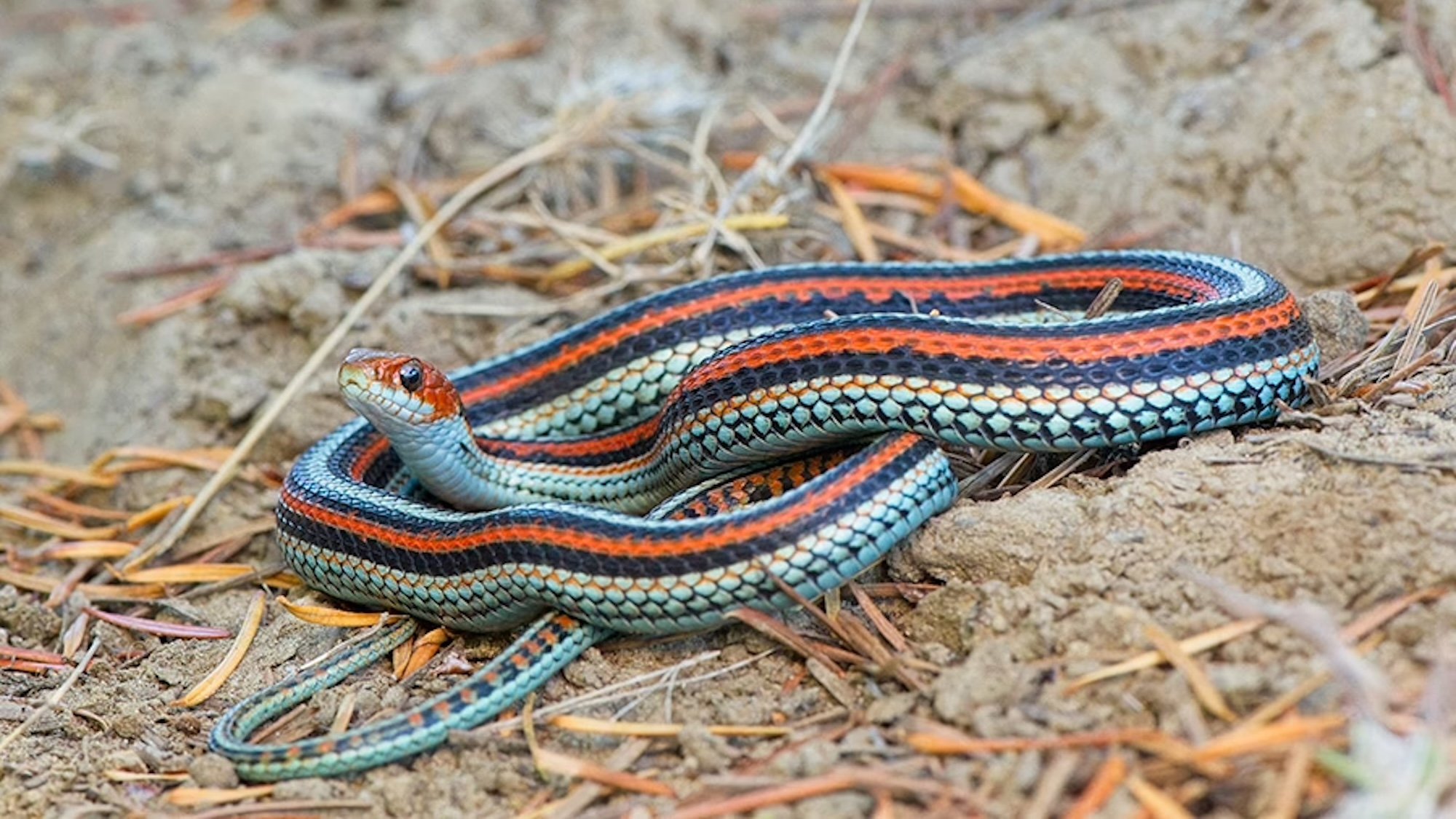
The San Francisco garter snake is distinct not only for its rarity but for its aesthetic appearance. Measuring between 18 and 55 inches in length, the snake features a striking pattern of bright red, turquoise, and black longitudinal stripes. Unlike many other garter snake subspecies, this variety possesses proportionally larger eyes, which researchers believe is an adaptation for its highly active diurnal lifestyle.
While the species is colloquially referred to as "harmless," it does possess biological defenses. The snake is mildly toxic; while its saliva is not dangerous to humans, it is lethal to its primary prey, such as small rodents and amphibians. This toxicity is a byproduct of its diet, as the snakes sequester toxins from the newts they consume. This complex relationship between the snake and its prey environment underscores the necessity of protecting the entire ecosystem, rather than just the target species itself.
Data-Driven Future: Building a Sustainable Trajectory
The momentum gained from the 2026 release is already being channeled into the next phase of the program. According to zoo records, over 130 additional garter snakes were born in captivity throughout 2026, all of which are currently being prepared for potential release in 2027.
This scale of reproduction is a significant milestone. By consistently adding new, genetically diverse individuals to the wild population, conservationists are attempting to counteract the "bottleneck effect" that has plagued the species for decades. Genetic bottlenecks occur when a population’s size is reduced for at least one generation, leading to an increase in inbreeding and a loss of the genetic variation necessary for adapting to environmental changes, such as climate-driven shifts in water availability.
However, the team remains cautious. Reintroduction is only one component of a multi-faceted recovery plan. Long-term success requires the ongoing management of invasive species, such as bullfrogs and non-native vegetation, as well as the mitigation of pesticide runoff from nearby agricultural developments. The monitoring of the current cohort will be intense, utilizing telemetry and visual surveys to determine how well these captive-reared individuals integrate into the wild social structure of their counterparts.
Broader Implications for Endangered Reptiles
The San Francisco garter snake project highlights a shift in conservation philosophy. In the mid-20th century, the focus was often on passive protection—setting aside land and hoping for the best. Today, that approach has evolved into active, intensive intervention. The use of genomic data to guide reintroduction locations and the investment in zoo-based "head-starting" represent a high-tech approach to biodiversity preservation.
If this methodology proves successful over the next five to ten years, it could provide a roadmap for the recovery of other threatened reptiles across the globe. Many species, particularly those in fragmented ecosystems, face similar threats of genetic isolation and environmental degradation. The San Francisco garter snake case demonstrates that with sufficient funding, public-private partnership, and rigorous scientific application, the downward trajectory of an endangered species can be reversed.
As the 2027 release date approaches, the eyes of the conservation community remain fixed on the grasslands and marshes of the San Francisco Peninsula. Each snake released is a data point in a grand experiment to determine whether we can effectively reverse the damage of the last century. For now, the successful return of these 62 individuals stands as a testament to the resilience of the species and the dedication of the scientists working to ensure that the San Francisco garter snake remains a permanent, vibrant fixture of California’s natural heritage.

