
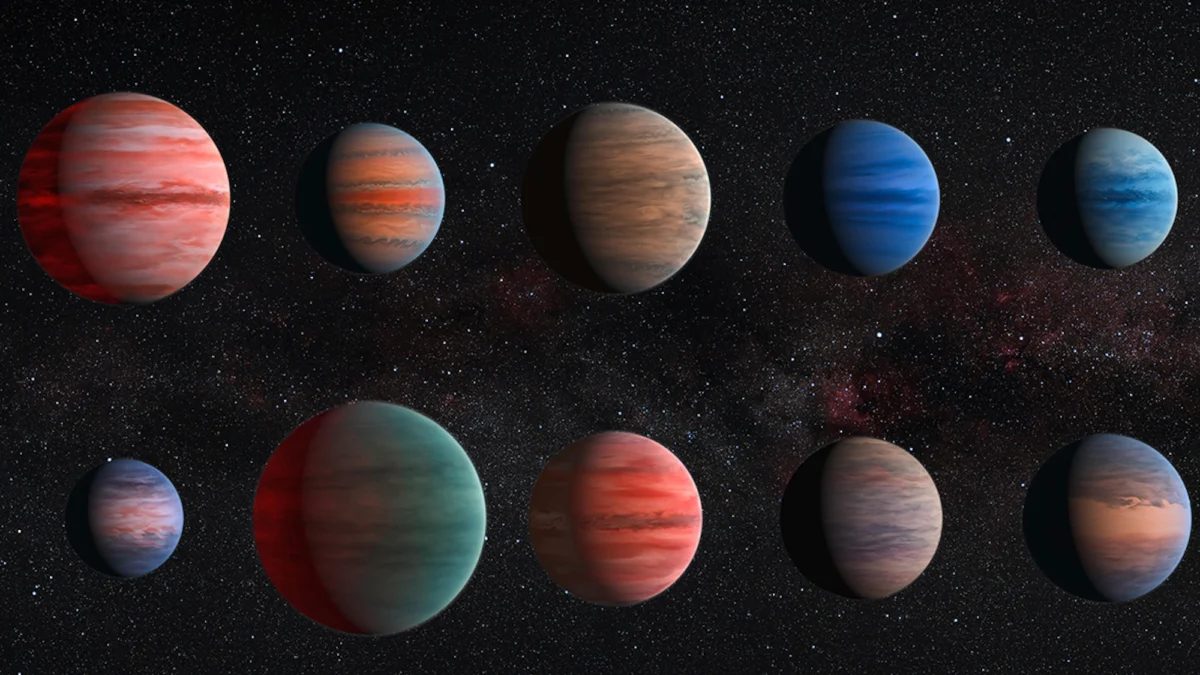
For decades, the field of exoplanetary science has operated under the assumption that planetary orbits are largely stable, predictable, and clockwork-like. This celestial mechanics paradigm, however, has been challenged by the discovery of TOI-2535 b, a "hot Jupiter" located approximately 1,000 light-years from Earth. New research published in the Astrophysical Journal Letters reveals that this massive gas giant is being subjected to intense gravitational perturbations from an unseen, closely orbiting neighbor, causing its orbital plane to tilt so dramatically that it has effectively disappeared from the line of sight of Earth-based telescopes.
The Mechanics of a Disappearing Act
The phenomenon observed in the TOI-2535 system is fundamentally a matter of orbital inclination. Astronomers identify exoplanets primarily through the "transit method," where a planet passes directly between its host star and the observer, causing a measurable dip in the star’s brightness. For this to happen, the planet’s orbital plane must be perfectly aligned with our perspective from Earth.
TOI-2535 b, which circles its host star in a rapid 8.25-day orbit—far tighter than Mercury’s 88-day trek around our Sun—was initially detected by NASA’s Transiting Exoplanet Survey Satellite (TESS) in April 2019. Over the subsequent seven years of monitoring, however, the regularity of these transits began to degrade. Researchers noted that the timing of the transits fluctuated by as much as six hours. Eventually, the transits became shallower and shorter, culminating in the planet’s total disappearance from view in March of this year.
Samuel Yee, an astronomer at the University of California, Los Angeles (UCLA) and lead co-author of the study, notes that this is not an evaporation event. The planet has not been destroyed; rather, its orbit has been pushed out of the alignment required for a transit. "We think of the universe as resembling clockwork, where everything is regular, but that’s not true," Yee explained. "If there are multiple planets in a system, they can affect each other’s orbits."
Gravitational Dynamics and the N-Body Problem
The culprit behind this orbital decay is believed to be a second, massive gas giant locked in a high-inclination orbit with TOI-2535 b. In astrophysics, this interaction is a classic demonstration of the "N-body problem," where the gravitational influence of multiple large objects creates complex, non-linear orbital dynamics.
The interaction between these two giants is similar to the dynamics governing the Earth-Moon-Sun system, though on a much more violent scale. Erik Petigura, a UCLA astrophysicist and co-author of the research, highlights that the moon’s own orbit is tilted relative to the Earth’s path around the sun. This tilt is the reason lunar and solar eclipses do not occur every month. "If the moon’s orbit around the Earth was perfectly aligned with the Earth’s orbit around the sun, we would see an eclipse every month," Petigura stated.
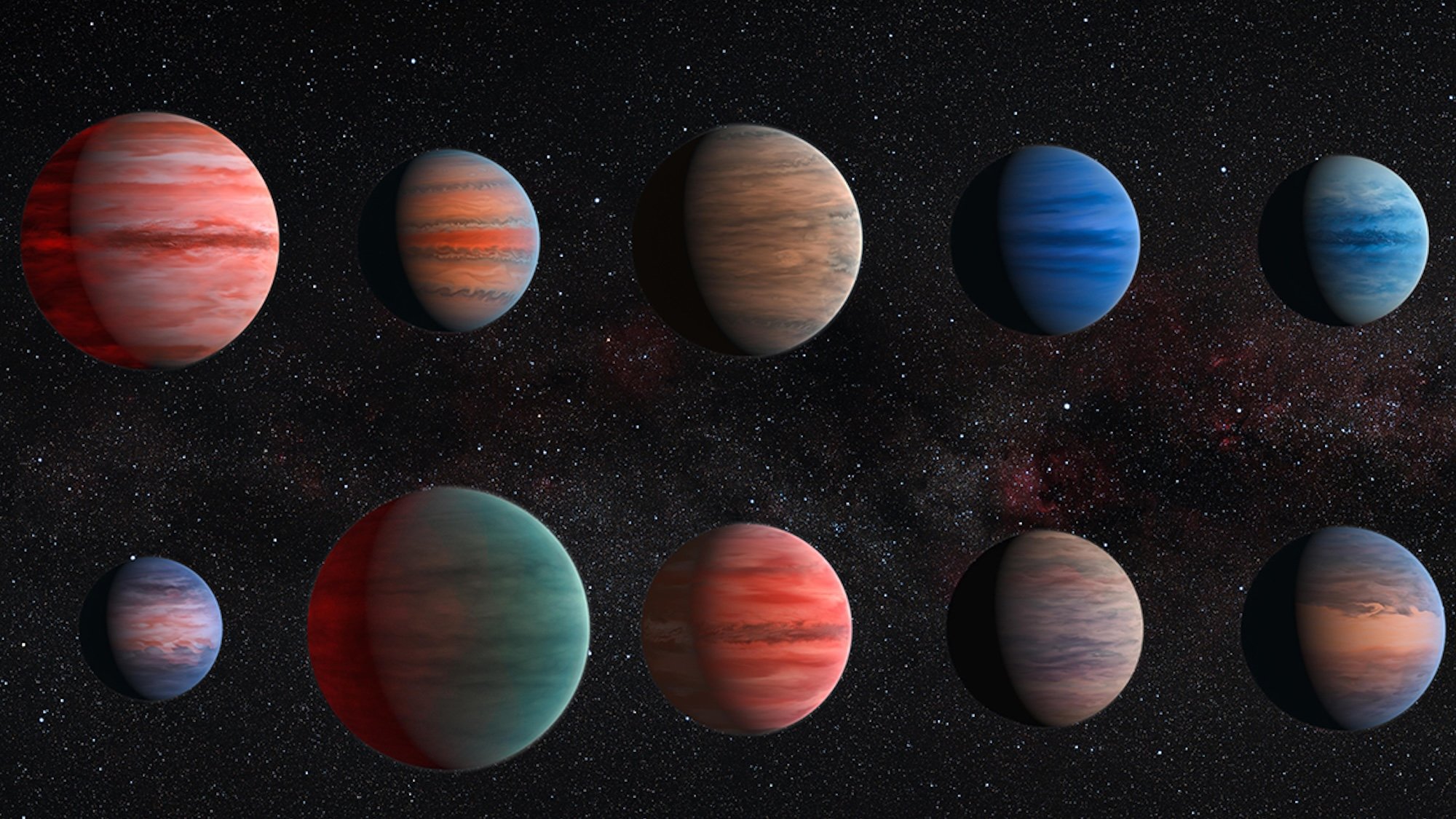
In the case of TOI-2535 b, the neighbor planet is exerting a "nodal precession"—a continuous, rapid change in the orientation of the orbital plane. The force is so significant that the transit geometry has shifted entirely, moving the planet out of the path that would allow it to block any portion of its star’s light from our vantage point.
Chronology of Discovery
The tracking of TOI-2535 b provides a rare look at the rapid evolution of planetary systems:
- April 2019: TESS commences observations of the TOI-2535 system. TOI-2535 b is identified via the transit method, showing consistent and predictable dips in stellar light.
- 2020–2024: Continued monitoring reveals "Transit Timing Variations" (TTVs). The transits begin to arrive earlier or later than expected, signaling external gravitational interference.
- Late 2024: Data indicates that the transit duration is shortening and the depth is becoming increasingly shallow, suggesting the planet is beginning to "graze" the edge of the star rather than crossing the center.
- March 2026: The transit ceases entirely. TESS observations confirm the planet is no longer crossing the stellar disk.
- Late 2026: The study is published, confirming the existence of a secondary companion driving the tilt.
Broader Implications for Exoplanetary Science
The discovery of this "wobbling" planet forces a re-evaluation of how astronomers interpret "null" data in exoplanetary surveys. If a planet can simply tilt out of view in a matter of years, it is highly probable that many other systems labeled as "single-planet systems" are, in fact, much more crowded than they appear.
Furthermore, this event provides empirical evidence for the "migration" theories of hot Jupiters. Hot Jupiters are gas giants that exist much closer to their host stars than their formation models suggest is possible. One theory is that these planets are pushed into their tight orbits by the gravitational influence of other massive bodies within the system. The extreme tilt observed in TOI-2535 b supports the hypothesis that intense, multi-body interactions are responsible for the chaotic early lives of many exoplanetary systems.
Future Outlook and Observational Constraints
The research team estimates that the orbit of TOI-2535 b is currently undergoing a rapid shift. Based on current mathematical models, the planet will remain invisible to transit-based detection for the next 30 to 50 years. During this time, the planet will continue to circle its star, but it will do so at an angle that precludes a crossing of the stellar disk relative to Earth.
Astronomers remain optimistic that they may detect the secondary companion planet—the one causing the instability—sooner than that. As that planet continues its own orbit, it may eventually pass in front of the star, providing a new data point to confirm the mass and orbital characteristics of the hidden disturber.
This discovery serves as a reminder of the limitations of current observation technologies. While TESS has been revolutionary in finding thousands of worlds, the "transit method" is inherently biased toward systems that remain stable and aligned. The case of TOI-2535 b highlights the need for long-term, multi-generational monitoring of exoplanetary systems to fully map the complex, and sometimes chaotic, dance of planets orbiting distant stars. As the field moves toward more sophisticated instrumentation, such as the continued integration of the James Webb Space Telescope (JWST) and future direct-imaging missions, the ability to "see" these planets through means other than transit will be crucial to understanding the true diversity of planetary architecture in the galaxy.

