
The establishment of a permanent human presence on the lunar surface remains one of the most formidable logistical challenges in the history of aerospace engineering. As NASA’s Artemis program and international space agencies move toward sustained operations, the "tyranny of the rocket equation"—which dictates that every additional kilogram of mass requires exponentially more fuel—remains a primary constraint. To mitigate the prohibitive costs of transporting construction materials from Earth, a team of researchers at the University of Arkansas has developed a breakthrough method for manufacturing structural components directly from lunar regolith.
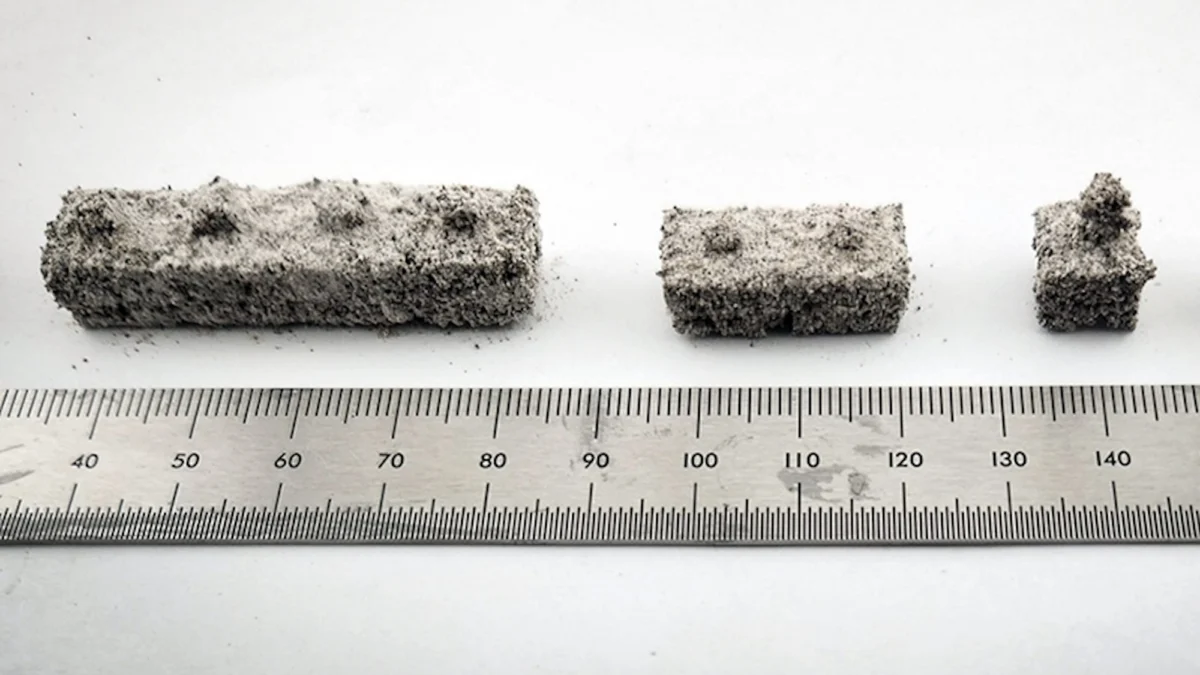
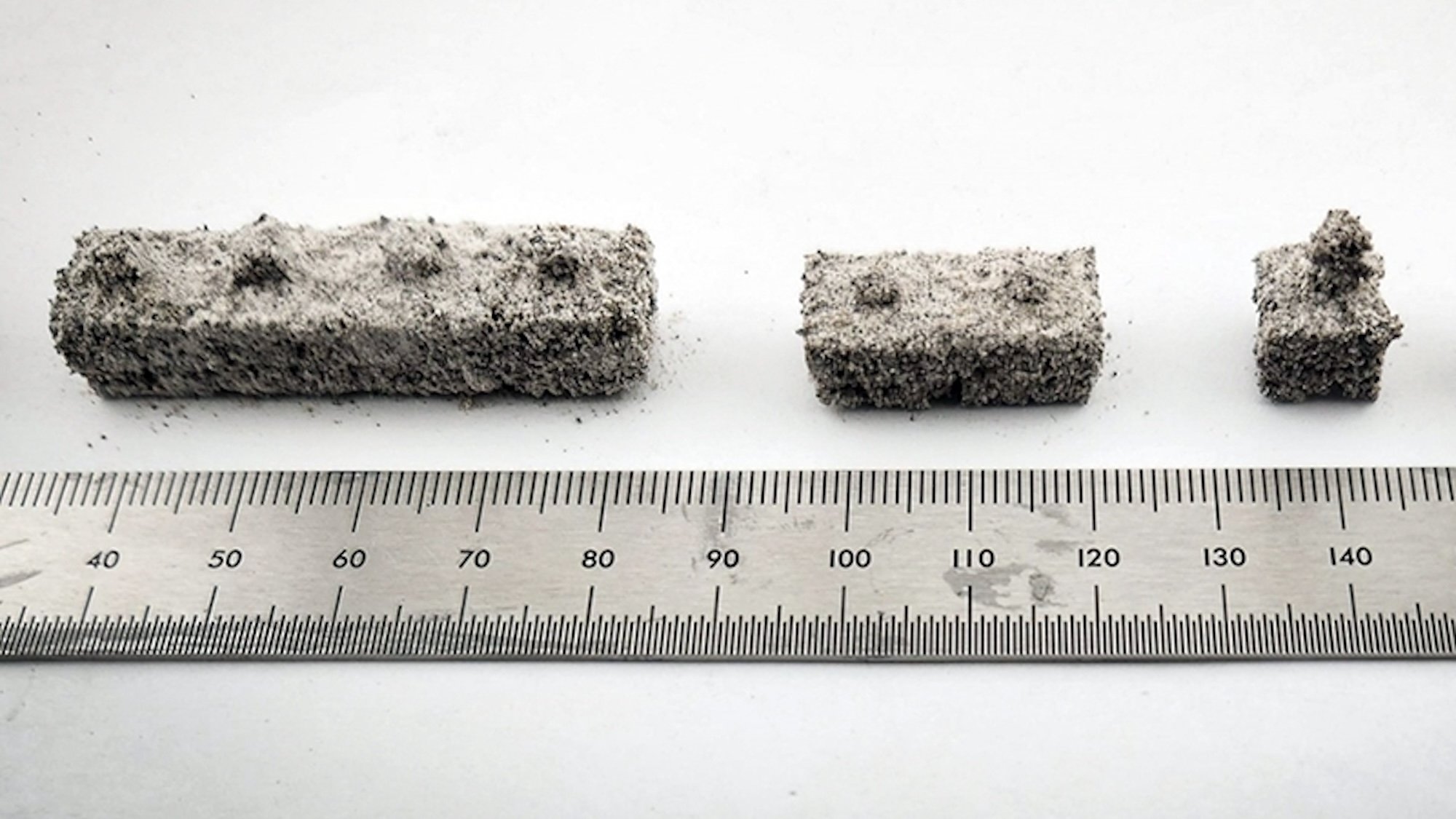
Mechanical engineer Wan Shou and undergraduate researcher Cole McCallum have successfully demonstrated a 3D printing technique capable of sintering lunar dust into interlocking, LEGO-like bricks without the need for external binding agents. Their research, recently published in the journal NPJ Advanced Manufacturing, offers a potential blueprint for how future lunar inhabitants might construct habitats, radiation shields, and landing pads using the very ground beneath their feet.
The Challenge of In-Situ Resource Utilization
Lunar regolith is a fine, abrasive powder generated by billions of years of meteoric bombardment. Unlike terrestrial soil, which is rich in organic matter and minerals that can be manipulated or cured into concrete, lunar dust is chemically inert and lacks the biological or aqueous components that typically facilitate binding. For decades, space agencies have explored In-Situ Resource Utilization (ISRU) to solve the supply chain crisis inherent in deep-space exploration.
Previous methods often required the importation of polymer resins or epoxy binders from Earth to stabilize regolith. However, these binders are heavy, expensive to launch, and susceptible to degradation under the harsh conditions of the lunar environment, including extreme temperature fluctuations ranging from -280 degrees Fahrenheit to 260 degrees Fahrenheit. The breakthrough achieved by the University of Arkansas team lies in the elimination of these imported additives, relying instead on a process known as laser powder bed fusion (LPBF).
Chronology of the Research
The development of these modular bricks followed a rigorous experimental timeline. The project began with the conceptualization of a closed-loop system where regolith is harvested, processed, and printed in a single cycle.
- Simulant Acquisition: Since genuine lunar material is strictly protected and limited, the team utilized Lunar Highlands Regolith Simulant (LHS-1). This material is scientifically engineered to mimic the mineralogical and physical properties of the samples retrieved during the Apollo missions.
- Design Iteration: The researchers opted for modular, interlocking geometries—specifically "cross" and "H" shapes—which facilitate stable, self-supporting masonry.
- The Sintering Process: Using high-powered lasers, the team applied thermal energy to the regolith powder bed. By carefully controlling the laser’s power density and scanning speed, they were able to induce a phase change that caused the microscopic grains of regolith to fuse together at the grain boundaries, creating a solid, cohesive structure.
- Testing and Validation: The team printed centimeter-scale prototypes to test the structural integrity and interlocking capabilities of the bricks. The resulting structures were subjected to mechanical stress tests to determine their load-bearing capacity.
Technical Analysis and Supporting Data
The laser powder bed fusion process employed by Shou and McCallum functions by precisely melting the regolith into a dense matrix. During the sintering phase, the laser heat causes the particles to bind through a process of partial melting and diffusion.
The resulting material is inherently porous. According to the team’s findings, while these bricks are sufficient for self-supporting structures, they currently lack the compressive strength required for heavy-duty load-bearing applications, such as the foundation of a pressurized habitat. However, the density achieved in this study represents a significant leap forward. Data from the research indicates that the bricks possess enough durability to withstand the vacuum of space, although further testing is required to determine their performance under the abrasive, electrostatic-rich environment of the Moon’s South Pole.
Implications for Lunar Architecture
The ability to manufacture infrastructure on-site is a cornerstone of the lunar economy. If successful, this technology could reduce the mass of cargo transported to the Moon by up to 90% for base-building missions. Instead of shipping steel beams or cement, missions could ship only the 3D-printing equipment and the necessary laser arrays.
"There’s nothing else it’s binding to. The regolith powder is binding to itself," noted Cole McCallum during a university press briefing. This autonomy is critical. A lunar base must be capable of expanding without constant resupply missions from Earth. By using regolith, the researchers are effectively turning the lunar surface into a raw material depot.
The interlocking design of the bricks provides a significant advantage for automated construction. Robotic swarms could potentially be programmed to "lay" these bricks in a modular fashion, creating igloo-like domes or long, protective walls to shield equipment from micrometeoroids and solar particle events—two of the most significant threats to lunar equipment and personnel.
Critical Caveats and Future Directions
Despite the promise of this technology, the research team remains cautious. The current prototypes are small and manufactured in an Earth-based laboratory setting. Moving the process to the Moon introduces several "unknowns":
- Vacuum Effects: The absence of an atmosphere on the Moon alters heat transfer and material cooling rates, which could lead to cracking or structural inconsistencies in the bricks.
- Microgravity: While gravity is lower on the Moon (one-sixth of Earth’s), the behavior of loose powder in a non-terrestrial environment during the 3D printing process needs to be validated in a microgravity laboratory or during a lunar pilot mission.
- Thermal Cycling: The Moon’s two-week-long day-night cycle creates extreme thermal expansion and contraction. Further material science studies are needed to determine if these sintered bricks can survive thousands of such cycles without losing structural integrity.
"These structures we’re making can be self-supported," McCallum added. "But I would be hesitant to say our process could be used for something that’s supporting other loads at this moment yet."
Broader Impact on Space Exploration
The collaboration between Wan Shou and Cole McCallum highlights the growing role of university-led research in the modern space race. As private aerospace companies and government agencies like NASA, ESA, and JAXA accelerate their lunar ambitions, the demand for innovative, lightweight, and sustainable construction solutions will only grow.
The University of Arkansas study serves as a proof-of-concept for a future where lunar colonies are not merely temporary outposts, but permanent, expandable settlements. By mastering the art of printing with moon dust, engineers are moving closer to the reality of a "lunar industry," where the Moon acts as a gateway to deeper exploration of the solar system.
As mission planners look toward the 2030s and beyond, the integration of 3D printing, autonomous robotics, and local resource processing will likely be the standard operating procedure. While the path from a centimeter-scale prototype in a lab to a full-scale lunar habitat remains steep, the success of the U of A team provides a critical foundation for the next chapter of human history in space. The ability to build, brick by brick, with the very material of the Moon ensures that humanity’s footprint on our celestial neighbor will be as permanent as the regolith itself.

