
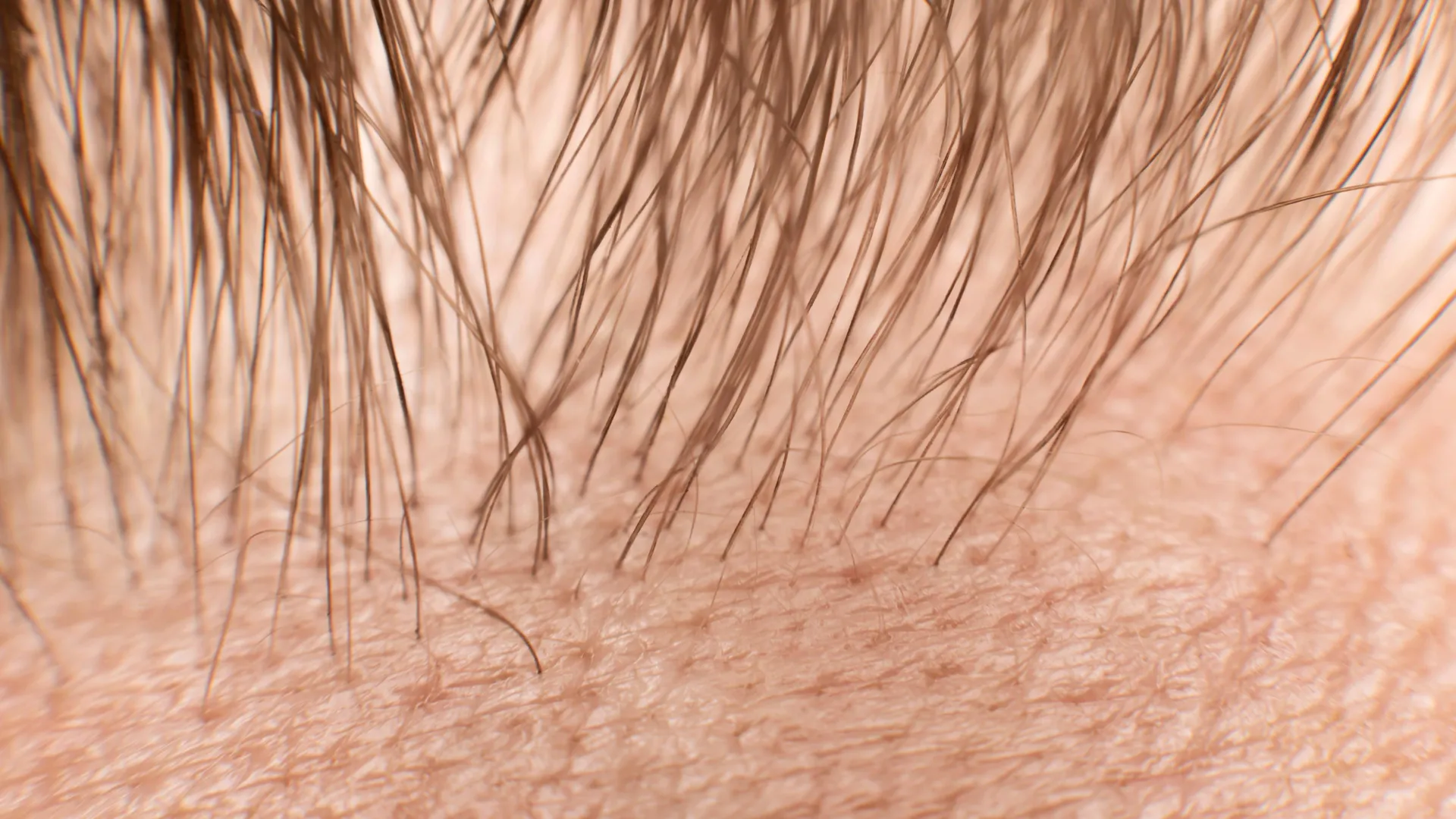
Long before a mammal is born, its skin begins establishing the precise locations where hair will eventually grow, forming intricate geometric arrangements that vary significantly between species. For decades, the biological mechanisms driving this process—the transition from a featureless expanse of embryonic tissue to a highly ordered grid of follicles—have remained a subject of intense scientific inquiry. Now, a study conducted by researchers at the University of Geneva (UNIGE) and published in the journal PNAS suggests that the complexity of these patterns may be the result of a surprisingly simple, universal mechanism rather than a rigid, pre-programmed genetic blueprint.
The research, led by Athanasia Tzika and Michel Milinkovitch of the UNIGE Department of Genetics and Evolution, pivots away from the traditional "expansion-induction" model that has dominated the field since the late 20th century. By utilizing advanced mathematical modeling and live-cell simulation, the team demonstrated that the spontaneous movement of cells toward chemical gradients—a process known as chemotaxis—is sufficient to generate the diverse follicle architectures observed across mammalian species.
The Historical Framework: The Expansion-Induction Model
To understand the significance of this discovery, it is necessary to examine the prevailing theory that has guided developmental biology for the last forty years. The expansion-induction model was developed primarily through the study of Mus musculus, the common laboratory mouse. This theory posits that the skin acts as a reactive landscape where individual placodes—the embryonic precursors to hair follicles—act as centers of inhibition.
According to this framework, as soon as a placode forms, it secretes a chemical signal that suppresses the development of neighboring placodes within a specific radius. As the embryo matures, the skin grows and stretches. This physical expansion creates new, empty space that is eventually pulled out of the reach of the inhibitory chemical signal. Once a region is "freed" from this suppression, a new placode emerges, and the cycle repeats. While this model successfully explains the hexagonal spacing observed in many mammals, it has struggled to account for the highly directional and varied patterns found in species with specialized fur, such as the spiny mouse (Acomys dimidiatus).
A Shift Toward Chemotaxis
The UNIGE research team hypothesized that the expansion-induction model might be an oversimplification of a more dynamic process. Their work focused on chemotaxis, a biological behavior wherein cells migrate along a gradient of chemical concentrations. This mechanism is well-documented in immunology, where white blood cells "smell" the chemical signatures of pathogens or inflammation to home in on a site of injury.
"We wanted to see if the same principles that allow immune cells to navigate the body could be responsible for the sophisticated architecture of the skin," explained Muhamet Ibrahimi, a researcher on the project.
By creating a computational simulation, the team modeled the interaction between mobile cells in the dermis and a signal-emitting epidermis. Unlike the traditional model, which relies on "stop" signals, the chemotaxis model relies on "go" signals—the active recruitment of cells to specific locations. When the researchers ran their simulations, they discovered that the system naturally settled into the same hexagonal patterns observed in laboratory mice. This confirmed that the observed biological outcome could be achieved without a complex, high-level "master program" dictating the location of every individual follicle.
Challenging the Paradigm: The Spiny Mouse Case Study
The most compelling evidence for this new mechanism arose when the team applied their model to the spiny mouse. Unlike the standard lab mouse, the spiny mouse exhibits a highly organized, linear, and directional arrangement of follicles. The traditional expansion-induction model cannot easily replicate this, as it is designed to produce uniform, isotropic spacing rather than directional grids.
By adjusting the parameters of their simulation—specifically the chemical properties and the rate of skin growth—the researchers successfully recreated the spiny mouse’s unique pattern. This indicates that the fundamental "rules" of skin development are consistent across species. The dramatic differences in fur architecture are not the result of fundamentally different biological mechanisms, but rather variations in the parameters of the same basic cellular movement process.
"The diversity of mammalian coat patterns can be explained by tweaking a single, shared system," noted Ebrahim Jahanbakhsh. "Evolution does not need to reinvent the wheel for every species; it simply modulates the interactions between existing chemical and cellular variables."
Chronology of Scientific Discovery
The quest to map the morphogenesis of hair follicles has evolved significantly over the last century:
- 1950s–1970s: Initial focus on the "reaction-diffusion" models, suggesting that chemical patterns drive structure.
- 1980s–2000s: The expansion-induction model becomes the gold standard, heavily relying on inhibitory chemical signals to explain follicle spacing.
- 2010s: Emergence of high-resolution 3D imaging technology allows researchers to observe follicle development in unprecedented detail.
- 2024: The UNIGE team publishes their findings in PNAS, proposing that chemotaxis and active cellular movement offer a more robust explanation for species-specific patterns than simple inhibition.
Supporting Data and Implications
The UNIGE study relies on high-fidelity 3D imaging of embryonic skin, which provides a quantitative baseline for their simulations. By measuring the density of cells and the rate of epidermal growth, the team could set strict constraints on their model. The results showed a high degree of correlation between the simulated growth and the actual anatomical development of the test subjects.
The implications of this research extend far beyond hair growth. This study provides a template for understanding how other repeating structures—such as feathers in birds, scales in reptiles, and even internal tissue architecture in organs—might form. By demonstrating that complex morphology can emerge from simple, self-organizing rules, the study supports the growing scientific consensus that biological "self-organization" is a primary driver of phenotypic evolution.
Scientific Community Reaction and Future Research
While the study has been received with interest by the developmental biology community, experts note that the next step will be to validate the model in vivo. "The mathematical elegance of the model is compelling," said an independent developmental biologist not involved in the study. "However, the challenge will be identifying the exact chemical signals that drive this chemotaxis in the embryonic environment. We have the ‘how’—now we need the ‘what’."
The UNIGE team plans to focus their future efforts on identifying the specific signaling molecules responsible for this migration. By isolating these chemicals, they hope to confirm that blocking or enhancing these pathways can result in predictable changes to follicle patterns in laboratory settings.
Broader Impact: Evolution and Complexity
The findings provide a sobering reminder of the economy of nature. In the context of evolution, the ability to generate vast morphological diversity through a simple, tunable mechanism is a massive advantage. It allows species to adapt their physical characteristics—such as the thickness or orientation of fur for thermal regulation or camouflage—without requiring a massive, overhaul of the underlying genetic architecture.
As researchers continue to decode these biological algorithms, the line between "programmed" development and "emergent" self-organization continues to blur. The UNIGE team’s work suggests that we are looking at a fundamental law of morphogenesis: the body does not build itself piece by piece; it organizes itself through the local, simple, and constant interactions of its constituent parts. This shift in perspective could redefine how we approach not only evolutionary biology but also regenerative medicine, where the goal is to replicate these exact self-organizing processes to repair damaged tissue or grow new skin.
In summary, the transition from an embryonic cell layer to a mature, hair-covered organism is perhaps less like an architect following a blueprint and more like a fluid dynamic system reaching a state of equilibrium. As this study in PNAS concludes, the complexity of life is often built upon the most elegant of foundations.

