
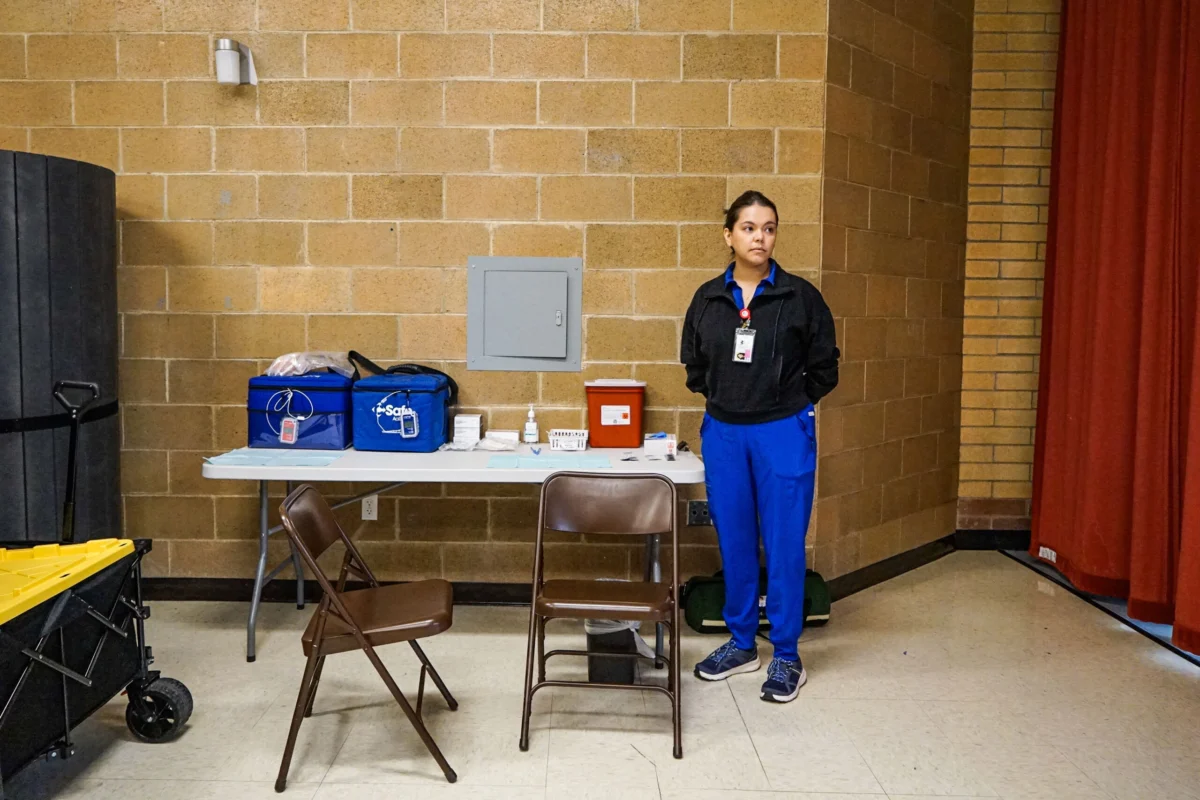
The United States has officially lost its status as a country where measles is eliminated, bringing an end to a major public health achievement secured a quarter-century ago. According to researchers with direct knowledge of the deliberations, the Pan American Health Organization (PAHO) concluded that measles has reestablished regular transmission within the country. In public health terms, measles elimination requires that sporadic outbreaks end within a single year—a threshold the U.S. is no longer meeting.
This milestone marks a profound regression for domestic public health. Epidemiologists and infectious disease specialists note that measles, an entirely preventable viral infection, carries significant risks of severe morbidity and mortality. The loss of elimination status reflects a combination of post-pandemic drops in childhood vaccination coverage, shifts in federal public health leadership, and the propagation of vaccine hesitancy by political figures.
Historical Context and the Path to Elimination
For decades, the federal government approached measles as a critical public health threat requiring aggressive, coordinated intervention. In the late 1980s and early 1990s, the U.S. experienced a massive surge in measles cases that overwhelmed pediatric wards and resulted in preventable deaths. That crisis prompted sweeping reforms, including the widespread adoption of the two-dose measles-mumps-rubella (MMR) vaccination protocol and the creation of federal initiatives like the Vaccines for Children program, which ensured that underinsured families had access to free immunizations.

These measures proved remarkably effective. By 2000, high population-wide immunity—often referred to as herd immunity, requiring at least 95% coverage within a community—effectively stopped endemic transmission. For the next 14 years, occasional imported cases from abroad were rapidly contained, failing to take root in the highly vaccinated population.
However, vulnerabilities began to accumulate. Even prior to the COVID-19 pandemic, localized outbreaks occurred, such as the 2014 outbreak originating at California theme parks and a large 2019 surge concentrated in Orthodox Jewish communities in New York and New Jersey. During those episodes, bipartisan coalitions in Congress, federal health agencies, and public health officials mounted aggressive campaigns to reinforce the importance of timely vaccination, utilize data-driven MMWR (Morbidity and Mortality Weekly Report) publications, and counter misinformation.
Shifting Federal Leadership and Vaccination Disruption
The landscape of federal vaccine policy shifted significantly following the inauguration of the Trump administration in 2025 and the appointment of Health and Human Services (HHS) Secretary Robert F. Kennedy Jr., a prominent and long-standing critic of vaccines.
Public health experts and internal agency whistleblowers have raised concerns regarding the administration’s approach to vaccine communication and agency management. Critics point to reductions in funding for state-level childhood immunization programs, the termination of grants dedicated to studying vaccine hesitancy, and the replacement of veteran vaccine experts on CDC advisory panels with fringe researchers holding anti-vaccine views.
Furthermore, high-profile departures from federal health agencies underscored internal friction. Susan Monarez, former director of the CDC, testified before Congress that she was dismissed after declining to preapprove modifications to vaccine recommendations without evidentiary review. Concurrently, internal CDC scientists reported that political appointees delayed or blocked the publication of vital epidemiological reports in the MMWR, including studies detailing the clinical severity of recent outbreaks and the efficacy of vaccines.
Federal officials have defended the administration’s record. HHS spokespeople asserted that the resurgence of measles stems primarily from pre-existing vaccination gaps that widened during the pandemic years. Representatives for the White House and HHS emphasized that the administration has provided additional funding to assist state responses and that leadership has periodically encouraged vaccination when directly pressed. Nevertheless, critics argue that mixed messaging from top officials—including public statements questioning the safety and necessity of standard childhood immunizations—has severely undermined public trust.
Epidemiological Toll and Economic Impact
The consequences of declining immunization rates and institutional friction have manifested in a wave of outbreaks across multiple states, including Texas, Utah, South Carolina, and Pennsylvania.
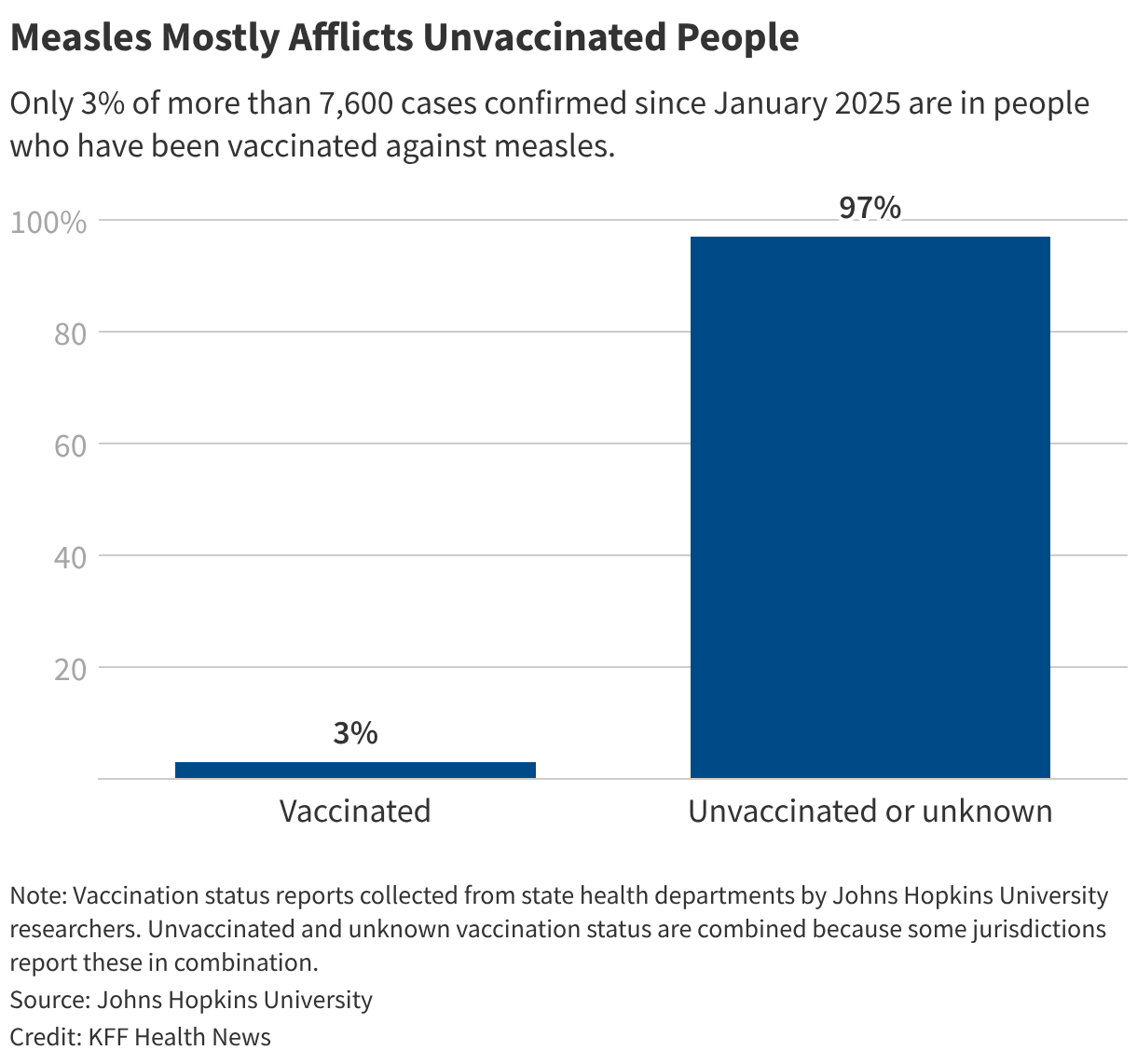
Data compiled by public health researchers and academic institutions illustrate the scale of the crisis:
- Over 8,000 individuals have been infected in recent outbreaks, generating an estimated $125 million in medical care costs, public health response expenditures, and productivity losses.
- More than 830 people have required hospitalization due to severe complications, which include pneumonia, high fevers, progressive degenerative nerve disease, and potentially fatal brain swelling.
- States have reported 13 measles-associated deaths, including infants too young to receive the MMR vaccine, which is typically administered after a child turns one year old.
The MMR vaccine is exceptionally effective, providing roughly 97% protection against infection upon completion of the two-dose series. When community coverage dips below the necessary threshold, the virus exploits those gaps rapidly, creating a compounding cycle of infection.
Path Forward and Implications for Public Health
Reversing the loss of elimination status will present a formidable challenge for public health infrastructure. According to federal and international microbiologists and epidemiologists, regaining elimination requires that current outbreaks be brought to a complete halt and that subsequent imported cases fail to establish transmission chains lasting longer than one year.
With active outbreaks continuing to expand across various jurisdictions, experts warn that the trajectory will not reverse without a unified, evidence-based national campaign to restore vaccination rates. Rebuilding public confidence, supporting state and local health departments, and ensuring the unhindered dissemination of transparent scientific data through official channels remain critical prerequisites for restoring the nation’s baseline of protection against vaccine-preventable diseases.

