
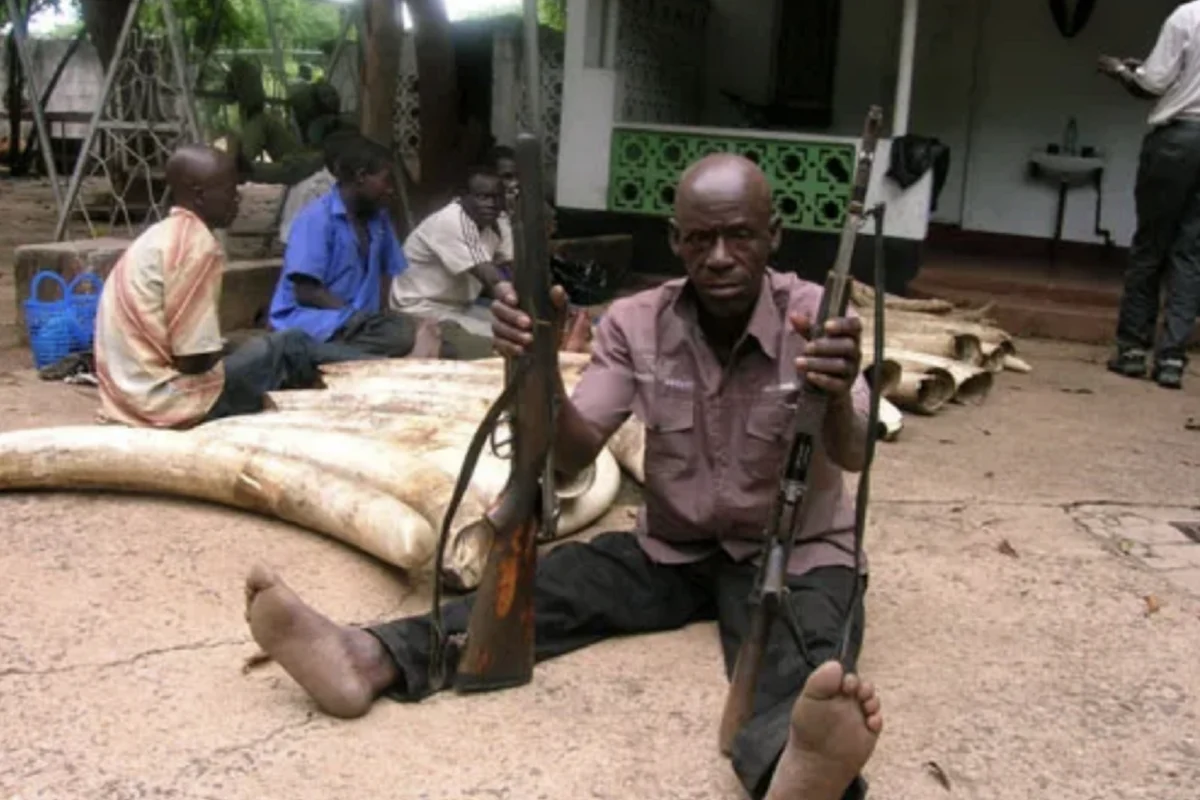
A man sits behind the iron bars of a Zambian prison, reflecting on the chain of events that led to his incarceration. His story is not one of a hardened criminal mastermind, but of a man driven by basic human anxieties: the desire to build a stable home for his family and the necessity of paying school fees for his children. Lured by the promise of a lucrative payout for ivory and pangolin scales, he accepted a phone and a contact number from an intermediary. He was a small cog in a massive, lethal machine, ultimately caught and sentenced for an elephant-related offense. His narrative serves as a poignant reminder that wildlife crime in Zambia is not merely an environmental crisis; it is a complex, multifaceted socio-economic phenomenon fueled by poverty, limited opportunity, and the strategic exploitation of the vulnerable by international syndicates.
To address the root causes of this crisis, the NGO Wildlife Crime Prevention (WCP) Zambia, in collaboration with researchers from Copperbelt University, recently conducted an extensive study. By interviewing more than 300 inmates incarcerated for wildlife-related offenses across 32 correctional facilities, the team sought to look past the arrests and understand the "why" behind the crime. The findings, published in the International Journal of Law, Crime and Justice, provide a sobering look at how grassroots offenders are recruited into a global industry that thrives on the exploitation of protected species.

The Anatomy of a Global Syndicate
Wildlife crime operates on a tiered structure. At the apex are the international kingpins who manage massive, high-profit syndicates, moving contraband across borders with military-grade precision. Below them are the mid-level middlemen who manage logistics and recruitment, and at the bottom—the most visible and easily prosecuted—are the local hunters and gatherers.
Zambia’s geography makes it a critical theater for this conflict. Sharing borders with eight other nations, the country functions as both a source for wildlife products and a vital transit corridor for illegal contraband. This geographical reality, combined with a lack of robust economic safety nets, creates an environment where poaching is often viewed as a viable, albeit illegal, livelihood.
According to the study, roughly 7% of Zambia’s total prison population is currently incarcerated for wildlife-related crimes. These offenses carry significant weight; depending on the species involved, a conviction can lead to a prison term ranging from three years for a first-time hunting infraction in a protected area to more than 20 years for serious crimes involving elephant ivory or rhino horn.

Surveying the Inmate Population: A Demographic Snapshot
The research team’s methodology was designed to extract qualitative insights from quantitative data. By asking 302 inmates to describe their personal histories and the circumstances leading to their arrest, the researchers uncovered a recurring pattern.
Demographically, the study revealed that approximately 50% of respondents were over the age of 41, with an overwhelming 97% of the cohort being male. A significant majority were first-time offenders in the eyes of the law, yet one-third of the participants admitted to having been involved in wildlife crime previously without being caught. The offenses were diverse, ranging from small-scale bushmeat hunting—often for subsistence—to the high-stakes poaching of pangolins and elephants.
The data highlighted a stark reality: 40% of the respondents cited "opportunity" as the primary driver for their involvement, while 16% pointed to immediate, existential needs such as medical emergencies or food insecurity. One inmate, who had been traveling to sell tomatoes, described how he stumbled upon a pangolin and, having heard of the high market value of its scales, seized the chance to potentially build a house for his family. This reflects a broader trend where subsistence farmers, faced with unpredictable agricultural yields and no access to formal credit, turn to the illicit wildlife trade as a desperate financial alternative.

The Failure of the Traditional Punitive Model
The study’s authors, including lead researcher Emma Richards, argue that the current approach to wildlife crime—which focuses heavily on incarceration—fails to account for the reality of post-release life. While the Zambia Correctional Service (ZCS) maintains the facilities where these inmates serve their time, the researchers suggest that prison, in its current form, does little to disrupt the cycle of recidivism.
"You can have somebody doing a carpentry project in prison, but if they get out and they have no access to carpentry tools, what have you really achieved?" Richards asked. The transition from prison back to a community that lacks economic infrastructure is fraught with risk. With no formal banking, no social safety net, and limited employment opportunities, former offenders often find themselves in the exact same position they were in before their arrest: vulnerable and lacking a legal way to sustain their families.
Only about a third of the interviewed inmates expressed a clear desire to abandon the wildlife trade upon release. A small percentage (5%) openly admitted they were worried about being drawn back into the trade, or even planned to continue. Others expressed a fundamental disconnect from the law, with some dismissing poaching as "fake" or suggesting that they would simply seek legal loopholes—such as obtaining licenses for family members to trade in bushmeat—to continue their activities.

Gender, Stigma, and Societal Dynamics
The study also touched upon the social dimensions of wildlife crime, though researchers noted that the gender component remains an "under-tapped topic." While the vast majority of the participants were men, the nine women interviewed expressed greater anxiety regarding the stigma they would face upon returning to their communities. Conversely, 80% of the men reported little to no fear regarding social rejection.
Meredith Gore, an environmental crime researcher at the University of Maryland, emphasizes that this lack of social stigma for men could be a significant factor in recidivism. If the community does not view wildlife crime as a moral failing, the deterrent effect of imprisonment is severely diminished. Gore suggests that the standard criminological models used in Western societies—which rely heavily on social shame as a deterrent—may not be applicable to the realities of rural Zambia.
Towards a New Strategy: Beyond Incarceration
The WCP Zambia pilot project, which focuses on pre-release family connection and reintegration support, represents a departure from purely punitive measures. By helping inmates reconnect with their families and providing practical resources—such as farming equipment or start-up capital for small-scale commerce—the initiative attempts to address the "post-release reality."

The implications of this research are profound. If the goal is to protect endangered species like elephants and pangolins, conservationists must accept that they are also fighting a battle against extreme poverty. As the study concludes, the individuals involved are not necessarily "evil people" who derive pleasure from killing; they are individuals navigating a landscape of limited choice.
The research raises critical questions about the efficacy of current law enforcement strategies. If catching the "lower-level links" in the chain is easy but ultimately ineffective at stopping the syndicates—because these individuals are so easily replaced—then resources might be better directed toward community-based economic development.
Conclusion: A Human-Centric Approach
As Zambia continues to struggle with the dual challenges of wildlife preservation and rural economic development, this study serves as a foundational document for policy shifts. It emphasizes that while law enforcement remains a necessary component of the anti-poaching effort, it is insufficient on its own.

The researchers hope that by framing wildlife crime through the lens of human experience rather than just criminal statistics, they can encourage a more compassionate and effective policy response. The transition from a poacher to a productive, law-abiding citizen is not a simple task; it requires a coordinated effort to provide viable alternatives that address the urgent, daily needs of the Zambian people. Until those needs are met, the cycle of poverty and poaching will likely continue, leaving both the wildlife and the human participants trapped in a system that offers little hope for a sustainable future.
The findings of this report invite policymakers, NGOs, and the international community to move beyond the traditional "ivory tower" conservationist perspective. Instead, they call for a holistic approach that recognizes the dignity of the local population and invests in the human infrastructure necessary to make wildlife preservation a community-supported endeavor rather than a state-imposed burden. Only by understanding the motivations of the individual can we hope to dismantle the syndicates that profit from their desperation.

