
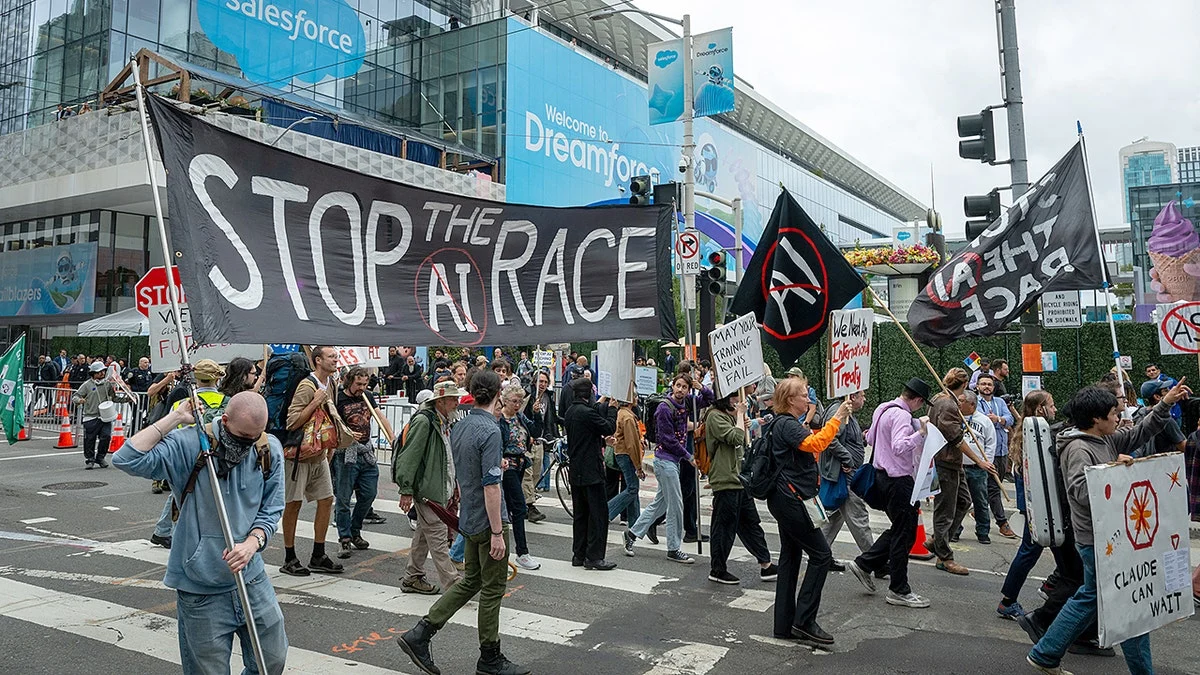
The rapid integration of artificial intelligence into the fabric of American daily life has collided with the physical realities of the digital age, creating a significant political friction point as the 2026 midterm elections approach. A recent Fox News national survey underscores a deepening paradox in public sentiment: while voters are increasingly skeptical of AI’s broader societal impact, they are becoming even more resistant to the physical infrastructure required to sustain it. The emergence of a "Not In My Backyard" (NIMBY) sentiment regarding AI data centers has transformed what was once a technical or environmental issue into a potent campaign topic that threatens to reshape voter coalitions.
Data centers are the industrial backbone of the artificial intelligence revolution. These massive facilities, housing thousands of high-performance servers, require immense amounts of electricity and water for cooling. As AI models scale in complexity, the demand for these "server farms" has skyrocketed. However, as the latest polling data indicates, 71% of American voters now oppose the construction of such facilities within their own communities. This opposition is not merely theoretical; 46% of those polled expressed "strong" opposition, a figure that has climbed steadily throughout the summer months of 2026.
The Geography of Opposition and the NIMBY Dynamic
The survey highlights a distinct divide in how voters perceive the necessity of these facilities. While there is broad consensus against local development—spanning urban, suburban, and rural demographics—the narrative shifts when the location is moved to remote areas. A 52% majority of respondents indicated they would favor the construction of data centers if they were situated in isolated, remote regions, compared to 44% who remained opposed regardless of location.
This "remote-acceptance" dynamic is not uniform across all demographics. Urban and suburban voters appear more willing to outsource the infrastructure to the periphery, with 50% and 57% respectively favoring remote siting. In contrast, rural voters remain skeptical, with 51% expressing opposition to data center development even in remote areas, likely reflecting concerns over the rural landscape’s preservation and the potential for industrial encroachment on agricultural land.
Demographically, the data reveals that women, White voters without a college degree, and those identifying as Democrats are consistently more likely to oppose these developments. This stands in contrast to male voters, nonwhite demographics, and college-educated professionals, who tend to exhibit higher levels of support or indifference toward the physical expansion of AI infrastructure.
The Economic and Environmental Trade-offs
The opposition is deeply rooted in tangible concerns regarding local resources. When voters are presented with the specific externalities of data center operations, support for new construction drops precipitously. The potential for these facilities to strain local water supplies—a critical issue in drought-prone states—is cited as a primary concern. Additionally, voters expressed significant anxiety over the potential for increased electricity costs and the aesthetic impact of massive, sprawling infrastructure projects.
Conversely, the data suggests that public opinion is malleable when the narrative shifts toward national necessity. When respondents are reminded of the vital role these centers play in maintaining digital infrastructure, such as banking systems, high-speed streaming, and critical utilities, support levels rise. Furthermore, framing the development of AI infrastructure as a national security imperative—specifically in the context of maintaining a technological lead over global competitors like China—increases support by approximately 18 points. This suggests that while local environmental and economic concerns drive current opposition, a national-interest argument remains a potent counter-narrative for proponents of the industry.
The Political Landscape: A New Wedge Issue
The political implications of this sentiment are becoming increasingly clear. In the current generic congressional ballot, Democratic candidates hold a 7-point lead overall. However, the data center issue acts as a filter for voter preference. Supporters of local data center construction are significantly more likely to favor Republican candidates (a 21-point advantage). Conversely, the Democratic coalition is bolstered by those who oppose the encroachment of these facilities, with Democrats holding a 19-point lead among voters who want to see these centers barred from both local and remote areas.
"In this election, the bottom line is that technology is no longer just a tool; it’s a wedge issue," notes Republican pollster Daron Shaw. "As infrastructure demands force AI into the physical world, campaigns that map tech anxiety onto their voter coalitions will shape the midterm narrative."
The political divide is further reflected in which party voters trust to manage the growth of AI infrastructure. Voters view the Democratic Party as better equipped to handle the oversight of these projects by a 14-point margin. This trust advantage is particularly pronounced among Black voters, younger demographics, and Hispanic voters. Interestingly, the political lines are not entirely rigid; 15% of Republican-leaning voters indicated a preference for the Democratic approach to data centers, suggesting that the issue has the potential to cause internal party friction.
Broader Societal Pessimism Regarding AI
The resistance to data centers occurs against a backdrop of widespread AI skepticism. The Fox News survey shows that the perception of AI’s impact on American society has soured significantly. A majority of voters now view AI as detrimental to the U.S. economy (54% bad vs. 36% good), mental health (54-34%), and the environment (60-30%). The most acute concern lies in the labor market, with 63% of voters fearing that AI will be a net negative for jobs.
The sole area of relative stability is the perceived benefit of AI to day-to-day life. Even here, however, the margin of approval has thinned. In November 2025, there was an 11-point positive spread regarding AI’s impact on daily life; by September 2026, that spread had narrowed to a mere 4 points. This overall decline in favorability—now at a 23-point deficit—suggests that the initial wave of "AI optimism" that characterized the early 2020s has been replaced by a more cautious, if not adversarial, public stance.
Emerging Regulatory Demands
Beyond the physical footprint of data centers, the survey highlights a public desire for stricter regulation of AI technology in specific sectors, particularly education and public safety. There is a robust consensus (76%) in favor of banning the use of AI in kindergarten through eighth-grade classrooms, with particularly high levels of support among mothers (81%). Similarly, there is strong public backing for policies prohibiting the use of cellphones in K-12 settings, reflecting a broader societal movement to limit the influence of digital technology on early child development.
In the realm of public safety, 57% of voters support a prohibition on the use of automated license plate readers by police departments. This issue reveals a rare alignment between disparate political groups, with Democrats, independents, and Republicans all expressing varying degrees of concern over the potential for surveillance overreach. Age acts as the primary divider here, with younger voters demonstrating a profound distrust of automated surveillance technology compared to older generations.
Chronology of Public Sentiment (2025–2026)
- November 2025: Initial public polling reflects a cautiously optimistic view of AI, with a net positive outlook regarding its impact on daily life (50% good vs. 39% bad).
- April 2026: AI favorability begins to decline, showing an 11-point deficit (unfavorable vs. favorable).
- July 2026: The deficit widens to 9 points as debates over the energy consumption of AI models reach mainstream media.
- September 2026: The Fox News survey confirms a significant hardening of public opinion, with a 23-point deficit in favorability and a majority of voters (71%) now opposing local data center construction.
Implications for Future Policy
The growing public mandate against the proliferation of unchecked AI infrastructure and surveillance technologies suggests that the 2026 midterms will be a litmus test for how political candidates address the "digital industrial complex." Candidates who fail to acknowledge the environmental and social anxieties of their constituents may find themselves at a disadvantage in an election cycle where technology is no longer an abstract concept but a visible, encroaching reality.
The legislative focus will likely shift toward finding a middle ground: promoting national technological competitiveness while instituting strict, localized oversight of infrastructure. Whether this can satisfy a electorate that is increasingly wary of the "black box" nature of AI development remains the defining challenge for policymakers in the coming year. As voters continue to reconcile the promise of rapid innovation with the potential for systemic disruption, the "Not In My Backyard" movement stands as a testament to the fact that the digital revolution will be negotiated on the ground, one community at a time.

