
Emma, a third-grader, stands on the edge of the playground, her face flushed with the raw, indignant tears of a child who feels the world has tilted off its axis. To an observer, the scene is mundane: she has been eliminated from a game of foursquare, a routine consequence of the rules. Yet, for Emma, the loss is not merely about a ball hitting the pavement; it is a manifestation of an internal sense of justice that has been sharpened by the precarious nature of her existence. While her teacher insists that the rules of the game are absolute and must be respected, both child and educator are acutely aware of a deeper, more harrowing contradiction: Emma’s family has spent years attempting to navigate the labyrinthine and ever-shifting rules of the U.S. immigration system, only to be met with the persistent, looming threat of deportation.
This intersection of classroom discipline and federal policy represents a growing crisis in American education. As political rhetoric intensifies, the protective barrier that schools have traditionally provided for children is being eroded by policies that treat students as legal subjects rather than developing individuals.
The Evolution of Immigration Enforcement and the Classroom
The tension between the sanctity of the classroom and the reach of federal immigration enforcement has deep roots in American jurisprudence. For decades, the 1982 Supreme Court ruling in Plyler v. Doe served as the bedrock for the inclusion of immigrant children in public schools. In that landmark case, the Court held that a Texas statute denying enrollment to undocumented children violated the Equal Protection Clause of the Fourteenth Amendment. The ruling established that public education is not a "right" granted to individuals by the Constitution, but that it is so fundamental to the maintenance of a democratic society that it cannot be denied to any child within a state’s borders.
However, recent legislative trends across several states suggest a concerted effort to challenge this precedent. Lawmakers in various jurisdictions have introduced proposals that would mandate schools to verify the citizenship status of their students, essentially forcing educators to function as an arm of immigration enforcement. These legislative maneuvers are often designed as "test cases," intended to trigger litigation that could eventually reach a conservative-leaning Supreme Court with the ultimate goal of overturning Plyler.
Chronology of Escalating Rhetoric
The shift in how immigrant children are perceived in the public square did not occur in a vacuum. It is the result of a decades-long strategic pivot in political messaging.
- 1982: The Supreme Court issues the Plyler v. Doe decision, guaranteeing public education to all children regardless of immigration status.
- 2010s: Immigration begins to be framed increasingly as a primary driver of domestic instability, with political campaigns linking unauthorized entry to inflation, strained social services, and middle-class economic anxiety.
- 2017–2021: The Trump administration implements a series of aggressive policies, including the "zero tolerance" family separation policy, which resulted in thousands of children being removed from their parents at the U.S.-Mexico border.
- 2023–2025: A new wave of state-level legislation emerges, targeting the right to public education and attempting to restrict access to government-funded services for non-citizen families.
This timeline illustrates a transition from viewing children as vulnerable populations to viewing them as political leverage. By framing immigrant children as "economic burdens" or "security threats," policymakers have successfully desensitized portions of the electorate to the psychological and developmental toll these policies take on youth.
Supporting Data and Educational Impact
The consequences of this environment are not merely anecdotal; they are documented in educational research and psychological studies. According to data from the Migration Policy Institute, there are roughly 5.5 million children in the United States living with at least one unauthorized immigrant parent. The vast majority of these children are U.S. citizens, yet they live in a state of perpetual "legal limbo."
Research from the American Psychological Association (APA) has consistently shown that children living in households with the threat of deportation experience higher levels of toxic stress. This stress manifests in the classroom as difficulty focusing, emotional outbursts, and, in some cases, declining enrollment or attendance. When a child fears that their parent may not be home when they return from school, the cognitive capacity required for learning is significantly diminished.
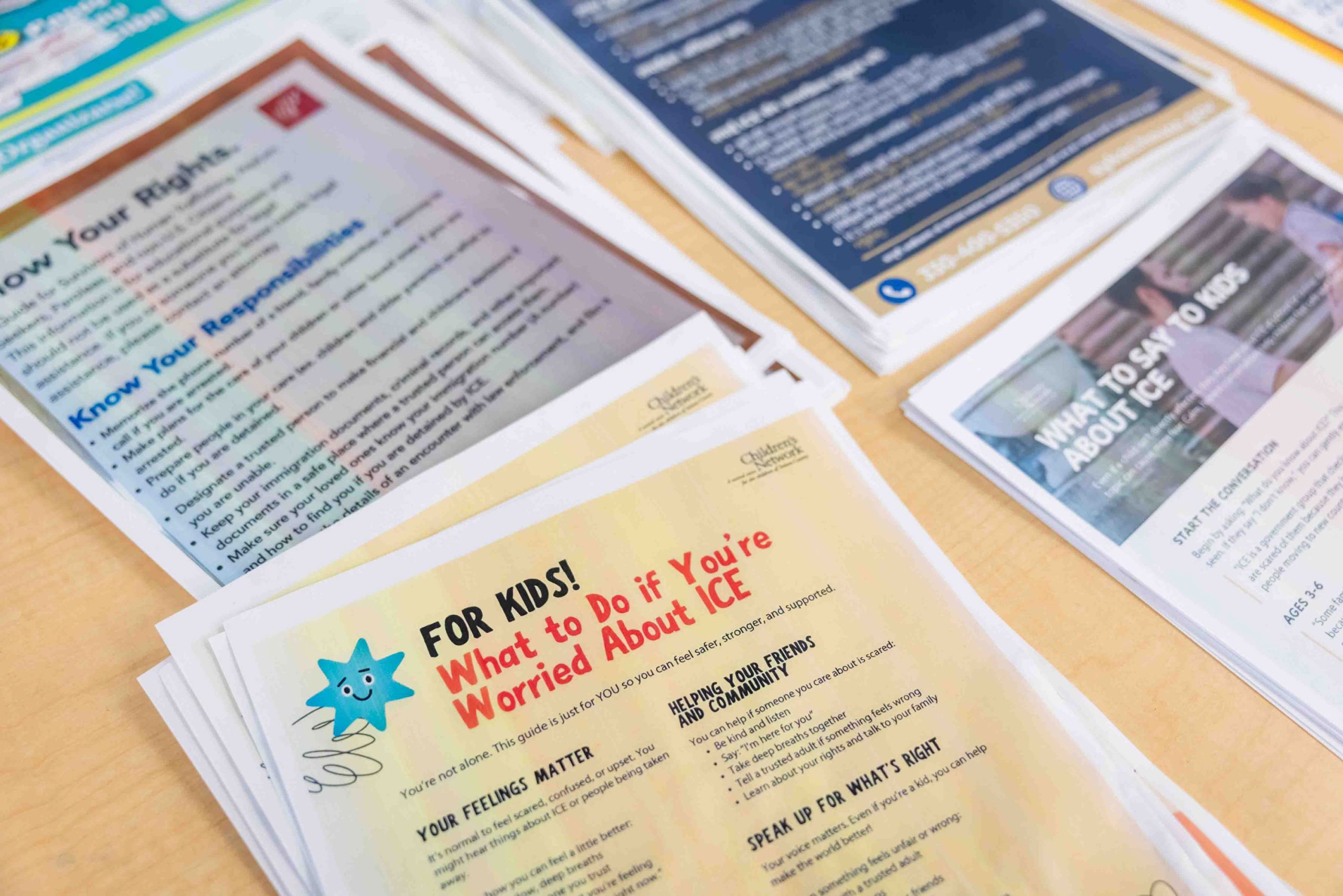
Furthermore, reports from the National Education Association (NEA) highlight that when schools are viewed as potential sites for immigration raids, trust between families and educators collapses. This leads to a withdrawal from essential services, such as English language learner (ELL) programs and school-based health screenings, which are critical for the long-term success of immigrant populations.
The Role of the Educator as a Stabilizing Force
In the midst of this national instability, the role of the teacher has become more complex. Educators like Hannah Harshe, an English Language Development specialist, argue that the classroom must remain a "safe harbor." The pedagogical challenge, however, is to maintain a standard of consistency and expectation while acknowledging that the world outside the school door is inherently unfair.
"As teachers, we know the importance of consistently holding kids to high expectations," Harshe notes. "In our classrooms, we need to be the steady adults that children can count on, so they have the safety to grow, play, explore and take risks."
The professional consensus among educators is that while the classroom cannot fix the immigration system, it can provide the structure necessary for a child’s development. This requires a delicate balance: enforcing the rules of the classroom to foster a sense of order, while simultaneously providing the emotional support that recognizes the trauma a child may be experiencing outside of school.
Broader Implications and Future Outlook
The potential overturning of Plyler v. Doe would represent a paradigm shift in the American moral and social contract. Should public schools be permitted to deny education based on immigration status, the U.S. would likely see a surge in disconnected, marginalized youth, which sociologists argue would create long-term economic and public safety costs far exceeding the current budgetary arguments used by proponents of such restrictions.
Moreover, the normalization of using children as "political footballs" carries a lasting cost to the American identity. By prioritizing demographic statistics and constitutional hypotheticals over the rights of children, the current political discourse risks creating a generation that views the state not as a protector, but as an adversary.
The debate is ultimately about the definition of the "citizen-child." If the United States is to remain a country that purports to protect its most vulnerable, the educational system must remain decoupled from federal immigration enforcement. The educator’s mandate, therefore, is twofold: to uphold the academic integrity of the classroom and to serve as a witness to the humanity of the children caught in the crossfire of national policy.
As Emma returns to the line at recess, wiping the tears from her eyes, she is doing more than following a teacher’s instruction. She is participating in the simple, necessary act of being a child. Protecting that right—regardless of the political climate—remains the primary, non-negotiable obligation of the American educational institution.

