
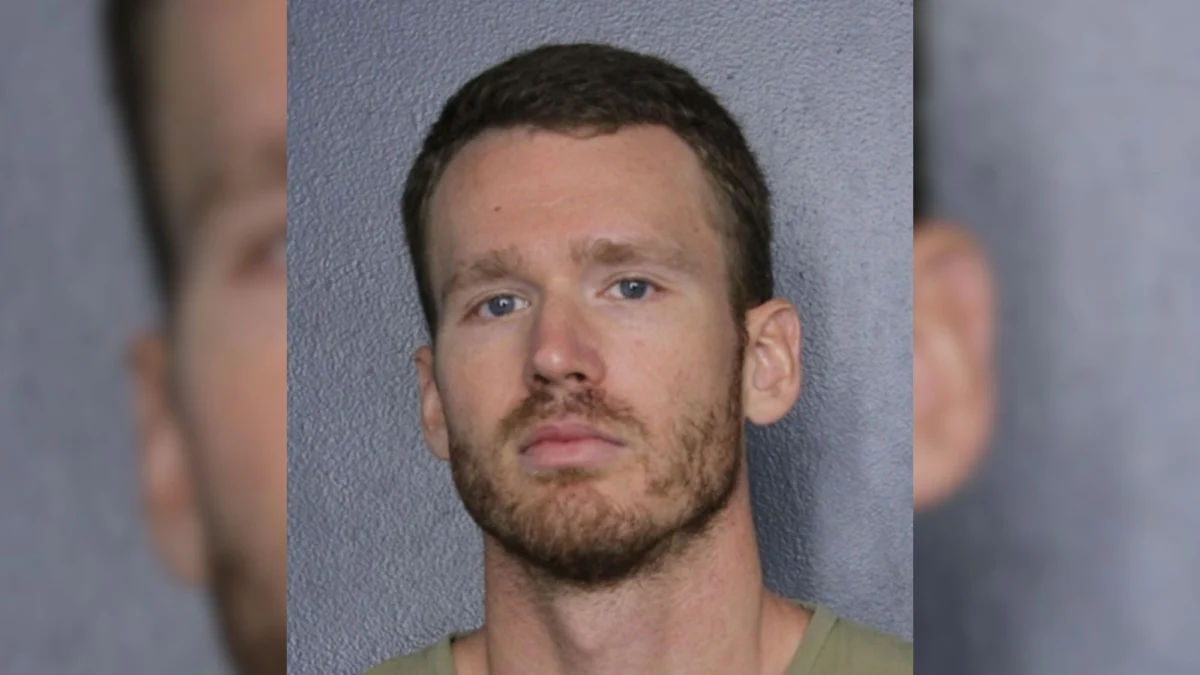
The intersection of law enforcement authority and systemic vulnerability was brought into sharp relief following a bizarre and complex fraud investigation in South Florida. Brian Sguros, a former police officer in the Broward County city of Lauderhill, faces multiple felony charges after allegedly commandeering the residence and identity of a deceased 71-year-old man. Court documents and investigative reports reveal an extraordinary multi-year scheme wherein Sguros allegedly exploited his official access to sensitive law enforcement databases to orchestrate a hostile takeover of a residential property, living under the radar until a real estate transaction ultimately exposed the deception.
The case, which has drawn widespread attention from legal analysts and law enforcement watchdogs alike, underscores the profound vulnerabilities inherent in property management following unattended deaths. It also highlights the ethical and legal perils associated with the misuse of governmental investigative tools for personal enrichment.
The Discovery of a Vacancy and the Genesis of the Scheme
The sequence of events began in July 2022, when Officer Brian Sguros, then an active-duty member of the Lauderhill Police Department, responded to a residential welfare check in Broward County. The subject of the call was Dennis I. West, a 71-year-old resident who lived alone. Medical examiners later determined that West had passed away from natural causes, specifically cardiovascular disease.
For most law enforcement personnel, a welfare check concluding with the discovery of a deceased individual is a routine, albeit somber, duty requiring standard notification protocols, documentation, and the eventual transfer of remains to the appropriate county office or next of kin. However, according to investigative findings released by state prosecutors and reporting from major journalistic outlets, Sguros allegedly perceived the empty residence as an opportunity for illicit financial gain.
Rather than initiating the standard search for surviving family members to manage the estate, Sguros allegedly engaged in a deliberate deception. Investigators state that the officer contacted the medical examiner’s office and falsely identified himself as a close personal friend of the deceased. Furthermore, Sguros allegedly assured officials that West had no living relatives who could claim the body or manage his final arrangements. Acting on these representations, the medical examiner released the remains, and Sguros reportedly authorized the cremation of Dennis West. This initial fabrication removed the primary barrier to accessing the property, effectively neutralizing the immediate oversight of grieving family members.
Chronology of a Three-Year Impostor Operation
With the homeowner deceased and cremated under questionable pretenses, Sguros allegedly initiated the second phase of his operation: physical occupation and identity concealment. The timeline of the alleged scheme spans from the summer of 2022 until late 2026, during which the officer maintained a dual existence as a sworn member of law enforcement and an unauthorized occupant of a dead man’s home.
July 2022: Officer Sguros responds to the welfare check for Dennis I. West, subsequently misleads the medical examiner regarding West’s familial status, and authorizes cremation.
August through December 2022: Sguros moves into the residence. Utilizing his credentials as a police officer, he allegedly performs unauthorized queries in restricted law enforcement databases to harvest West’s personal identifiable information, including his Social Security number and driver’s license details.
2023–2025: Over the course of nearly three years, Sguros establishes operational control over the property. He assumes responsibility for utility bills and property taxes, directing them through channels that mimic legitimate occupancy. To enhance the property’s value, he allegedly forges West’s signature on municipal building permits and invests heavily in physical renovations, informing curious neighbors of his intention to convert the dwelling into a short-term rental property, such as an Airbnb.
Late 2026: The elaborate facade crumbles when the estate of Dennis West—having finally located legitimate heirs—lawfully sells the real estate to a commercial firm. Representatives of the real estate company arrive to take physical possession of the asset, only to discover Sguros residing inside.
October 2026: Following a formal inquiry by Broward County investigators, Sguros is arrested and subsequently resigns from the Lauderhill Police Department.
Systemic Exploitation and Database Misuse
A critical dimension of the criminal charges against Sguros involves the alleged abuse of governmental technology. Law enforcement officers are granted privileged access to sensitive databases, including the Florida Crime Information Center (FCIC) and the National Crime Information Center (NCIC), as well as driver and vehicle information databases. These systems are strictly regulated and restricted to official criminal justice purposes.
According to the indictment and supporting affidavits, Sguros weaponized this institutional access. To maintain the illusion that West was still alive or to manage administrative affairs associated with the property, the former officer allegedly conducted unauthorized searches to retrieve precise personal data. Investigators assert that this systematic exploitation of state infrastructure constitutes a severe breach of public trust, transforming tools designed to protect communities into instruments for private fraud.
Financial Investments and the Downfall of the Operation
One of the more confounding aspects of the case is the substantial financial investment Sguros allegedly poured into the property. Rather than merely squatting in a neglected home, financial records indicate that the former officer invested approximately $214,000 of his own funds into comprehensive renovations.
Legal experts note that fraudsters typically seek to extract liquid capital with minimal investment. Sguros’s strategy of heavily upgrading the asset suggests a long-term commitment to the deception, possibly under the assumption that legitimate heirs would never materialize or that the statute of limitations regarding estate claims would eventually favor an adverse possession argument. He even went so far as to discuss commercial plans with local residents, openly advertising his intention to operate the home as a hospitality rental.
The operation unraveled due to the persistence of West’s actual family and standard legal due diligence. Once the estate was formally probated and rightful heirs were identified, the property was sold through legitimate commercial channels to a real estate firm. When company representatives attempted to exercise their legal right of occupancy, they encountered Sguros.
In a display of audacious legal maneuvering that surprised civil attorneys, Sguros initially surrendered the keys to avoid an immediate physical confrontation but subsequently filed a civil lawsuit against the real estate company. His legal action sought financial reimbursement for the $214,000 he had spent on renovations. This civil filing inadvertently drew the intense scrutiny of Broward County prosecutors and law enforcement investigators, who quickly connected the civil plaintiff to the suspicious circumstances surrounding West’s death and the subsequent property takeover.
Official Responses and Legal Ramifications
The fallout from the arrest has been swift within the Lauderhill Police Department and the broader Broward County legal system. Municipal officials and police leadership condemned the actions of the former officer, emphasizing that criminal behavior by sworn personnel undermines the integrity of the entire agency.
While formal statements from defense counsel for Sguros have emphasized due process and the awaiting of discovery in court, prosecutors have assembled a robust multi-count indictment. Sguros faces several felony charges, including:
Official misconduct by a public servant
Criminal use of a deceased person’s identification
Fraudulent use of personal identification information
Falsifying records or documents
Because Sguros used his position as a police officer to facilitate the fraud, the legal penalties he faces are significantly enhanced under Florida sentencing guidelines. The charges of official misconduct carry mandatory administrative consequences, which were preempted by his resignation following his arrest in October.
Broader Impact and Implications for Estate Fraud
The case has ignited broader discussions among real estate professionals, probate attorneys, and law enforcement agencies regarding the vulnerabilities in estate administration and the monitoring of unoccupied properties.
When an individual dies without an immediate local family or apparent next of kin, a window of vulnerability opens. While public administrators and probate courts are designed to handle unclaimed estates, the lag time between a person’s death and the formal inventory of their assets can span months or even years. In densely populated regions with high real estate values, such as South Florida, vacant homes represent high-value targets for sophisticated squatters and opportunistic fraudsters.
Furthermore, the case has highlighted deficiencies in internal auditing controls regarding database access within law enforcement agencies. While routine audits flag excessive or anomalous queries, an officer interacting with a deceased person during a legitimate call for service possesses a plausible context for accessing personal records immediately following the incident. Cybersecurity and internal affairs experts suggest that stricter cross-referencing between medical examiner death notifications and police database queries could help detect anomalies before they evolve into multi-year fraud schemes.
As the judicial proceedings against Brian Sguros advance through the Broward County circuit court, the case serves as a cautionary tale of institutional betrayal, the limits of clandestine financial planning, and the inevitability of legal accountability when property rights intersect with criminal investigation.

