
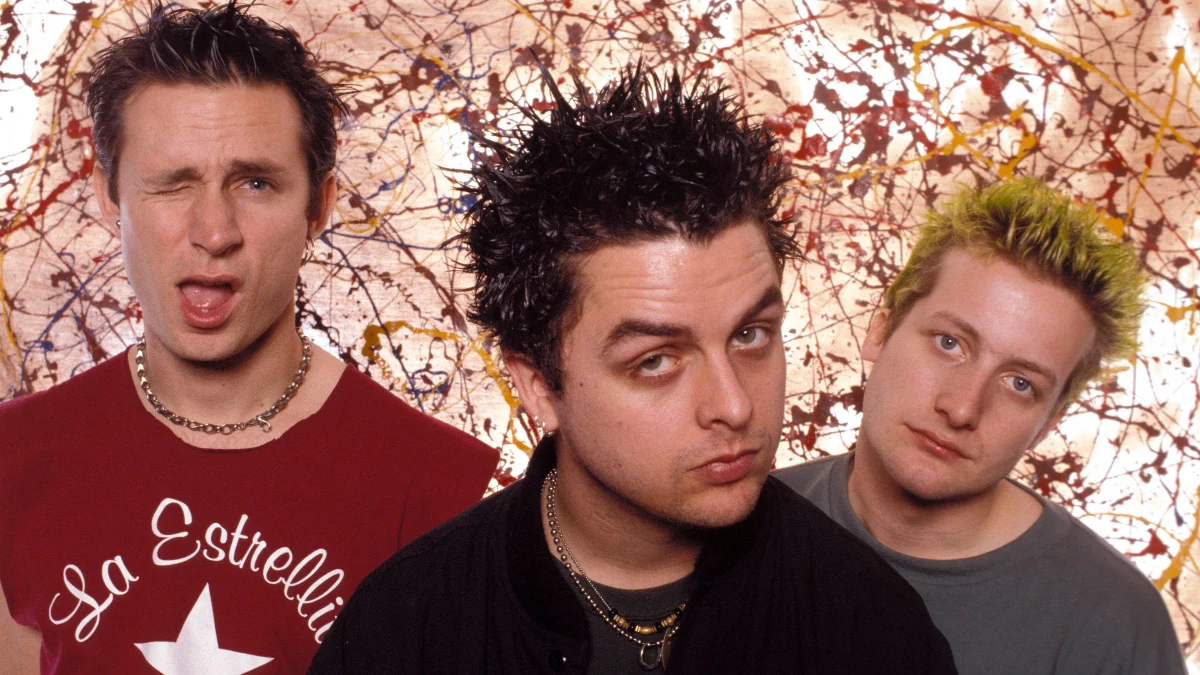
The trajectory of American punk rock was permanently altered in the early 1990s, anchored by the emergence of a trio from the East Bay of California that would eventually redefine the boundaries of commercial alternative music. Long before selling tens of millions of records worldwide, headlining stadiums, and being inducted into the Rock and Roll Hall of Fame, Green Day’s foundational members—Billie Joe Armstrong and Mike Dirnt—began their musical journey as aspiring adolescents navigating the vibrant, fiercely protective underground punk scene of Northern California. Their narrative is not merely one of overnight pop-punk success, but a complex study in artistic evolution, the friction between underground ideological purity and mainstream success, and the enduring connection between a band and its geographic roots.
Early Beginnings and the Formation of Sweet Children
The musical inclinations of frontman Billie Joe Armstrong manifested exceptionally early. Growing up in a working-class household in Rodeo, California, Armstrong recorded a local track titled Look For Love at the tender age of five. By the time he reached his eleventh birthday, he acquired his first electric guitar: a light-blue Fernandes Stratocaster affectionately dubbed Blue. That instrument would remain a fixture of his gear arsenal throughout his career, defining the raw, snappy tone of Green Day’s earliest recordings.
As his musicianship matured, so did his songwriting capabilities. At age 14, Armstrong penned his very first complete original composition, Why Do You Want Him?, a song candidly exploring the complex dynamic between his mother and stepfather. Around this same period, Armstrong crossed paths with Michael Ryan Pritchard—later known globally as Mike Dirnt—in a school cafeteria when they were both ten years old. Bonding instantaneously over a shared passion for music, the two formed a lifelong partnership. Interestingly, before establishing himself as one of the most recognizable and melodic bass players in modern rock history, Dirnt initially harbored ambitions of pursuing a career in stand-up comedy.
The duo eventually formed a band named Sweet Children, recruiting drummer John Kiffmeyer to round out the lineup. Operating within the fertile grounds of the East Bay punk movement, the trio quickly became a staple of the local underground circuit, most notably at the legendary all-ages punk club 924 Gilman Street in Berkeley, California. Founded on strict do-it-yourself (DIY) ethics, anti-commercialism, and community-driven ideals, 924 Gilman Street served as the crucible for the burgeoning East Bay punk revival.
Independent Releases and the Arrival of Tré Cool
In 1989, when the core members were just 17 years old, the group officially changed its name to Green Day, drawing inspiration from their fondness for cannabis culture. Later that year, they released their debut extended play, 1,000 Hours, through Lookout! Records, an independent label deeply intertwined with the Gilman Street community.
Throughout 1990, the band maintained a relentless recording and touring schedule. They released their official full-length debut studio album, 39/Smooth, which garnered immediate critical acclaim within underground music publications and fanzines. That same year, they followed up with two additional EPs: Slappy and Sweet Children. The material from these early independent releases was eventually compiled into a comprehensive collection titled 1,039/Smothered Out Slappy Hours, released in 1991, solidifying their standing as elite torchbearers of modern melodic punk.
A pivotal lineup shift occurred in 1990 when drummer John Kiffmeyer departed the group to pursue higher education. To fill the vacancy, the band brought in Frank Edwin Wright III, universally known by his stage name Tré Cool. With Tré Cool firmly behind the drum kit, the newly solidified trio immediately entered the studio to record their sophomore studio album, Kerplunk. Released on December 17, 1991, Kerplunk arrived during a seismic shift in the global music landscape, catalyzed heavily by the mainstream explosion of Nirvana’s landmark album Nevermind. Consequently, music critics and industry insiders began casting their gaze toward Green Day, frequently anointing them as the next Nirvana and setting off a frantic bidding war among major record labels.
The Major-Label Leap and the 924 Gilman Street Backlash
In 1993, veteran artists and repertoire (A&R) executive Rob Cavallo successfully signed Green Day to Reprise Records, a major subsidiary of Warner Music Group. While the signing represented a monumental career milestone that promised global exposure, financial stability, and professional production resources, it simultaneously triggered a profound crisis within the band’s domestic ecosystem.
By signing to a major conglomerate, Green Day directly violated the stringent, uncompromising DIY rules maintained by 924 Gilman Street, which explicitly forbade bands signed to major labels from performing at the venue to preserve its anti-corporate integrity. Recognizing the inevitable friction, the band elected to play a high-profile "farewell" concert at Gilman Street on September 3, 1993, approximately six months before their major-label debut dropped.
The reaction from the local purist punk community was swift and severe. Vocal factions within the East Bay scene accused Green Day of "selling out," leading to the band being formally blackballed and ostracized from the very club that had nurtured their formative years. For many underground traditionalists, the transition from independent Lookout! Records to Warner-backed Reprise was an unforgivable betrayal of punk rock ethos.
Dookie and the Mainstream Pop-Punk Explosion
Despite the local backlash, Green Day’s strategic pivot permanently altered the trajectory of popular music. Released on February 1, 1994, their major-label debut album, Dookie, became an instant cultural phenomenon and remains one of the defining rock records of the 1990s. Propelled by iconic, high-energy singles such as Longview, Basket Case, When I Come Around, and Welcome to Paradise, Dookie struck a chord with a disaffected global youth demographic.
The commercial metrics achieved by Dookie were staggering for a punk band. The album ultimately peaked at No. 2 on the Billboard 200 chart and has since been certified diamond by the Recording Industry Association of America (RIAA), boasting worldwide sales exceeding 20 million copies. Furthermore, the album’s four primary singles completely dominated the Billboard Alternative Airplay and Mainstream Rock charts, establishing Green Day as international superstars and paving the commercial highway for a massive wave of late-1990s and 2000s pop-punk acts, including Blink-182, Sum 41, and Fall Out Boy.
Reconciliation and Community Engagement
Though the fractures caused by their major-label signing took years to heal, the hostility from their early stomping grounds did not prove permanent. Over subsequent decades, the passage of time softened ideological divides, allowing for a gradual reconciliation between Green Day and the institutions that once rejected them.
On September 16, 2001, Green Day executed a surprise return to 924 Gilman Street, shocking patrons by walking unannounced onto the stage, borrowing another performing band’s equipment, and delivering an impromptu, high-octane short set that bridged a decade of separation.
The reconciliation deepened further on May 17, 2015, when the band participated in a heavily publicized, surprise benefit concert at the Berkeley venue. The primary objective of the event was to raise critical financial relief funds for local Oakland publishing, community, and recording spaces that had suffered catastrophic damage during a massive warehouse fire. Despite the historical friction and the punk community’s prior rejection of their commercial ambitions, Green Day demonstrated an enduring loyalty to their geographic roots, stepping up without hesitation when local cultural infrastructure faced existential peril.
Broader Legacy and Cultural Implications
Analyzing Green Day’s journey from a teenage garage band in Rodeo to global rock royalty reveals profound insights into the economics and sociology of modern popular music. The band successfully navigated the delicate tightrope walk between commercial accessibility and authentic artistic integrity. While purists initially condemned their departure from the underground, Dookie successfully democratized punk rock, introducing raw guitar-driven music to mainstream audiences on a scale previously unimaginable for the genre.
Moreover, their willingness to confront their past—returning to 924 Gilman Street to support community recovery efforts—underscores a nuanced understanding of their legacy. Green Day proved that commercial success does not necessarily sever an artist’s foundational roots. Today, as members of the Rock and Roll Hall of Fame and veterans of stadium tours spanning multiple continents, Armstrong, Dirnt, and Cool remain definitive architects of modern rock, leaving a legacy that traces directly back to a blue Stratocaster, a school cafeteria friendship, and the gritty stages of the East Bay.

