
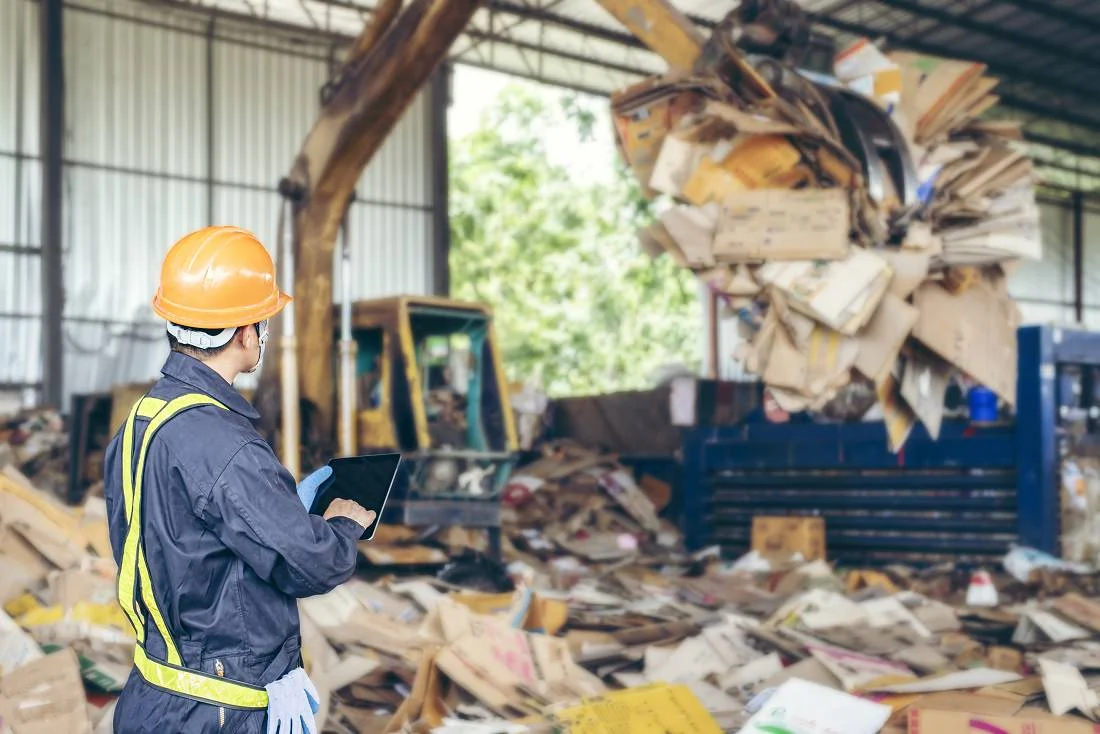
The journey of a corrugated cardboard box from a retail warehouse back to a paper mill takes approximately fourteen days. In stark contrast, a single-use plastic container can persist in the environment for centuries, with current estimates indicating that only 5 to 6 percent of plastic generated in the United States is successfully recycled. This disparity serves as the focal point for an industry caught between the ambitious promises of a "circular economy" and the stark logistical realities of waste management. As of 2024, the circular packaging sector has matured into a $245 billion global market, yet the path toward true sustainability remains fraught with systemic inefficiencies, regulatory gaps, and a growing crisis of consumer confidence.
The Catalyst for Domestic Evolution: From China to Pennsylvania
The modern landscape of American recycling was irrevocably altered in 2018 when China implemented its "National Sword" policy. For decades, the United States had exported approximately one-third of its recyclable materials to Chinese processors. When China banned the import of most plastics and established a strict 0.5 percent contamination limit for paper, the U.S. recycling infrastructure collapsed under the weight of its own waste. Communities across the nation were forced to shutter programs, and the limitations of "single-stream" recycling—where all materials are tossed into one bin—became undeniable.
In April 2020, amidst the early uncertainty of the global pandemic, DS Smith opened its first North American recycling plant in Reading, Pennsylvania. This facility was designed to bypass the failures of municipal systems by creating a closed-loop corrugated packaging model. Located adjacent to an existing paper mill and a packaging manufacturing site, the facility demonstrated that fiber-based materials could be collected, processed, and remanufactured into new boxes within a two-week window. By sourcing "clean" materials directly from distribution centers and retailers rather than contaminated curbside bins, the model achieved a level of efficiency that traditional Materials Recovery Facilities (MRFs) could not match.
The Dominance of Fiber and the Consolidation of Power
While other materials struggle, paper and cardboard remain the undisputed leaders of the circular economy. In 2024, the American Forest & Paper Association reported that the U.S. recycled over 33 million tons of cardboard—averaging 90,000 tons per day. This represents a recovery rate of approximately 70 percent. The industry’s reliance on recycled content is also deepening; the share of recycled paper utilized at U.S. mills has climbed from 36.6 percent in 2005 to over 44 percent in 2024.
This stability has triggered a wave of massive industrial consolidation. In July 2024, Smurfit Kappa finalized its acquisition of WestRock, creating Smurfit WestRock, a global powerhouse with $32 billion in combined revenue and a workforce of 100,000. Simultaneously, International Paper reached an agreement to acquire DS Smith for nearly $10 billion. These mergers signal a strategic bet by institutional investors that fiber-based, recyclable packaging is the most viable and durable growth market within the sustainability sector. Unlike plastic, which faces mounting bans and negative public sentiment, cardboard benefits from a mature infrastructure and high consumer participation.
The Plastic Paradox: Why Recyclability Does Not Mean Recycling
Despite the success of fiber, the broader goal of circularity is hampered by the persistent failure of plastic recycling. While many plastic products bear the "chasing arrows" symbol, the reality is that the U.S. plastic recycling rate has remained stagnant or declined over the last decade. The primary obstacle is the inherent complexity of the material; different resin types (PET, HDPE, LDPE, etc.) cannot be processed together, and the cost of virgin plastic—often subsidized by the petrochemical industry—remains lower than the cost of collecting and cleaning used plastic.
Furthermore, contamination remains a significant hurdle. Data suggests that mixed curbside collections have an average contamination rate of 25 percent. When food residue, non-recyclable materials, or the "wrong" types of plastic are introduced into a bale of recyclables, the entire lot is often diverted to a landfill to avoid damaging processing machinery. While companies like Amcor have reported doubling the recycled content in their plastic packaging since 2018, these improvements are often overshadowed by a global market that increased overall plastic packaging use by 8 percent in the same period.
Corporate Commitments and the "Puffery" of Greenwashing
The gap between corporate sustainability marketing and environmental outcomes has led to a surge in legal and regulatory scrutiny. In 2018, over 1,000 organizations joined the Ellen MacArthur Foundation’s (EMF) Global Commitment, pledging to reach 100 percent reusable, recyclable, or compostable packaging by 2025. However, the EMF’s 2024 progress report admitted that many of these targets are now "out of reach." Specifically, while participants avoided 9.6 million tons of virgin plastic, this represents less than 3 percent of annual global production.
This lack of progress has fueled accusations of "greenwashing." In late 2024, the legal advocacy group ClientEarth issued a report arguing that vague claims such as "100% recyclable" often violate consumer protection laws in the UK and EU because they fail to account for the lack of actual recycling infrastructure. A particularly controversial moment occurred during the September 2024 Packaging Recycling Summit, where industry consultants noted that some companies have defended their misleading environmental claims in court by categorizing them as "classic puffery"—a legal term for promotional statements that no reasonable person would take literally.
The result of these broken promises is a measurable decline in public trust. Recent data indicates that 32 percent of Americans now doubt the efficacy of curbside recycling, more than double the percentage from four years ago. This has given rise to "greenhushing," where brands deliberately stop publicizing their sustainability goals to avoid the risk of litigation or public backlash.
A Divergence in Regulation: The E.U. vs. The U.S.
The future of circular packaging is increasingly being shaped by government mandates rather than voluntary corporate pledges. The European Union has taken a decisive lead with the Packaging and Packaging Waste Regulation (PPWR). This policy requires 70 percent of all packaging waste to be recycled by 2030 and targets a 15 percent reduction in per capita packaging waste by 2040. Crucially, the E.U. is also standardizing the definitions of "biobased" and "compostable" to prevent deceptive marketing.
In the United States, the regulatory landscape is fragmented. There is currently no federal mandate for recycling or circularity, leaving individual states to fill the vacuum. California has emerged as the domestic leader, passing Extended Producer Responsibility (EPR) laws that shift the financial burden of waste management from taxpayers to the companies that produce the packaging. Maine, Oregon, and Colorado have followed suit with similar policies. However, the lack of a unified national strategy continues to hinder the development of the shared reverse logistics systems necessary for large-scale reuse and refill models, which currently account for only 1.3 percent of the global packaging market.
The Economic Barrier: Infrastructure and Investment
Achieving true circularity requires more than just better consumer habits; it requires a massive overhaul of physical infrastructure. The Environmental Protection Agency (EPA) estimates that modernizing the U.S. recycling system will require an investment of between $36.5 billion and $43.4 billion. This funding is needed to increase composting capacity, improve mechanical sorting at MRFs, and scale up advanced chemical recycling technologies for plastics.
Without binding federal policy, this investment has been slow to materialize. The collapse of the UN Global Plastics Treaty negotiations in Busan in November 2024 further delayed the establishment of a global framework for plastic reduction, leaving the industry in a state of regulatory limbo.
Implications for the Future
As the circular packaging market moves toward its projected doubling by 2034, the industry faces a fundamental choice. It can continue to rely on "downcycling"—where materials are repurposed into lower-value items like park benches or carpet fibers—or it can invest in true "closed-loop" systems like the DS Smith model.
For the consumer, the path forward involves a shift from passive recycling to active advocacy. Experts suggest that the most effective individual actions include:
- Prioritizing Refillables: Opting for products with reusable packaging to bypass the recycling system entirely.
- Contamination Control: Ensuring that only clean, dry materials enter the recycling stream to protect the integrity of the bales.
- Material Selection: Favoring aluminum and fiber-based packaging, which have higher recovery rates and established domestic markets.
- Civic Engagement: Supporting local and state policies that hold producers accountable for the entire lifecycle of their products.
The next decade will determine whether the circular economy is a legitimate industrial revolution or merely a sophisticated marketing narrative. While the success of the fiber industry provides a blueprint for what is possible, the ongoing struggle with plastic and the rise of greenwashing serve as a reminder that without transparency and rigorous regulation, the loop will remain broken.