
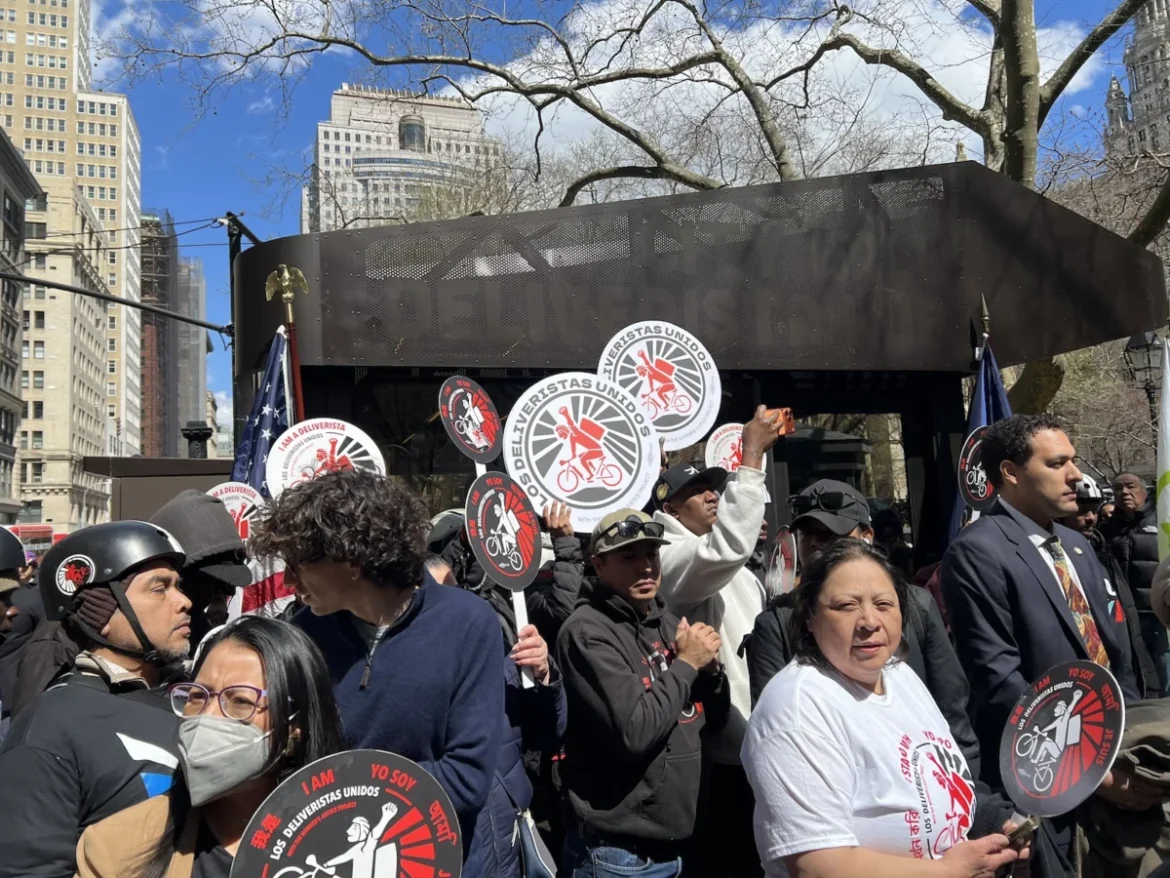
The inauguration of the city’s first "deliverista hub" took place last Tuesday in downtown Manhattan, signaling a transformative shift in how New York City manages its public infrastructure to support the burgeoning gig economy. Located around the corner from City Hall on a site formerly occupied by a derelict newsstand, the sleek, modernist structure represents the culmination of a half-decade of advocacy by app-based delivery workers. Under the bright midday sun of what felt like a premature spring day, municipal employees, labor organizers, and delivery workers gathered to celebrate a facility designed to provide the city’s 80,000 delivery professionals with a sanctuary from the elements, a place to charge essential equipment, and a base for community organizing.
The structure itself, characterized by clear glass windows and tall metallic columns, stands as a stark contrast to the surrounding traditional architecture. While modest in footprint, its significance lies in its purpose: addressing the physical and logistical needs of a workforce that has become indispensable to the city’s daily operations. Since 2021, Los Deliveristas Unidos—a prominent union representing app-based couriers—has campaigned for such spaces, arguing that the "public realm" must evolve to serve those who facilitate the city’s commerce on two wheels.
Technical Specifications and the Purpose of the Hub
The newly opened Lower Manhattan hub is designed to function as a multifunctional rest stop. Its primary features include a sheltered area for workers to escape extreme weather, high-capacity charging stations for e-bike batteries, and a centralized location for labor resources. The transition to e-bikes, scooters, and mopeds has been essential for delivery efficiency, but it has also introduced new challenges, specifically regarding battery range and the safety of lithium-ion charging. By providing regulated, safe charging ports, the city aims to mitigate the risks associated with improper charging in residential buildings while ensuring that workers can remain mobile throughout long shifts.
Furthermore, the hub will serve as an outreach center for the Worker’s Justice Project (WJP). Starting shortly after the opening, the facility will be staffed five days a week by WJP representatives. This presence is intended to transform the hub into a "know your rights" center, where delivery workers—many of whom are immigrants and independent contractors—can learn about labor protections, minimum wage requirements, and the benefits of unionization.
A Chronology of Advocacy and Political Evolution
The journey to the completion of the first deliverista hub began in the crucible of the COVID-19 pandemic. In 2020, as the city entered lockdown, delivery workers were classified as essential, yet they found themselves increasingly isolated. With restaurants closed to indoor dining and public restrooms shuttered, workers had nowhere to seek shelter from the rain, cold, or heat. Gustavo Ajche, co-founder of Los Deliveristas Unidos, noted that the idea for the hub was born from observing abandoned urban infrastructure, such as vacant newsstands, which he believed could be repurposed to serve the labor force.
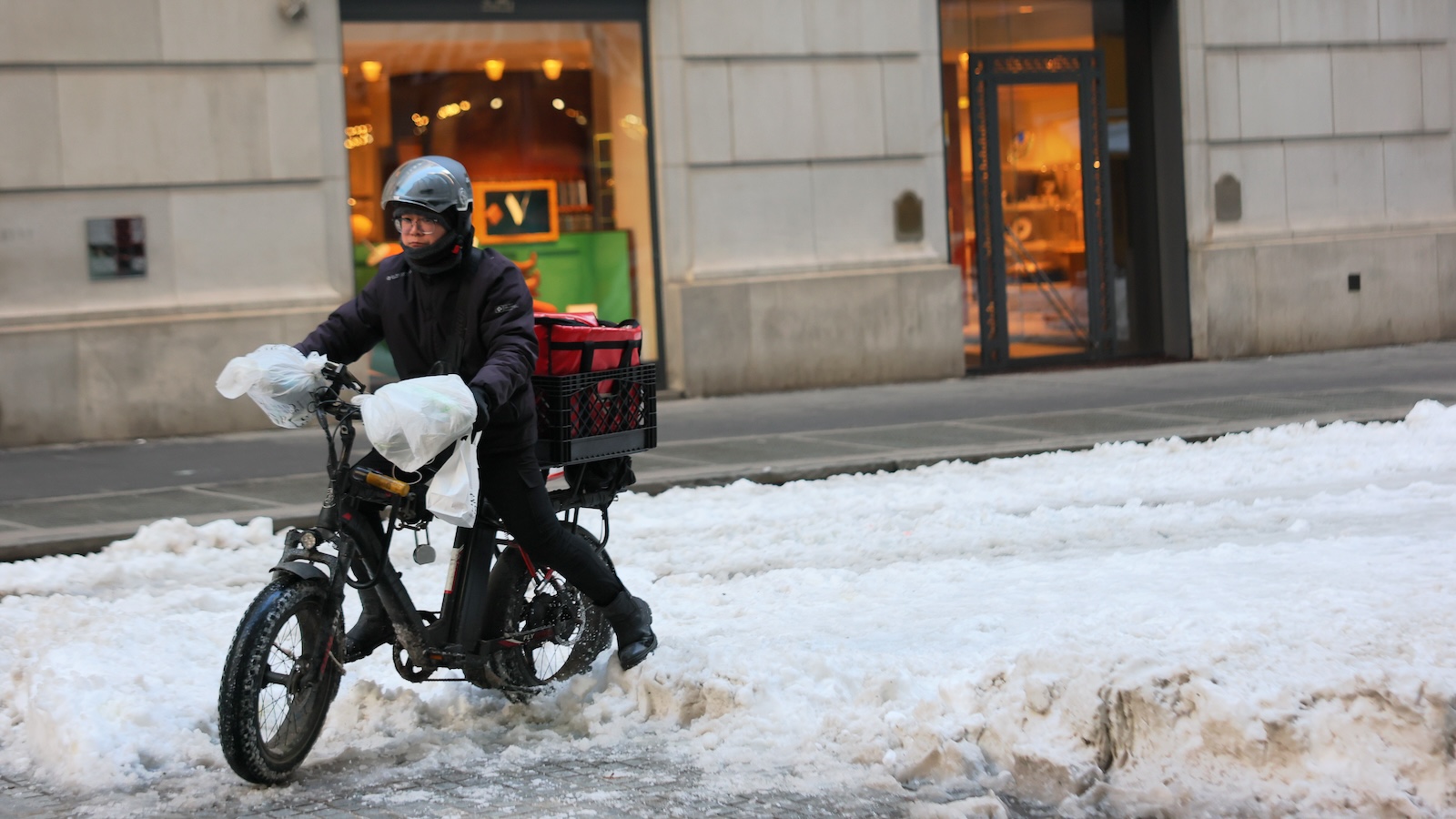
However, the path from concept to reality was hampered by years of bureaucratic hurdles. Between 2021 and 2025, the project faced significant permitting delays and red tape. Under the previous mayoral administration of Eric Adams, progress was slow, with labor advocates often citing a lack of urgency in coordinating between the various city agencies required to approve the use of sidewalk space.
The momentum shifted significantly following the election of Mayor Zohran Mamdani. Upon taking office, Mamdani made the completion of the pilot hub a priority of his administration’s first 100 days. By streamlining the communication between the Department of Transportation (DOT), the Parks Department, and the Department of Buildings, the physical construction of the hub was completed in approximately one month—a sharp contrast to the years of stagnation that preceded it.
Supporting Data: The Economic and Environmental Context
The necessity for such infrastructure is underscored by the sheer scale of the delivery industry in New York City. Current estimates suggest that more than 80,000 individuals work as deliveristas, navigating the city’s streets to transport groceries, meals, and retail goods. This workforce has grown by nearly 30 percent since 2019, driven by the expansion of platforms like DoorDash, UberEats, and Grubhub.
From an environmental perspective, the hub aligns with the city’s climate goals. By supporting e-bike and moped users, the city encourages "last-mile" delivery methods that produce significantly lower carbon emissions than traditional delivery vans or cars. However, this shift also exposes workers to the direct impacts of climate change. According to data from the National Weather Service, New York City has seen an increase in "extreme heat days" (temperatures exceeding 90°F) over the last decade. Deliveristas, who spend the entirety of their shifts outdoors, are at a high risk for heat exhaustion and heatstroke. The hub provides a critical cooling station, representing a tangible application of climate justice by protecting the most vulnerable workers from a warming environment.
Official Responses and Political Stakeholders
The opening ceremony drew a wide array of high-ranking officials, reflecting the project’s broad political support. New York Senator Chuck Schumer, who was instrumental in securing $1 million in federal funding for the initiative, spoke at the event, emphasizing the importance of federal-local partnerships in modernizing urban infrastructure. Schumer’s involvement highlights the federal government’s growing interest in supporting the "green" transition of urban logistics.
New York City Parks Commissioner Tricia Shimamura, who assumed her role only eight weeks prior to the opening, praised the project as a model for future public space utilization. "This is what it means for our city to serve the people who keep it running," Shimamura stated, acknowledging that the Parks Department must look beyond traditional playgrounds and gardens to meet the needs of a modern workforce.
Other notable attendees included New York City Public Advocate Jumaane Williams and City Council Member Shaun Abreu. Their presence underscored a unified legislative front in favor of expanded protections for gig workers. Ligia Guallpa, executive director of the Worker’s Justice Project, framed the opening as a victory for the working class over historical urban planning priorities. She argued that for too long, New York’s public spaces were designed primarily for the wealthy and for car owners, often at the expense of those who actually maintain the city’s vitality.
Broader Impact and Future Implications
While the opening of the Lower Manhattan hub is a landmark achievement, it also highlights the scale of the challenge that remains. One facility cannot adequately serve 80,000 workers spread across five boroughs. Both Ajche and Commissioner Shimamura acknowledged that the future of the program depends on identifying sustainable financing and navigating complex property ownership issues. Not all viable sites for hubs fall under the jurisdiction of the Parks Department; many are controlled by the DOT or private entities, requiring a high degree of inter-agency cooperation.
There is also the matter of technical completion. Although the hub is physically open, the installation of HVAC systems and permanent charging hardware is still pending. These components are essential for the hub to fulfill its promise as a year-round refuge. A representative from the Worker’s Justice Project confirmed that these upgrades would be rolled out in the coming months as part of the pilot’s second phase.
The success of this pilot will likely serve as a blueprint for other major metropolitan areas grappling with the rise of the gig economy. Cities like Chicago, San Francisco, and London have watched New York’s "Deliverista Law" (which established a minimum pay rate) with interest; they are now expected to monitor the effectiveness of these physical hubs as a means of improving worker safety and retention.
Conclusion: A Symbol of Deliverista Power
As the ceremony concluded, a light mist—later identified as overspray from a nearby window-washing operation—fell on the crowd, but it did not deter the celebratory mood. Delivery workers, still in their tactical gear and helmets, posed for photographs with labor leaders, chanting "Deliverista! Power!"
The inauguration of this hub represents more than just the repurposing of a vacant newsstand. It is a formal recognition by the City of New York that the rights of gig workers are inextricably linked to the physical layout of the city. By integrating worker-centric infrastructure into the sidewalk landscape, New York is acknowledging that the future of urban resilience depends on the health and safety of those who navigate its streets every day. As the city looks toward the possibility of expanding this network, the Lower Manhattan hub stands as a metallic and glass testament to the persistence of Los Deliveristas Unidos and a new era of labor-conscious urban design.