The Federal Emergency Management Agency, a cornerstone of the United States’ domestic safety net for nearly half a century, currently stands at a precarious crossroads following a year of unprecedented administrative upheaval and ideological shifts. After a first year under the Trump administration that many veteran emergency managers describe as the most volatile in the agency’s history, FEMA is attempting to navigate a leadership transition that could fundamentally redefine the relationship between the federal government and state authorities during times of crisis. The convergence of a massive civil service overhaul, aggressive spending freezes, and a proposed decentralization of disaster response has left the agency’s 20,000-plus employees and millions of vulnerable Americans in a state of deep uncertainty.
The initial phase of this transformation was marked by a series of aggressive maneuvers designed to shrink the federal footprint. Under the guidance of the Department of Government Efficiency, led by Elon Musk, a sweeping purge of the federal civil service targeted senior leadership and career bureaucrats within FEMA’s parent organization, the Department of Homeland Security (DHS). This was followed by a controversial tenure under former Secretary of Homeland Security Kristi Noem, who instituted a near-total freeze on disaster recovery and response spending. The freeze was characterized by critics as a paralyzing blow to the agency’s core mission, effectively holding up billions of dollars earmarked for communities recovering from past catastrophes and delaying urgent aid during new emergencies, such as the devastating July 4 floods that ravaged Central Texas.
The Noem Era and the Policy of Austerity
Kristi Noem’s approach to emergency management was rooted in a strict interpretation of fiscal conservatism and state-led responsibility. By mandating high-level approval for even routine expenditures, the DHS leadership effectively "micromanaged" the agency into a state of inertia. During this period, FEMA’s efforts to prepare for future disasters—traditionally handled through programs like Building Resilient Infrastructure and Communities (BRIC)—were largely dismantled or allowed to lapse. The administration’s reluctance to release funds was not applied uniformly; leaked reports and internal complaints suggested that aid requests from Democrat-controlled states were subjected to higher levels of scrutiny and more frequent denials than those from Republican-led regions.
The internal climate at FEMA reached a boiling point earlier this year when leaked memos from DHS revealed a plan to slash the agency’s on-the-ground response staffing by approximately 50 percent. Such a reduction would have fundamentally altered FEMA’s ability to deploy Personnel Mobilization Teams and Urban Search and Rescue Task Forces during the critical first 72 hours of a major hurricane or earthquake. While the administration argued these cuts were necessary to eliminate redundancy and force states to bolster their own capabilities, emergency management experts warned of a "catastrophic gap" in national readiness.
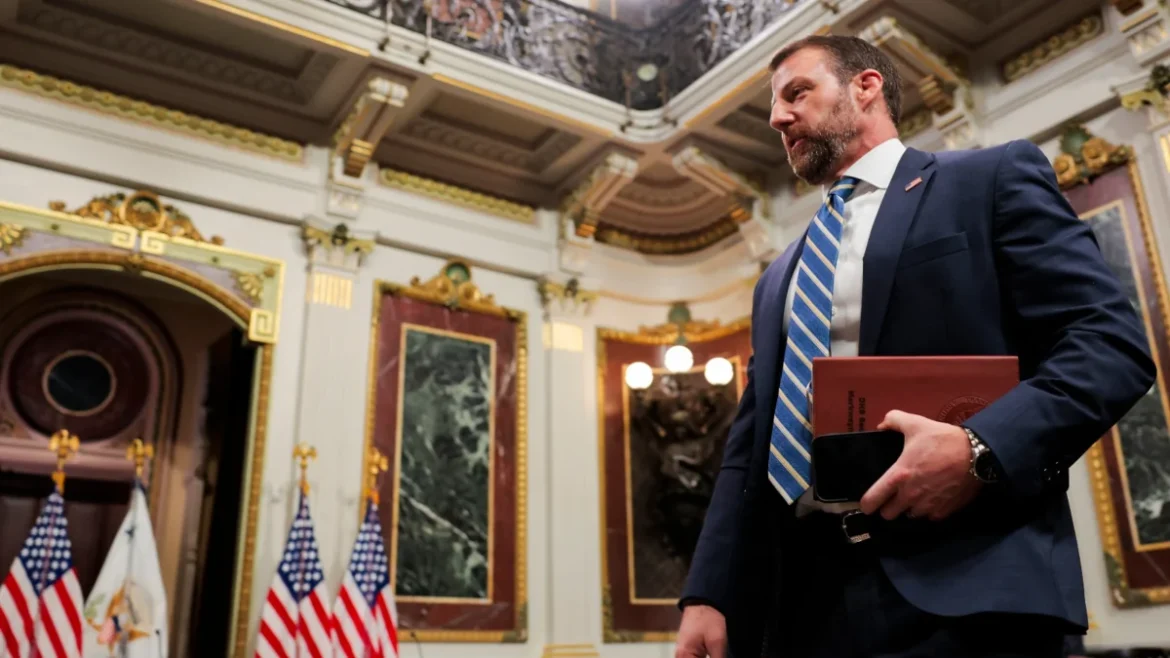
The tension culminated last month with the firing of Noem, following a series of controversies involving immigration enforcement strategies and allegations of misleading Congress regarding personal expenditures. In her wake, the President appointed former Oklahoma Senator Markwayne Mullin to lead the DHS. Mullin’s arrival brought an immediate shift in rhetoric, if not yet in total practice.
Transition to Leadership Under Markwayne Mullin
Upon taking the helm, Markwayne Mullin vowed to end the spending freeze that had defined his predecessor’s tenure. He publicly dismissed the previous policy as counterproductive micromanagement and moved quickly to terminate several of Noem’s top deputies. Mullin has also committed to appointing a permanent FEMA Administrator, a position that had remained vacant or filled by interim "acting" officials throughout the first year of the administration.
Despite these promises, the transition has been slow. Karen Evans, Noem’s handpicked interim administrator, continues to oversee daily operations until a permanent choice can be cleared by the Senate. According to FEMA officials speaking on the condition of anonymity, many of the agency’s most vital functions remain in "limbo." While some reconstruction payments have been unfrozen, major long-term infrastructure projects remain stalled. For over a year, the agency has failed to offer new funding through its primary long-term aid programs, only recently abandoning a plan to eliminate a key resilience program following a federal court order.
The timing of this administrative friction is particularly concerning as the United States approaches the peak of the Atlantic hurricane season and the height of the Western wildfire cycle. Morale within the agency is reportedly at an all-time low, with one regional official stating, "It’s like we are collectively waiting for the other shoe to drop."
The Erosion of the National Flood Insurance Program
One of the most tangible impacts of the recent administrative paralysis is the degradation of the National Flood Insurance Program (NFIP). Serving approximately five million households, the NFIP is the primary source of flood coverage in the United States. The program relies on a complex rating system that rewards cities and counties with insurance discounts if they implement proactive flood-mitigation strategies, such as stricter building codes and the preservation of open space in floodplains.
However, the contract with the private firm responsible for managing this rating system was allowed to lapse several weeks ago. Consequently, the discount program has been suspended. This lapse means that the federal government is currently unable to monitor whether local governments are adhering to safety standards or if they are allowing risky development in high-hazard zones. Without the incentive of insurance discounts, experts fear that local governments may deprioritize expensive flood-protection measures, leading to higher long-term costs for taxpayers and increased risk to life and property.
A Philosophical Shift: The "Supporting Role" Doctrine
The most significant long-term change facing FEMA is a shift toward what some call the "balkanization" of disaster response. President Trump has long advocated for a model where states shoulder the vast majority of the burden for both preparation and response. Markwayne Mullin appears to have fully embraced this philosophy. During a recent visit to North Carolina—a state still reeling from the long-term impacts of Hurricane Helene—Mullin stated that the federal government "shouldn’t look at FEMA as being a first responder," but rather as a secondary entity meant to "support the first responders you already have."
Mullin’s argument is that states are "much more equipped" to handle localized crises and that the federal government should only step in to assist with the "first heavy lift." This perspective represents a radical departure from the post-Katrina era of emergency management, which emphasized a robust, proactive federal presence to ensure that no state was left to face a catastrophe alone.
While some wealthy states with robust tax bases, such as Florida and Texas, have well-funded emergency management departments, others do not. Experts like Andrew Rumbach, a senior fellow at the Urban Institute, warn that a diminished federal role could have "hugely significant impacts" on poorer, storm-vulnerable states like Mississippi, Louisiana, and West Virginia.
"If we’re just transferring responsibility for federal resources to the states, that raises a whole different set of questions," Rumbach noted. While some states might use the freedom to experiment with innovative solutions—such as Hawaii utilizing federal funds for modular housing instead of traditional hotel vouchers—other states might use the lack of federal oversight to prioritize affluent communities over marginalized ones when distributing aid.
The Maryland Case Study: A Glimpse into an Austere Future
The practical implications of this "states-first" policy are already being felt. Last year, western Maryland suffered devastating river floods that caused damage more than triple the traditional threshold for federal disaster assistance. Despite meticulous documentation provided by Governor Wes Moore’s administration, the Trump administration denied the state’s request for $30 million in reconstruction aid.
Left with no federal backstop, Maryland was forced to establish its own "state disaster recovery fund." However, the scale of the state’s resources paled in comparison to the need. The state was only able to provide approximately $500,000 to the hardest-hit county—a fraction of the millions needed for road and bridge repairs. The cost of the remaining repairs is estimated to be equivalent to one-fifth of the total annual budget for the impacted county.
In response, Maryland lawmakers are currently workshopping legislation to create a permanent state-level resilience grant fund. While this move toward independence is seen by some as a necessary adaptation to a changing federal landscape, it highlights a growing disparity: only states with the financial health to self-insure against disasters will be able to maintain their infrastructure in the coming decades.
Chronology of FEMA’s Transformation (Year 1 to Present)
- January – March: Implementation of the "civil service purge" under the Department of Government Efficiency. High turnover in DHS leadership begins.
- April: Secretary Kristi Noem institutes a "high-level approval" requirement for FEMA spending, effectively freezing billions in disaster recovery funds.
- July: Historic flooding in Central Texas occurs; federal aid is delayed due to the spending freeze and administrative bottlenecks.
- September: Leaked DHS memos reveal plans to cut FEMA’s field staffing by 50 percent.
- November: The National Flood Insurance Program’s rating system contract lapses, ending insurance discounts for proactive cities.
- December: A "review council" of governors completes a non-public report advocating for a diminished federal role in disaster response.
- Last Month: President Trump fires Kristi Noem; Markwayne Mullin is appointed to lead DHS.
- Present: Mullin vows to end the spending freeze but reaffirms a "supporting role" philosophy for FEMA as hurricane season approaches.
Analysis of Implications and Broader Impact
The restructuring of FEMA is not merely a bureaucratic shift; it is a fundamental re-evaluation of the American social contract regarding disaster relief. For decades, the assumption has been that the collective resources of the United States would be deployed to assist any region facing a disaster beyond its capacity to handle. By pivoting toward a state-centric model, the administration is introducing a market-style competition for safety and recovery.
The potential consequences are three-fold. First, there is the immediate risk of an inadequate response to a "mega-disaster." If FEMA’s staffing is indeed halved and its role relegated to secondary support, the initial days of a major urban disaster could see a vacuum of leadership and resources. Second, the move toward austerity in disaster mitigation—the "preparation" phase—is likely to increase the long-term costs of disasters. Every dollar spent on resilience is estimated to save six dollars in future recovery costs; by cutting these programs now, the government may be ensuring much higher expenditures in the future.
Finally, the political nature of aid distribution remains a concern. Without the standardized, formula-driven approach that FEMA has traditionally used, the process of disaster declarations and fund disbursement could become increasingly politicized, leaving states to wonder if their recovery depends on their alignment with the federal executive branch.
As the "review council" of governors continues its work through May, the nation’s emergency management community remains in a state of "wait and see." The outcome will determine whether FEMA remains the nation’s primary shield against catastrophe or becomes a vestigial agency in an era of localized responsibility.