
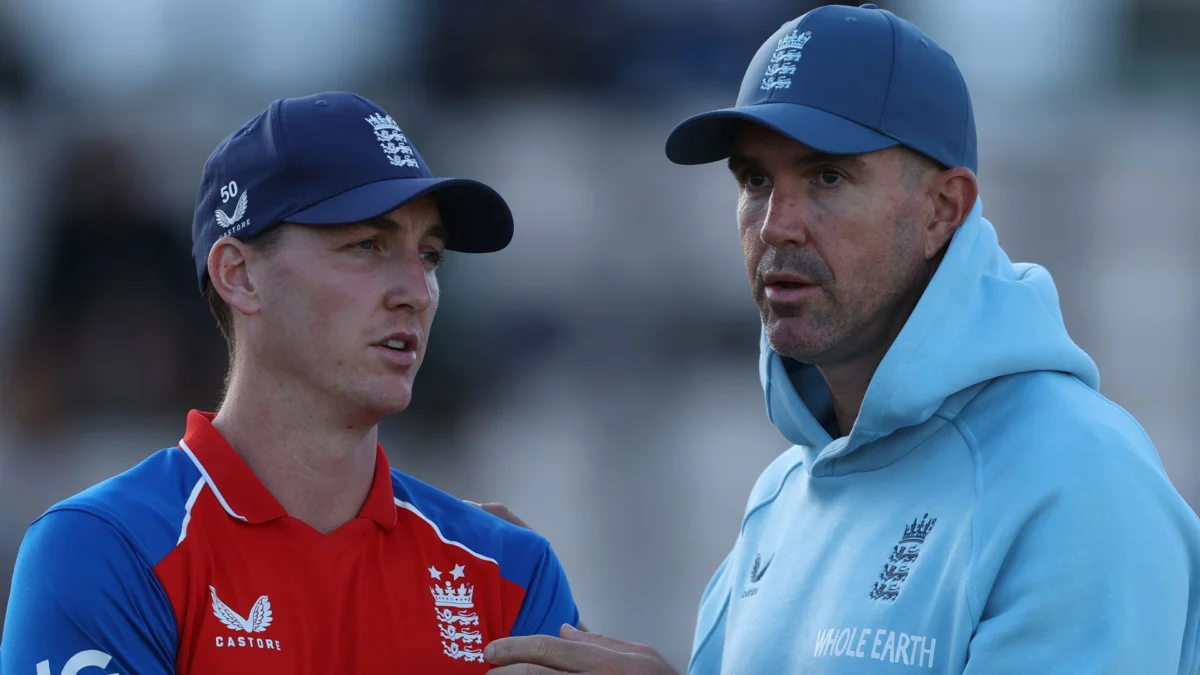
The landscape of English cricket has long been defined by individual brilliance, but a recent assertion from Test captain Ben Stokes has reignited a debate regarding the hierarchy of talent within the national setup. Following a blistering performance by Harry Brook against Sri Lanka at the Utilita Bowl in Southampton, Stokes took to social media to suggest that the 27-year-old Yorkshireman possesses a natural ability that may even eclipse the prodigious talent of England legend Kevin Pietersen. This comparison—between one of the most transformative figures in the history of the sport and the current vanguard of England’s aggressive white-ball evolution—has sent ripples through the cricketing fraternity, highlighting both the heights Brook has already reached and the formidable legacy he is beginning to challenge.
A Masterclass in Southampton
The catalyst for this discourse was Brook’s scintillating 42-ball century against Sri Lanka, an innings that served as a microcosm of his tactical and physical growth. Striking 10 fours and six towering sixes, Brook dismantled the Sri Lankan attack with a level of clinical aggression that has become the hallmark of the Brendon McCullum era. The most striking sequence of the match occurred when Brook targeted spinner Dunith Wellalage, dispatching the bowler for 30 runs in a single over—a feat that underscored the "Bazball" philosophy of taking the game to the opposition regardless of the situation.
This performance was not merely a display of raw power; it was a testament to his technical refinement. Pundits, including former England captain Eoin Morgan and legendary Sri Lankan batter Kumar Sangakkara, noted the precision of his footwork. Sangakkara, a master of the craft, remarked on Brook’s ability to read length instantaneously, a trait that allows him to remain balanced whether he is attacking pace through the covers or utilizing the scoop and reverse-paddle against spin.
The Comparison: Brook and Pietersen
To understand the weight of Ben Stokes’s statement, one must consider the shadow cast by Kevin Pietersen. Between 2004 and 2014, Pietersen amassed 13,779 international runs across all formats, fundamentally altering how England approached batting against elite spin and high-velocity pace. His dominance was characterized by a swashbuckling style that forced bowlers to rethink their defensive strategies.
However, the modern game demands a different set of versatility, and this is where the comparison becomes nuanced. While Pietersen thrived on dominating the crease and imposing his will through sheer aggression, Brook operates with a blend of power and a "360-degree" technical range that is tailored for the high-intensity, data-driven environment of 2024. Stokes, who has witnessed both players’ impacts from different vantage points, did not shy away from his assessment. On social media, he declared, "I don’t even think the genius of KP could come close to what Brook has talent-wise. You are an absolute freak, Harry."
While Stokes later conceded that the comment might have been "a bit harsh on KP," the underlying sentiment remained: he views Brook as a unique talent whose ceiling is yet to be fully realized.
Statistical Trajectory and Longevity
The objective data provides a compelling narrative for both players. Pietersen’s career was cut short by administrative and personal fallout with the England and Wales Cricket Board (ECB), which arguably robbed the sport of several more years of his prime. Brook, conversely, has been integrated into the England setup during a period of massive structural investment and tactical freedom.
Since his international debut in 2022, Brook has accumulated over 6,500 runs in international competition. At 27 years of age, he is entering what are widely considered the "peak" years for a professional batter. If he maintains his current rate of scoring and remains free from significant injury, he is projected to challenge, and potentially exceed, Pietersen’s career run tally. However, longevity remains the true test. Pietersen maintained his high-scoring output across a decade, a feat that requires immense mental fortitude and physical durability—the next threshold for Brook to cross.
The Role of Mentorship and Cultural Shift
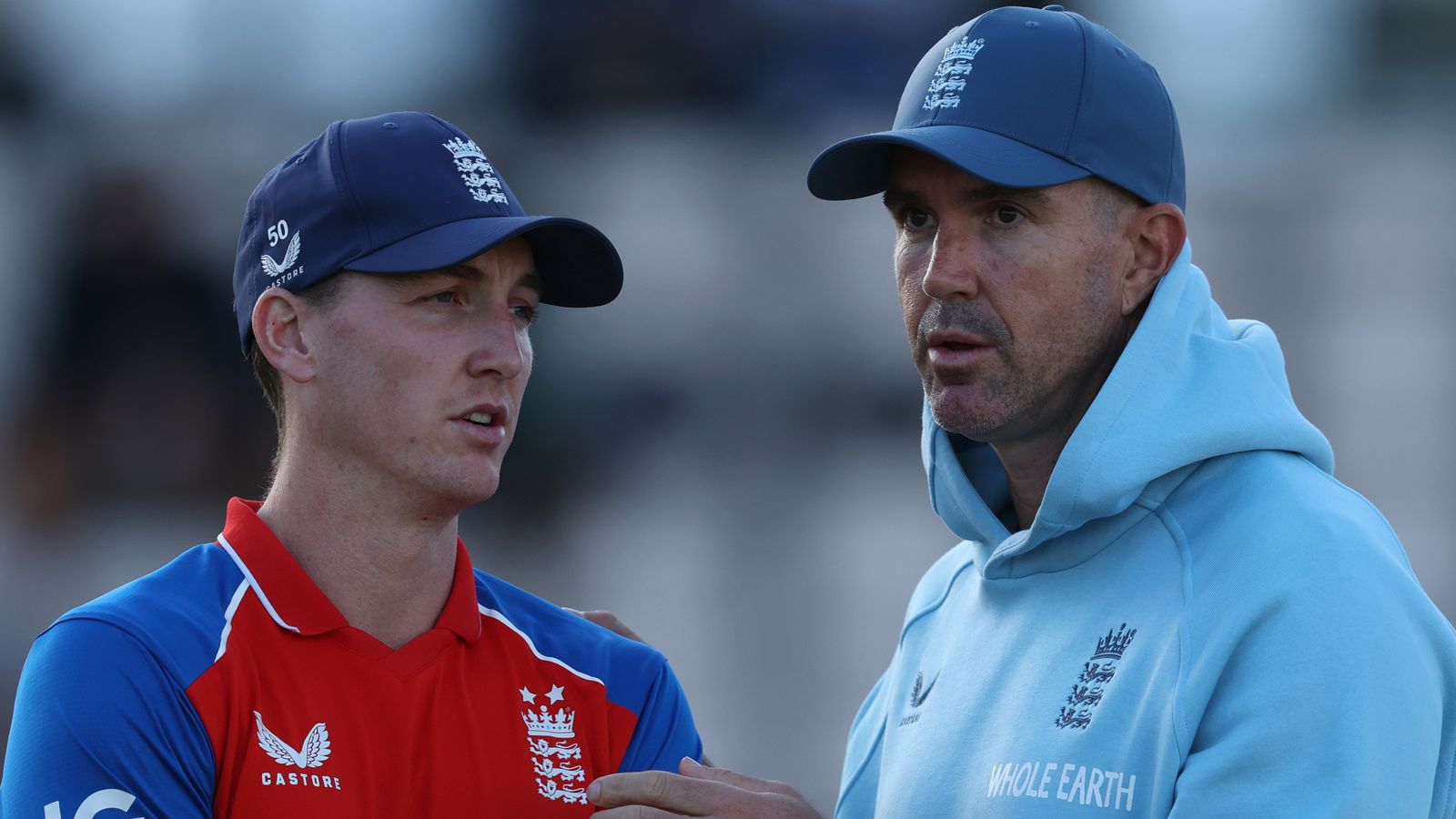
Adding intrigue to the debate is the presence of Kevin Pietersen himself in the current England white-ball setup. Pietersen has been brought in as a mentor under head coach Brendon McCullum, a role that will continue through to the 50-over World Cup in 2027. This intersection of generations—where the master serves as a guide for the student—adds a layer of professional maturity to the discussion.
The mentorship program is part of a broader strategy by the ECB to bridge the gap between the "golden generation" and the current crop of talent. By incorporating former legends into coaching roles, the management hopes to instill the same level of tactical awareness and mental resilience that defined the early 2000s, while maintaining the high-tempo aggression that has made England a powerhouse in T20 and ODI cricket.
Broader Implications for the England Setup
The debate over who is "better" is ultimately subjective, yet it highlights the evolution of the England team. For the past two years, the team has consciously moved away from the more conservative, defensive batting styles of the mid-2010s. Brook is the primary beneficiary of this shift. He has not only been given the license to fail but has been encouraged to treat every delivery as an opportunity to change the momentum of a game.
While his white-ball form is explosive, the real implication of his rise lies in his transition to red-ball cricket. Despite not scoring a Test century for over a year, his performance in the international game’s longest form has shown a shift in temperament. Throughout the recent summer, Brook has been responsible for five fifties, demonstrating a capacity to build innings in difficult conditions. This adaptability—the ability to pivot between the carnage of a T20 century and the grind of a Test match—is the true marker of a modern great.
Looking Ahead: The Second T20 and Beyond
As England prepares for the second match of the series against Sri Lanka, the focus will inevitably remain on Brook. The expectations placed upon him have shifted from "promising youngster" to "generational talent." This brings its own set of pressures. The volatility of T20 cricket means that for every 42-ball hundred, there is the risk of a "daft dismissal," as noted by critics.
However, the confidence shown in him by the likes of Stokes, Morgan, and the coaching staff suggests that the team is willing to live with the occasional failure in exchange for the match-winning potential he provides. For the fans, the debate between Pietersen and Brook serves as a celebration of the depth of English talent. Whether Brook surpasses Pietersen’s legacy or carves out a entirely different, arguably more versatile one, the current era of English cricket is undeniably witnessing one of its most exciting chapters.
The fixture in Southampton was more than just a victory; it was a statement of intent. As the squad looks toward the 2027 World Cup, the continuity of this talent, nurtured by the wisdom of figures like Pietersen and guided by the leadership of Stokes and McCullum, will be the defining factor in whether this current era is remembered as merely successful or truly legendary. For now, the cricketing world waits to see if the "freak" talent identified by his captain can continue to make the extraordinary look routine.

