
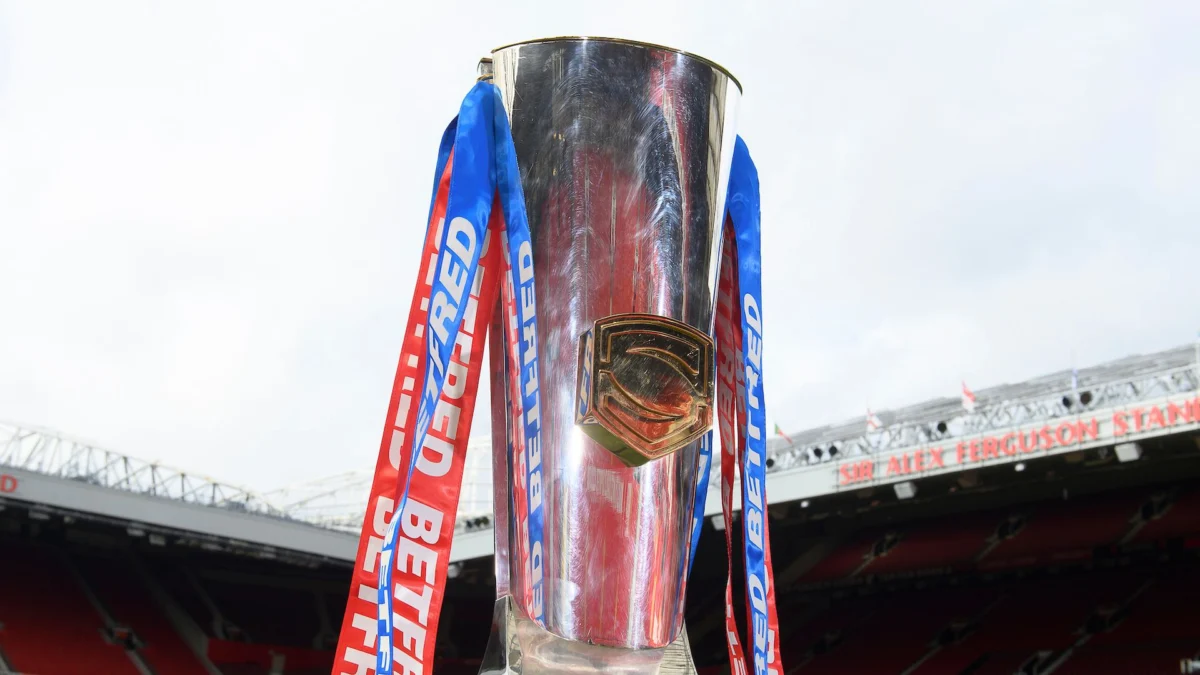
The 2026 Super League Grand Final between Warrington Wolves and Wakefield Trinity on Saturday, October 3, at Old Trafford marks a watershed moment in the history of English rugby league. For the first time since the inception of the Super League era in 1998, the sport’s showpiece event will not feature the traditional powerhouses of Wigan Warriors, St Helens, or Leeds Rhinos. This collision between the third and fourth-placed teams from the regular season serves as a testament to a shifting competitive landscape, where the established hierarchy has been dismantled in favor of a new, more unpredictable order.
A Historic Venue and a Changing Guard
Old Trafford, the iconic "Theatre of Dreams," has hosted the Super League Grand Final since the competition’s inception in 1998. With the exception of the 2020 fixture, which was moved to Hull due to the global pandemic, the home of Manchester United has served as the permanent stage for the crowning of the champions. Over the past twenty-eight years, this venue has witnessed the rise of dynasties, but 2026 represents a departure from that narrative.
Wakefield Trinity’s presence in the final is a historic achievement, as they become the 11th club to contest the Grand Final. While clubs like St Helens, Wigan, Bradford Bulls, and Leeds have historically dominated the silverware, Wakefield’s emergence highlights the narrowing gap between the league’s traditional elite and the rest of the competition. For Warrington Wolves, a club that has frequently flirted with success, this is an opportunity to rewrite their own history. Since their last appearance in 2018, the Wolves have undergone a rigorous period of transition, focusing on a collective identity that has finally yielded a path to the biggest night in the calendar.
The Road to Old Trafford: A Statistical Overview
The path to this year’s final was paved with high-stakes drama. Warrington’s journey saw them navigate a challenging path, culminating in a resilient victory over the Leeds Rhinos in the semi-finals. Conversely, Wakefield Trinity produced one of the most emphatic displays in the history of the Super League play-offs by dismantling the Wigan Warriors. The margin of victory for Wakefield in that semi-final was a wake-up call for the entire league, underscoring the tactical evolution that has defined their 2026 campaign.
Statistically, both teams have been remarkably balanced. While individual brilliance has been recognized—notably with Ben Currie (Warrington) and Caleb Hamlin-Uele (Wakefield) earning selections in the Super League Dream Team—the success of these squads has been predicated on structural cohesion. Warrington’s game plan has leaned on the creative vision of George Williams and the explosive pace of Matty Ashton, while Wakefield has anchored their identity in a formidable forward pack. The inclusion of players like Isaiah Vagana and Caius Faatili has provided Wakefield with a physical edge that has proven difficult for even the most experienced defensive lines to suppress.
Tactical Analysis: The Clash of Styles
The tactical battle between Warrington and Wakefield will likely center on the control of the "middle" of the park. Wakefield’s Tyson Smoothy has emerged as a quintessential leader, bringing an NRL-caliber discipline to the team’s structure. Having tasted success on the biggest stages in Australia, Smoothy’s composure under pressure will be a critical factor for the Trinity.
For Warrington, the mandate is clear: maintain the pace that defined their late-season run. James Bentley and James Harrison have been tasked with the "grunt work," creating the platform necessary for the backline to capitalize on quick play-the-balls. Analysts suggest that the team that manages the transition between defense and attack most efficiently will hold the trophy by the end of the evening. The historical head-to-head record this season—a victory for Warrington in round 3 and a narrow win for Wakefield in round 26—suggests a contest that will likely remain in the balance until the final whistle.
A Legacy of Excellence: The Rob Burrow Award
Since 2024, the player of the match has been awarded the Rob Burrow Award, replacing the historic Harry Sunderland Trophy. This change was implemented by the Rugby Football League (RFL) to honor the late Leeds Rhinos legend, whose commitment to raising awareness for Motor Neurone Disease (MND) inspired a nation. The award serves as more than just a piece of silverware; it is a symbol of the resilience and spirit that defines the sport.
The list of previous winners of the player of the match award is a "who’s who" of rugby league royalty. From Jason Robinson in 1998 to the more recent accolades for Bevan French (2024) and Mikey Lewis (2025), the award has consistently highlighted players who can produce magic when the pressure is at its zenith. Whether it is a masterful kicking display or a game-breaking run, the individual who lifts the Rob Burrow Award on Saturday will be etched into the folklore of the sport.
Sir Kevin Sinfield’s Final Challenge
The 2026 Grand Final is further distinguished by the final charity challenge of Sir Kevin Sinfield. Having already raised over £11 million for the MND community since 2020, Sinfield’s seventh and final challenge involves a series of seven ultra-marathons spanning the home grounds of all 12 Super League clubs. His journey, which began at Hull KR’s Craven Park on September 27, is designed to unite the rugby league community before culminating at Old Trafford.
Sinfield’s presence at the event, where he is scheduled to present the match ball, provides a poignant backdrop to the proceedings. It serves as a reminder that while the game at Old Trafford is a fierce, professional contest, it is also supported by a community that values character, empathy, and collective support. The pre-match and half-time entertainment, featuring the Soul Symphony and the traditional performance of "Jerusalem" by Laura Wright, will ensure that the atmosphere remains reflective of the sport’s deep-rooted traditions.
The Broader Implications for Super League
The absence of the "Big Three" (Wigan, St Helens, and Leeds) from this year’s final is not merely a fluke; it is a sign of a more competitive, parity-driven league. The investment in youth development, the globalization of talent recruitment, and the increased parity in the salary cap have all contributed to a more democratic, albeit chaotic, league table.
For the sport’s governing body, this final is a marketing triumph. By showcasing two clubs that have historically operated outside the traditional championship circle, the league is signaling to its fanbase that the "Grand Final dream" is achievable for any club with the right vision and execution. The long-term impact of this shift could be an increase in fan engagement across regional markets that have previously felt disenfranchised by the dominance of a few select clubs.
Conclusion: The Final Countdown
As the clock ticks toward the 6:00 pm kick-off on October 3, the narrative is set for a historic encounter. Whether Wakefield Trinity makes history with a maiden title or the Warrington Wolves cement their place as the new kings of the North, the 2026 Super League Grand Final is guaranteed to deliver a spectacle worthy of its venue.
Fans watching via Sky Sports Main Event and Sky Sports+ will witness not only a clash of two determined rosters but also the conclusion of a season that has permanently altered the trajectory of the sport. The stage at Old Trafford is prepared for the next generation of icons to emerge. In the absence of the old guard, the opportunity for greatness has never been more accessible, and for the players of Warrington and Wakefield, the time to seize that destiny has finally arrived.

