
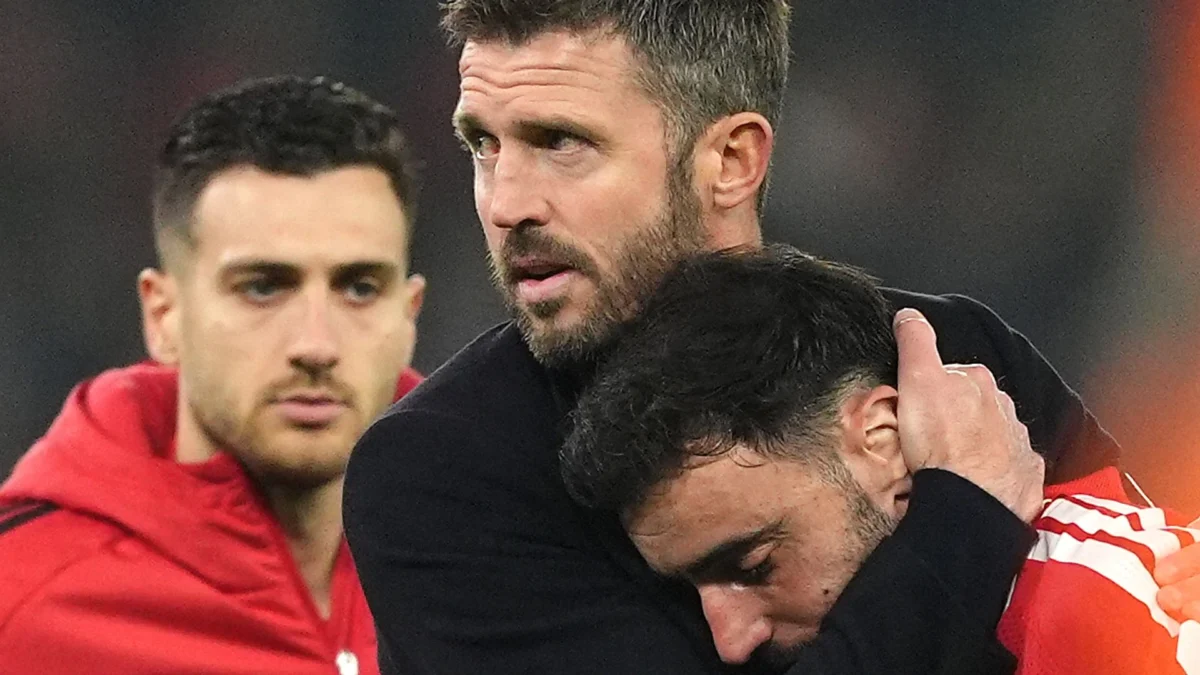
The stalemate at Old Trafford, salvaged only by two desperate stoppage-time goals, represents a new nadir for the club in the modern era. Currently occupying 18th place, Manchester United finds itself in its most precarious position after ten games since the 1986/87 campaign, when the team sat 20th in the top flight. The result extends an alarming winless streak to eight league matches—a club record in the Premier League era—leaving the squad just one point clear of safety and the manager’s future under intense scrutiny as the November international break approaches.
A Chronology of Decline
The current malaise at Old Trafford is not a sudden occurrence but rather the culmination of a prolonged slide. Following a summer of transition and high-profile recruitment, expectations were high for the squad to mount a serious challenge for European qualification. Instead, the side has struggled to implement a cohesive tactical identity, leading to a breakdown in defensive structure and a lack of clinical efficiency in the final third.
Over the last ten matches, the team has displayed a recurring pattern: early concessions, a lack of mid-game tactical adjustments, and a reliance on individual moments of brilliance to salvage points. The draw against Aston Villa was emblematic of these failures. Despite holding the majority of possession and creating significant scoring opportunities, the defense appeared porous, conceding four times against a well-drilled Villa side. The late rally—saving a point in the final minutes—has been interpreted by some as a sign of character, but for others, it merely highlights the defensive instability that has plagued the team since August.
The Statistical Reality
The metrics behind Manchester United’s current standing make for grim reading. Beyond the eight-game winless run, the club’s defensive output is among the worst in the league. Through the first ten matches, the side has conceded an average of 2.1 goals per game, a staggering figure for a club of its stature.
Furthermore, the team’s conversion rate has dipped significantly. While the attack is creating chances, the lack of a clinical finisher who can consistently capitalize on high-xG (expected goals) moments has left the team reliant on late-game heroics. Historical data shows that in the last three decades, no Manchester United side has looked this vulnerable across the first quarter of a season. The drop-off in points per game compared to last season is significant, suggesting a regression that goes beyond mere bad luck or a difficult schedule.
Tense Exchanges and Official Stance
In the immediate aftermath of the Villa result, the atmosphere surrounding the club was palpable. During a post-match interview with Sky Sports’ Patrick Davison, Michael Carrick appeared visibly strained when questioned about the viability of his continued tenure. The interaction was marked by a tense exchange, with Carrick pushing back against the suggestion that his departure might be imminent or even under consideration by the board.
"It’s not going to happen, no," Carrick stated when asked if he would walk away. When probed about the inevitable conversations expected between the coaching staff and the club’s hierarchy, Carrick remained defiant, questioning the premise of the inquiry. He maintained that the focus remains on "tightening up" on individual errors and continuing the tactical work established in training.
In the subsequent press conference, Carrick doubled down on his belief that the squad possesses the quality required to climb the table. "One hundred per cent," he asserted. "I think there’s more than enough. Goals change games and we’ve got to deal with it and it’s something we have to improve on drastically." He emphasized that his vision for the club’s direction remains clear, noting that while the results have not materialized, the performance metrics—outside of the errors in the defensive third—suggest that the team is not as far from a positive run as the league table might indicate.
Institutional Criticisms
The crisis at Old Trafford has drawn sharp criticism from former players and pundits who argue that the problem transcends the manager. Gary Neville, speaking on NBC, delivered a scathing assessment of the club’s institutional health. Neville argued that the current situation is the result of systemic failure within the ownership and recruitment departments.
"You can keep changing the manager and thinking that’s going to be the answer. But this has been proven now over eight managers in 12 years—that’s not the answer," Neville observed. He highlighted that the club’s failure to align its leadership from the boardroom to the pitch has created a culture of instability. According to Neville, the club is currently staffed by individuals in senior roles who lack the experience necessary for such high-pressure positions, leading to a disjointed approach to recruitment and player development.
Roy Keane, known for his uncompromising standards, echoed these sentiments while offering a more targeted critique of the squad’s mentality. Referring to Carrick’s post-match comments, Keane suggested that the manager’s "politician-like" approach—avoiding direct blame and focusing on broad, vague improvements—might not be the right tone for a team currently in a relegation battle.
"He talks a lot but doesn’t say much," Keane remarked. "He keeps saying we need to tighten up, but they better get moving on that. You should be banging heads! I don’t see that as an honest dressing room. The really top players put demands on each other. They all seem to be tiptoeing around each other." Keane specifically warned that the upcoming fixture against Liverpool would be a litmus test for the team’s resolve, questioning whether the players are capable of the defensive grit required to secure a result against high-caliber opposition.
Broader Implications and The Road Ahead
The international break provides a brief reprieve from the relentless schedule, yet it also creates a vacuum that is often filled by speculation regarding managerial changes. For the Manchester United board, the decision is twofold: persist with Carrick and hope that the tactical adjustments he promises can stabilize the ship, or initiate a change and risk further upheaval during a critical stage of the season.
The implications of failing to turn the season around are profound. Beyond the financial impact of missing out on European competition, a relegation battle compromises the club’s ability to attract top-tier talent in future transfer windows and destabilizes the commercial foundations that the club relies upon.
Furthermore, the fan reaction—which oscillated between support for the manager at the final whistle and growing frustration with the board—reflects a divided and anxious supporter base. If the team returns from the international break with another lackluster performance, the pressure on the decision-makers will reach a breaking point.
As it stands, the club is at a crossroads. The tactical, psychological, and institutional issues identified by observers like Neville and Keane suggest that there is no "quick fix." The team must find a way to balance the need for immediate, pragmatic results—such as clean sheets and defensive organization—with the long-term project that the leadership has been trying to build. Whether Michael Carrick is given the time to see that project through, or whether the board decides that a new voice is required to shake the squad from its current stupor, remains the defining question of the Premier League season thus far. For now, the only certainty is that the margin for error has evaporated, and for Manchester United, the next few weeks will be nothing short of a defining period in the club’s modern history.

