
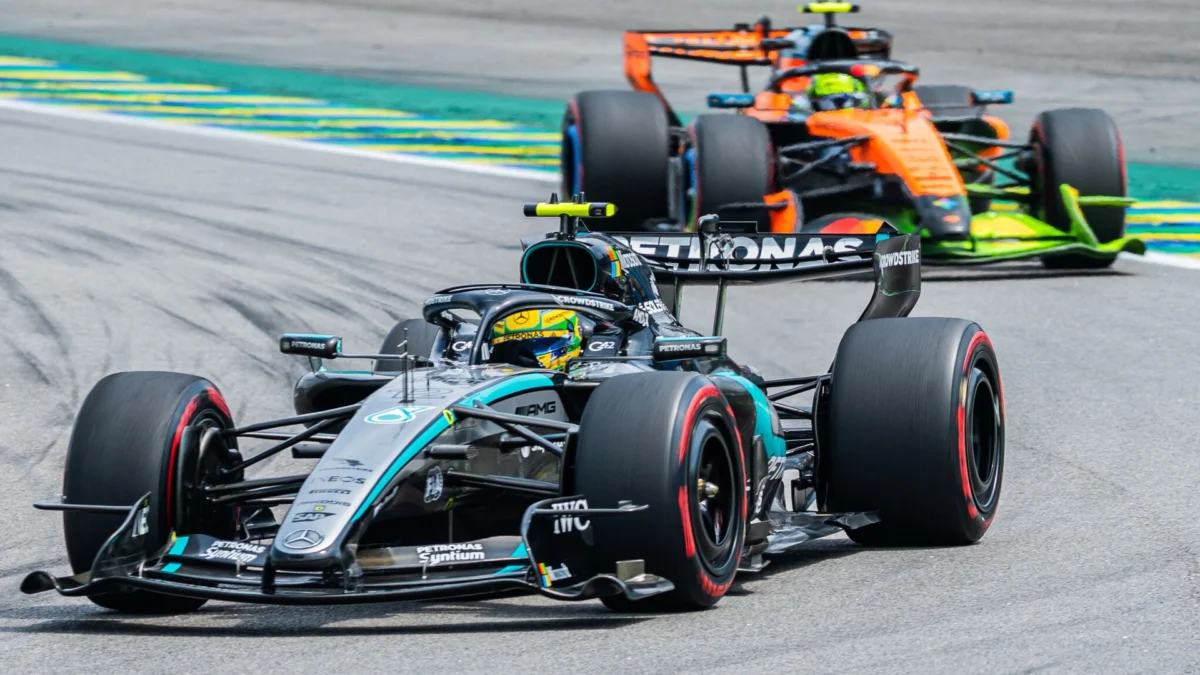
Fresh off his historic title-clinching performance in Mexico just five days ago, Kimi Antonelli has wasted no time demonstrating why he is currently the benchmark of the sport. At the iconic Autódromo José Carlos Pace in Interlagos, the Mercedes prodigy topped the timesheets in the second practice session, signaling that his championship victory has not diminished his competitive hunger. Antonelli, who secured the second-fastest time in the opening session, was the only driver to break the 71-second barrier, posting a blistering 1:10.763. This benchmark proved two-tenths of a second faster than both Lando Norris and Max Verstappen, who finished second and third respectively.
The atmosphere in the paddock remains electric as the sport navigates the final leg of an intense triple-header. Interlagos, with its legendary undulating layout and technical demands, has long been a favorite for drivers and fans alike. The weekend’s proceedings are compounded by the unpredictability of the Sao Paulo climate, which has already begun to influence team strategies and driver preparations.
A Rhythmic Mastery at Interlagos
Sky Sports F1 analyst Karun Chandhok noted that Antonelli’s performance is defined by a newfound level of composure. "I think Antonelli has just found a better rhythm around here than anyone else," Chandhok remarked. "He is driving without the baggage of the championship sitting on his shoulders and has found an incredible rhythm that is clearly difficult for the rest of the field to emulate."
This lack of "championship pressure" appears to have unlocked a more intuitive driving style. While others are meticulously managing points gaps or securing their standings, Antonelli’s approach remains focused on extracting maximum performance from the W16 platform. His ability to adapt to the lower grip levels inherent to the Interlagos surface has been a standout feature of his Friday program.
McLaren’s Upgraded Ambitions
For Lando Norris and the McLaren team, Friday provided much-needed validation for their latest technical upgrades. The MCL40 has undergone significant refinements intended to close the gap to the front-runners. Despite struggling slightly to match the Mercedes pace in the second session, Norris expressed genuine optimism regarding the team’s trajectory.
"I think FP1 we seemed quite easily on the pace," Norris said. "FP2 we struggled a little bit more to match the Mercedes but it’s been a pretty good start to the weekend and we have continued the trend we had in Mexico. We have gained performance. Nothing has changed from a driving point of view. Still tricky, but it’s maybe brought a little bit of lap time, which is what we want."
The data supports his assessment. McLaren appears to have found a more consistent balance on long-run simulations, which could prove decisive if the weather remains dry for Sunday’s main event.
Ferrari’s Challenging Friday
The narrative for Ferrari, however, was one of frustration and internal recalibration. Following the high-profile first-lap collision in Mexico—which prompted an emergency meeting between drivers Lewis Hamilton, Charles Leclerc, and team principal Frédéric Vasseur—the Scuderia faced a difficult start to the weekend.
Hamilton finished sixth, while Leclerc, returning to the cockpit after missing Thursday’s media commitments to be with his family for the birth of his daughter, Bianca, managed seventh. The team appears to be struggling with short-run pace, an area where they usually excel. Vasseur’s primary challenge this weekend is to stabilize the internal dynamics between his two lead drivers, ensuring that the friction observed in Mexico does not translate into further points loss in Brazil.
The Rookies and the Rising Stars
The Sao Paulo Grand Prix also serves as a platform for emerging talent, with several young drivers filling seats during the opening practice session. Gabriel Bortoleto, representing Audi at his home race, impressed by finishing eighth, a significant achievement given the pressure of performing in front of a partisan Brazilian crowd.
Red Bull’s Isack Hadjar finished ninth, while Oliver Bearman rounded out the top ten for Haas. However, not all debutants enjoyed a smooth transition. Rafael Camara, stepping in for Esteban Ocon at Haas, experienced a steep learning curve. While his day was relatively clean, a minor incident with Charles Leclerc during the second session saw him summoned to the stewards, highlighting the intensity of F1 traffic management at a circuit as short and cramped as Interlagos.
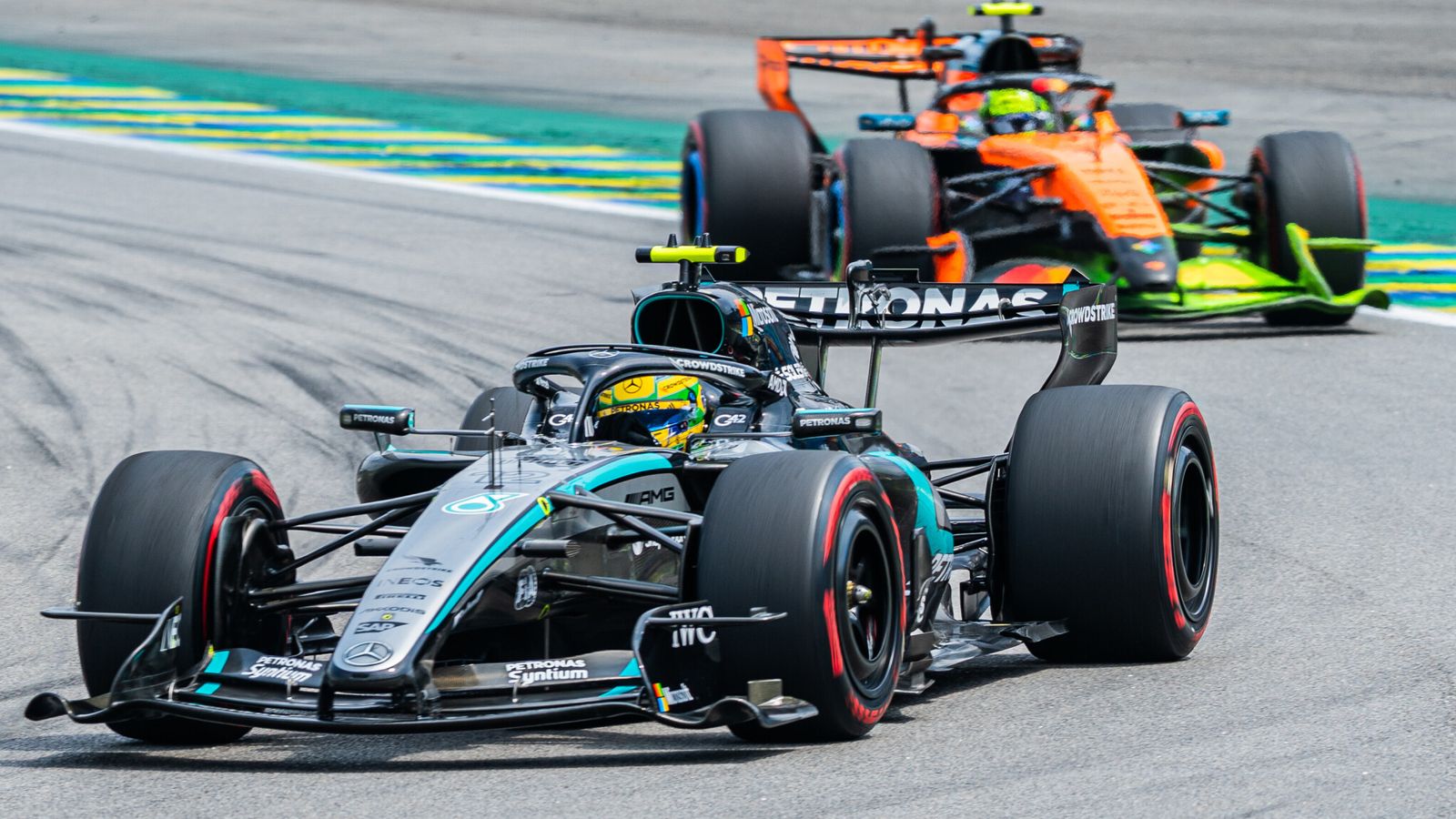
Reliability issues plagued the back of the grid, with Nico Hulkenberg failing to set a lap time due to persistent technical gremlins. Similarly, the Audi program suffered when youngster Freddie Slater’s outing was cut short after just seven laps due to an electrical failure that the team was unable to rectify for the remainder of the day.
Weather and Tactical Uncertainty
As the weekend progresses, the shadow of the Brazilian weather remains the most significant variable. While Friday’s sessions remained dry, low-hanging clouds and the threat of torrential rain loom over Saturday’s qualifying and Sunday’s race.
"Tomorrow will be very, very wet!" Norris warned during his post-session debrief. "I would bring your rain jacket and a hat."
The teams are preparing for a "dynamic" approach to the weekend, knowing that at Interlagos, conditions can shift from sunshine to a deluge in a matter of minutes. This volatility makes the data gathered on Friday particularly vital, as teams must extrapolate potential wet-weather setups from their dry-running telemetry.
Tactical Implications and Championship Dynamics
With George Russell carrying a five-place grid penalty for an engine change, the Mercedes strategic outlook is complex. While Antonelli is leading the way, the team must ensure they optimize Russell’s strategy to mitigate the impact of his penalty. The battle for the remaining podium spots, and indeed for points in the middle of the pack, remains tight.
The performance of the midfield—Alpine, Racing Bulls, and Aston Martin—suggests that qualifying will be separated by mere hundredths of a second. As Antonelli noted, "We know Ferrari in qualifying can find a bit extra. We will all be very close to each other and it will be a very tight qualifying."
Looking Ahead: The Final Sprint
As the weekend moves toward the final qualifying session and the Grand Prix, the focus shifts to tire degradation. High degradation rates noted by the drivers during long-run simulations indicate that a multi-stop strategy might be the norm for Sunday.
The Sao Paulo Grand Prix is the final leg of a demanding triple-header, and the fatigue of the teams and the stress on the machinery are reaching their seasonal peak. The performance of the field during Friday’s practice has set the stage for a dramatic showdown. With a world champion driving with the freedom of success and a pack of hungry contenders looking to reclaim momentum, the stage is set for a high-stakes weekend.
The schedule for the remainder of the event is as follows:
Saturday, November 7
- 2:15 PM: Practice Three (Session starts at 2:30 PM)
- 5:00 PM: Qualifying Build-up
- 6:00 PM: Sao Paulo Grand Prix Qualifying
- 8:00 PM: Ted’s Qualifying Notebook
Sunday, November 8
- 3:30 PM: Grand Prix Sunday: Build-up
- 5:00 PM: The Sao Paulo Grand Prix
- 7:00 PM: Chequered Flag: Race Reaction
- 8:00 PM: Ted’s Notebook
As the paddock prepares for the intensity of qualifying, the narrative remains centered on whether Kimi Antonelli can maintain his dominance or if the combined experience of the grid can mount a meaningful challenge against the newly crowned champion. Whatever the outcome, the Sao Paulo Grand Prix promises to be a pivotal chapter in what has already been an extraordinary season.

