
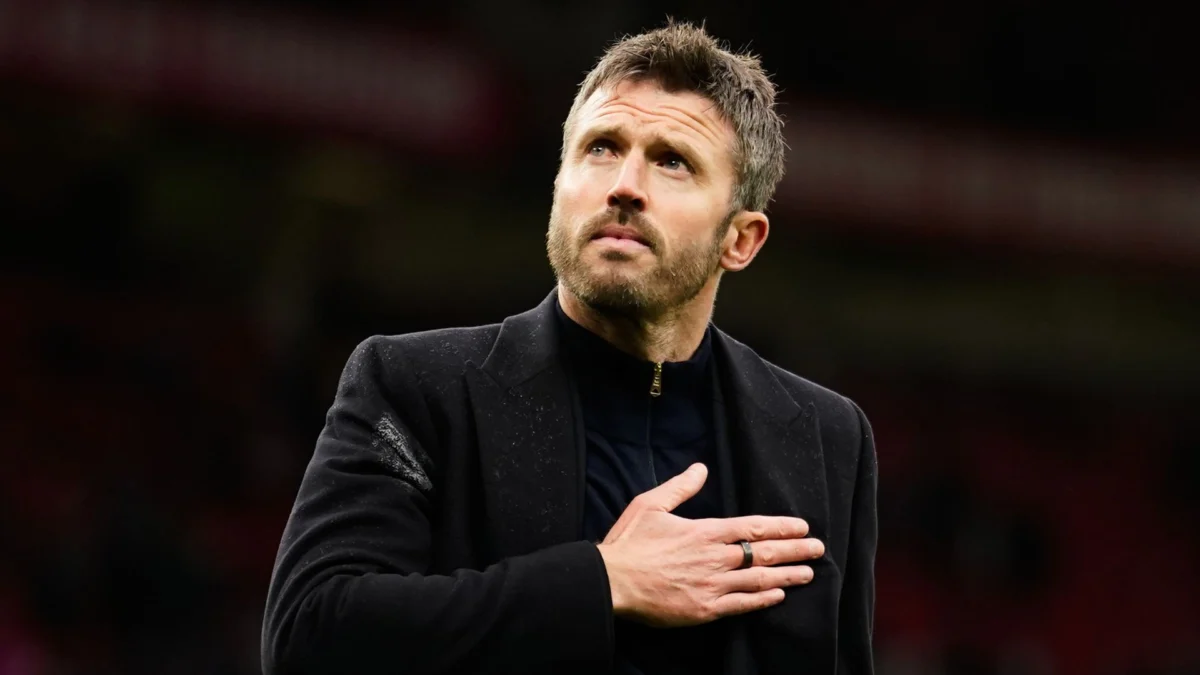
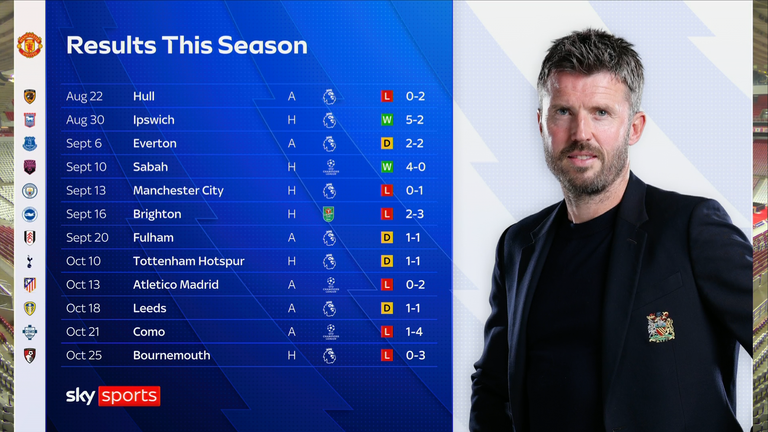
The corridors of Carrington have been filled with an atmosphere of profound uncertainty this week as Manchester United’s leadership evaluates the future of head coach Michael Carrick. Following a comprehensive 3-0 defeat at home to Bournemouth—a result that extended the club’s winless streak to eight games across all competitions—the hierarchy, including CEO Omar Berrada and director of football Jason Wilcox, held urgent meetings at the club’s training facility. While the first-team squad was granted a scheduled day off on Monday, the presence of senior management at the training ground underscores the gravity of the crisis currently engulfing the Old Trafford club.
As the players prepare to return to training on Tuesday, it remains unclear whether Carrick will be the individual overseeing the session. The silence from the club’s ownership, headed by Sir Jim Ratcliffe, has fueled speculation regarding a potential managerial change, yet the delay in a definitive announcement suggests a complex decision-making process rooted in both strategic planning and public relations management.
A Season of Unprecedented Decline
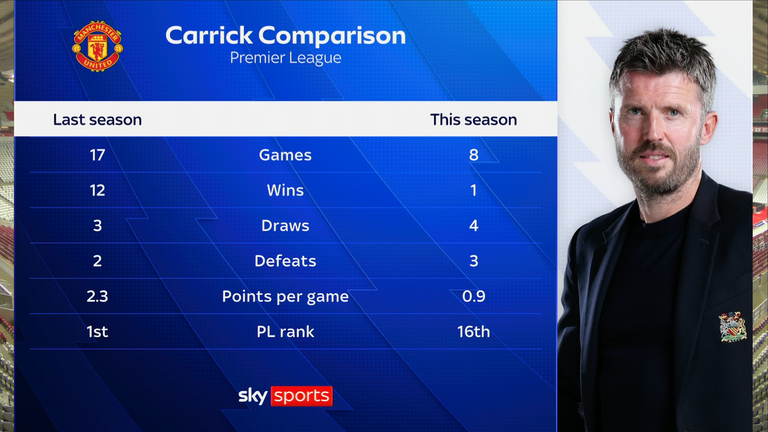
The current campaign has marked a catastrophic descent for Manchester United. Currently languishing in 16th place in the Premier League table, the club has accrued a mere seven points from their opening seven fixtures. This represents the worst start to a top-flight season in the club’s modern history, leaving them just one point clear of the relegation zone. The statistical decline is stark; after a promising 2025/26 season, the drop-off in output, defensive stability, and creative cohesion has been sharp.
The tension within the dressing room has mirrored the struggles on the pitch. Following a heavy 4-1 loss in the Champions League to Como, club captain Bruno Fernandes reportedly questioned the tactical setup implemented by the coaching staff. In a move that signaled deep-seated friction, Carrick opted to drop his captain for the subsequent match against Bournemouth. The defeat that followed served only to amplify the scrutiny on the manager, whose tactical decisions have increasingly come under fire from both analysts and supporters.
Chronology of a Failed Tenure
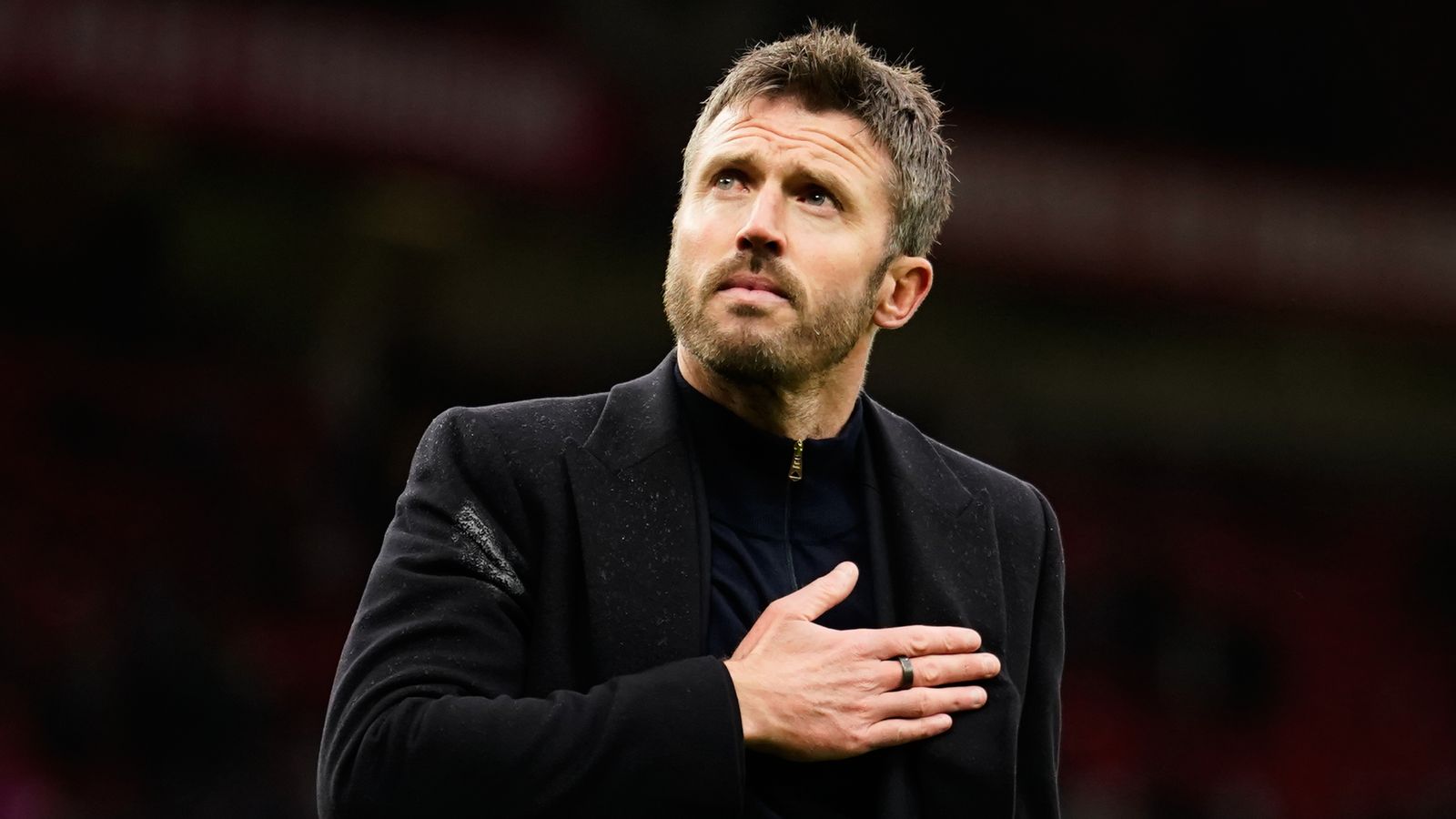
To understand the current impasse, one must look at the trajectory of Carrick’s appointment. Brought in during January 2026 following the dismissal of Ruben Amorim, Carrick initially acted as a stabilizing force. His interim period was characterized by a resurgence that saw the team win 12 of 17 matches, ultimately securing a third-place finish and a return to European football’s elite competition.
Such was the success of that period that the board rewarded him with a new contract in May 2026, extending his tenure until 2028 and acknowledging him as a nominee for the Premier League Manager of the Season. However, the momentum from that spring period evaporated during the summer transfer window, and the subsequent failure to integrate new arrivals into a cohesive system has seen the club’s form collapse entirely. The current eight-game winless streak is not merely a slump; it is a structural failure that has left the team vulnerable against mid-table and lower-tier opposition.
The Carrington Atmosphere: A House Divided
The scene at Carrington on Monday offered a visual representation of the club’s internal instability. While Omar Berrada and Jason Wilcox conducted high-level discussions regarding the club’s direction, Carrick was observed in the academy section of the facility, quietly watching the U21s take on Hull City.
The lack of formal communication between the manager and the decision-makers on Monday has been described as an "awkward" situation by those present. With Wilcox departing the training base at 4:30 PM and Carrick following suit shortly before 5:00 PM, the lack of an immediate meeting suggests that the board is either engaging in a period of intense deliberation or waiting for specific internal processes to conclude before approaching the manager.
Strategic Considerations Behind the Delay
The hesitation to immediately relieve Carrick of his duties can be attributed to several strategic factors. Firstly, the club is acutely aware of the logistical dangers of a "managerial vacuum." The worst-case scenario for the board would be to terminate Carrick’s contract without a clear, signed agreement with a successor. Such a move would leave the club in a state of operational limbo, risking further point deductions in the league and a total loss of control over the squad’s training regimen.
Secondly, the board is navigating the delicate issue of fan sentiment. Despite the team’s dismal performances, Carrick remains a figure of genuine popularity among the Manchester United fanbase, a remnant of his playing days and his initial success as a coach. The club’s leadership is mindful of the precedent set during the final days of Ole Gunnar Solskjaer’s tenure in 2021. In that instance, the club sought to manage the departure with extreme care to preserve the dignity of a club legend and mitigate potential backlash. There is a palpable desire among the hierarchy to handle this transition humanely and professionally to avoid an ugly, public confrontation that could further alienate a disillusioned supporter base.
Broader Implications and Tactical Failure
Beyond the individual role of the manager, the crisis at Old Trafford reflects deeper systemic issues within the club’s recruitment and tactical infrastructure. The reliance on individual moments of brilliance from players like Fernandes, Manuel Ugarte, or Benjamin Sesko has failed to mask the lack of a cohesive team identity.
Analysts have pointed to a recurring theme: the lack of a defined defensive structure and an inability to manage games when the opposition adopts a high-press strategy. Bournemouth’s victory was not a fluke; it was the result of a well-organized tactical plan that exploited the space between United’s midfield and defense—a recurring vulnerability throughout the current winless run.
The financial implications of this decline are also significant. Missing out on the lucrative knockout stages of the Champions League, combined with a potential finish in the bottom half of the Premier League, would represent a massive blow to the club’s commercial and broadcasting revenues. Sir Jim Ratcliffe’s vision for the club, which was predicated on a swift return to the top of the English game, is currently facing its sternest test since his arrival as a part-owner.
What Comes Next?
As Tuesday approaches, the football world turns its eyes to Carrington. If Carrick is permitted to take training, it will be viewed as a temporary stay of execution, a sign that the board has yet to finalize a successor. Conversely, if a parting of ways is announced, the club must move with unprecedented speed to install an interim solution—a task complicated by the high expectations associated with the Manchester United brand.
The players, having spent the last 24 hours under the shadow of this uncertainty, will be expected to return to professional duties, but the morale within the camp is undoubtedly at an all-time low. For the board, the next 48 hours will be decisive. They must balance the need for immediate, drastic action to save their season with the need for a long-term, sustainable strategy that does not rely on knee-jerk reactions.
Whether or not Michael Carrick continues as the face of this transition, the overarching narrative is clear: Manchester United is a club in the midst of a profound identity crisis. The resolution of the coaching situation is only the first step in a long, difficult process of rebuilding the culture, the tactics, and the competitive spirit that once defined the institution. For now, the supporters, the staff, and the players are waiting, caught in the tension of a club standing at a crossroads.

