
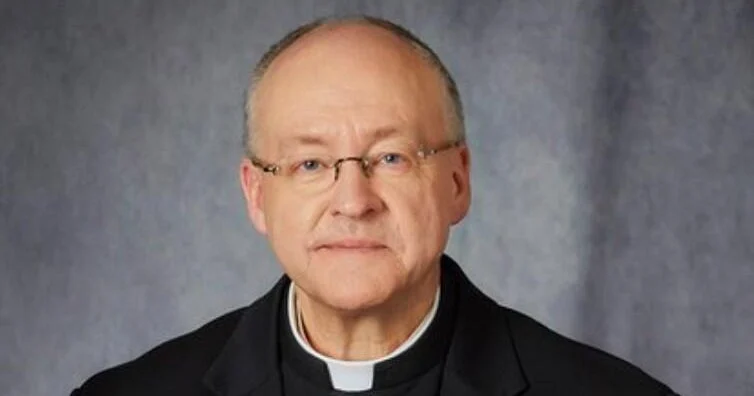
Milwaukee Archbishop Jeffrey Grob and Des Moines Bishop William Joensen have issued public apologies following a controversial White House meeting held less than two weeks before the midterm elections. The gathering, which included a dozen Catholic prelates and President Donald Trump, swiftly transitioned from what the religious leaders understood to be a private policy discussion into a widely distributed multimedia campaign asset. The incident has reignited longstanding tensions regarding the delicate intersection of religious ministry and partisan politics in the United States, placing the U.S. Catholic hierarchy under intense scrutiny from both constituents and observers.
The controversy centers on a meeting originally scheduled through an invitation extended by the White House in September. According to statements released by Archbishop Grob and Bishop Joensen, the gathering was pitched as a confidential dialogue addressing critical policy issues of mutual concern to the administration and the Catholic Church. These topics reportedly included federal immigration enforcement, the availability of visas for international religious workers, federal policy on abortion, and the implementation of tax credits to support private and parochial education.
Furthermore, participants were informed that the session would feature discussions with Catholic members of the presidential cabinet, culminating in a private moment of prayer with the president. Trusting these assurances, a delegation of twelve Catholic bishops arrived at the White House on Thursday, October 22, operating under the assumption that the engagement was pastoral and confidential rather than political and public.
However, the nature of the event shifted dramatically shortly after the participants departed. Within hours, the White House digital media teams published photographs and a video capturing the bishops praying with President Trump. The media assets were rapidly integrated into official communication channels and amplified across digital platforms. Because the release occurred merely two weeks prior to the national midterm elections, the timing drew immediate accusations from critics that the sacred act of prayer had been weaponized for electoral leverage.
The fallout was swift. Archbishop Grob reported being inundated with feedback from distressed members of his diocese, some of whom expressed profound pain and confusion over the optics of the meeting. In a formal statement titled "A Public Apology," released on Sunday, October 26, Grob articulated his profound sorrow.
"I feel a heavy sadness, not only over the pain I caused, but also for the fact that something so sacred to a group of religious leaders, prayer to our Heavenly Father, would be manipulated in that way," Grob wrote. He added that while he entered the building with reservations—reservations he now deeply regrets ignoring—he had hoped to advocate for the vulnerable and foster the common good. Instead, he found himself depicted in what many perceived to be a partisan endorsement.
Bishop Joensen of Des Moines echoed these sentiments in his own public address, acknowledging a lapse in strategic foresight. "I wish I had been more shrewd and less simple, like those who exploited our meeting for partisan political purpose," Joensen noted. He affirmed his ongoing commitment to pastoral engagement with political leaders of all affiliations, but underscored that he felt profoundly taken advantage of by the administration’s handling of the event’s optics.
When pressed by journalists regarding whether the administration had secured explicit, informed consent from the bishops prior to publishing the photographs and video, the White House press office declined to directly answer the inquiry. Instead, White House spokesperson Taylor Rogers issued a statement deflecting the procedural question and emphasizing the president’s policy record.
"There has never been a greater president for Catholic Americans than President Trump, and his strong record proves it," Rogers stated.
The response underscores the administration’s aggressive posture in framing any engagement with religious figures as a testament to broad-based community support, particularly during high-stakes political cycles like the midterm elections.
The episode highlights a profound and ongoing ideological fracture within the U.S. Conference of Catholic Bishops (USCCB) concerning how to navigate interactions with secular political power. Individual bishops hold vastly diverse perspectives on President Trump and his administration’s policy agenda.
On one end of the spectrum, figures such as Minnesota-based Bishop Robert Barron have actively collaborated with the administration, having agreed to serve on the White House Religious Liberty Commission—a body largely populated by conservative Christian leaders. Proponents of this cooperative approach argue that direct dialogue is essential to advancing Church teachings on religious freedom, school choice, and the protection of the unborn, regardless of which party holds the executive branch.
Conversely, numerous other bishops have fiercely opposed major tenets of the administration’s platform. Critics within the episcopate have repeatedly denounced the White House’s hardline immigration enforcement strategies, family separations, and border policies, arguing that such measures directly contradict Catholic social teaching and the moral imperative to welcome the stranger and protect human dignity.
This internal ideological diversity often leaves the broader hierarchy vulnerable to being perceived as partisan, depending on which faction accepts invitations to high-profile administration events. Analysts note that when religious leaders participate in tightly controlled photo opportunities without ironclad agreements regarding media usage, they risk having their pastoral intentions overshadowed by the sophisticated machinery of political public relations.
The political implications of the White House meeting extend far beyond the immediate embarrassment experienced by the participating prelates. In the final stretch of a contentious midterm election cycle, both political parties have aggressively courted religious voters—particularly Catholic blocs in key swing districts and states.
Catholic voters have historically represented a critical demographic, often functioning as a bellwether electorate. While white Catholic voters have trended increasingly conservative in recent election cycles, Hispanic Catholics and more politically progressive Catholic demographics remain deeply divided. Events that project an image of ecclesiastical endorsement—even if unintentional or manipulated—can influence voter perceptions and mobilize or alienate reliable voting blocs.
By exploiting the imagery of a prayer session, political strategists aim to solidify the president’s standing among faith-based voters who prioritize traditional moral values and religious liberty. However, the subsequent public backlash from senior clergy members risks alienating moderate voters who prize the traditional separation of church and state, or those who feel that sacred rituals should remain untainted by electoral politics.
For Archbishop Grob, Bishop Joensen, and the ten other bishops who attended the Thursday meeting, the episode serves as a cautionary tale regarding the complexities of engaging with the modern apparatus of executive power. As they attempt to repair relations with their diocesan communities, the broader American Catholic Church is left to grapple once more with the perilous boundaries where faith and partisan politics intersect.

