
The 2026 Formula 1 season has reached a critical juncture at the Lusail International Circuit, where Mercedes has delivered a performance that has effectively stunned the paddock. During Friday’s practice sessions for the Qatar Grand Prix, the Silver Arrows asserted a level of superiority that has left championship contenders Ferrari, McLaren, and Red Bull searching for a technical "outlier" to explain the massive gap in performance. Kimi Antonelli, in a display of confidence and technical precision, topped both practice sessions, with teammate George Russell trailing closely behind to establish a dominant one-two finish for the Brackley-based team.
This sudden resurgence of pace marks a departure from the tightly contested nature of the latter half of the 2026 season, which had previously seen the top four constructors separated by mere hundredths of a second. As teams prepare for Saturday’s all-important qualifying session, the narrative surrounding the weekend has shifted from a battle of parity to a desperate investigation into how Mercedes found an estimated four-tenths of a second advantage over their nearest competitor, Lando Norris.
A Friday of Contrast and Controversy
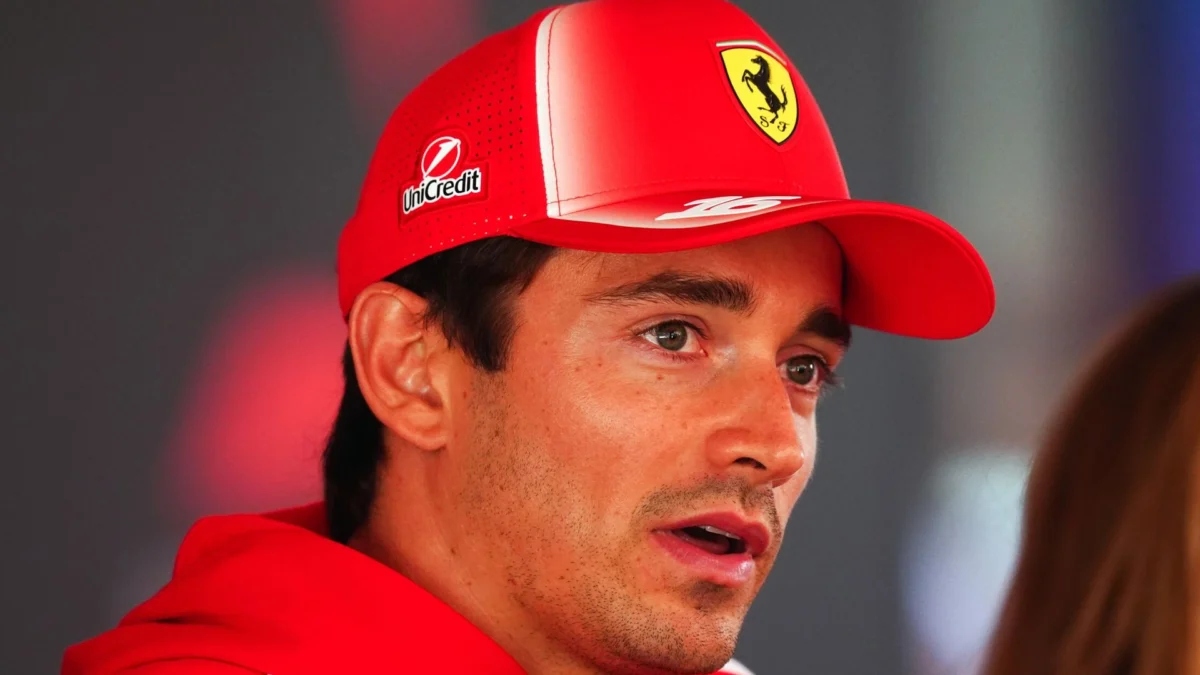
The atmosphere at the Lusail International Circuit was starkly different for the competing teams. While Mercedes operated with mechanical precision, their rivals faced a series of setbacks that compounded their lack of raw pace. Ferrari, in particular, endured a disastrous Friday. Charles Leclerc suffered a significant spin during the second practice session, which resulted in vehicle damage and forced the team into time-consuming repairs. Further compounding the Scuderia’s woes, Lewis Hamilton encountered a severe engine issue that brought his car to a premature halt on the circuit.
For Ferrari, the deficit was staggering, with their drivers finishing over one second behind the pace set by Antonelli. Leclerc was visibly frustrated, noting that the team struggled not only with the soft tyre compound—traditionally the benchmark for single-lap pace—but also with the mediums, failing to find improvements in lap time as the track conditions evolved.
Technical Analysis: The Search for the Outlier
The term "outlier" has become the buzzword of the weekend, introduced by Leclerc to describe the seemingly inexplicable performance gap. From a technical perspective, the Lusail circuit presents a unique set of challenges. It is characterized by high-speed corners, a long main straight, and a track surface that demands extreme aerodynamic efficiency and mechanical grip.
Historically, teams look to optimize their "ride height" and "floor geometry" to maximize downforce without inducing excessive drag or "porpoising." Mercedes appears to have unlocked a specific aerodynamic configuration that allows their W17 to remain glued to the tarmac through high-speed sections while maintaining top-end speed on the straights. Rival engineers are currently poring over GPS data and onboard footage to determine if Mercedes is running an experimental suspension setup or a unique floor iteration that has yet to be replicated by the rest of the grid.
McLaren and Red Bull: Assessing the Damage
McLaren, who were widely tipped to perform well in Qatar due to their inherent strength in high-speed corners, found themselves relegated to the status of spectators to the Mercedes show. Lando Norris, currently locked in a fierce battle for the Drivers’ Championship, was candid about the situation. He noted that the team intends to introduce a new floor design—previously tested in Las Vegas—for Saturday’s proceedings, but he remained skeptical about its ability to bridge the seven-tenths-of-a-second deficit.
"Mercedes are in a different category," Norris remarked during the post-practice media briefing. His assessment reflects the sentiment across the pit lane: that this is not merely a setup advantage, but a fundamental gain in vehicle performance that is difficult to claw back in the span of a single evening.
Simultaneously, Max Verstappen and the Red Bull Racing team reported a "disconnected" car balance. The four-time world champion, known for his ability to extract performance from difficult machinery, appeared uncharacteristically vulnerable. He identified the car’s lack of all-round balance as the primary obstacle, suggesting that both short-run and long-run pace were significantly compromised compared to the Silver Arrows.
Chronology of the 2026 Qatar Grand Prix Weekend
The schedule for the remainder of the event is condensed, leaving little room for teams to implement wholesale changes before the competitive sessions begin:
Saturday, November 28:
- 14:15 GMT: Final Practice (FP3) – This session serves as the last opportunity for teams to evaluate their aerodynamic configurations before the cars enter parc fermé conditions.
- 18:00 GMT: Qualifying – The critical test of one-lap pace. All eyes will be on whether the field can close the gap or if Mercedes will lock out the front row.
Sunday, November 29:
- 16:00 GMT: The Qatar Grand Prix – The main event, where degradation and fuel efficiency will likely dictate the outcome, provided the Mercedes pace holds steady over a race distance.
Implications for the Championship
The ramifications of a dominant Mercedes weekend are far-reaching. For the teams trailing in the standings, a Mercedes victory would not only disrupt the current points balance but would also force a shift in development focus. If Mercedes has indeed found a "silver bullet" solution, the remaining races in the 2026 calendar will become a scramble to reverse-engineer their success.
Furthermore, the performance of Kimi Antonelli is drawing significant attention. As a young driver in the spotlight, his ability to manage the pressure of a dominant car while maintaining consistency is a key subplot. His performance on Friday indicates that he has matured significantly, providing Mercedes with a two-pronged attack that complicates the strategic options for Red Bull and Ferrari.
The Road Ahead
As the sun sets over the Lusail International Circuit, the focus shifts to the overnight data analysis in the team garages. The engineers at Ferrari, McLaren, and Red Bull will be working through the night to simulate various load cases, attempting to understand the mechanics behind the Mercedes pace.
For the spectators and fans, the weekend promises a fascinating tactical battle. Will the "outlier" performance be sustained through the cooler temperatures of qualifying, or will the field compress as track conditions shift? While Mercedes currently holds the cards, the unpredictability of Formula 1—a sport where a single gust of wind or a minor change in track temperature can alter the balance of power—means that nothing is guaranteed until the chequered flag falls on Sunday evening.
The pressure is now firmly on the shoulders of the chasing pack. To challenge for the win, they must move beyond identifying the outlier and find a solution that allows them to re-engage with the front of the field. Failure to do so will almost certainly hand a significant advantage to Mercedes, effectively changing the trajectory of the 2026 title fight in the final stages of the championship.

