
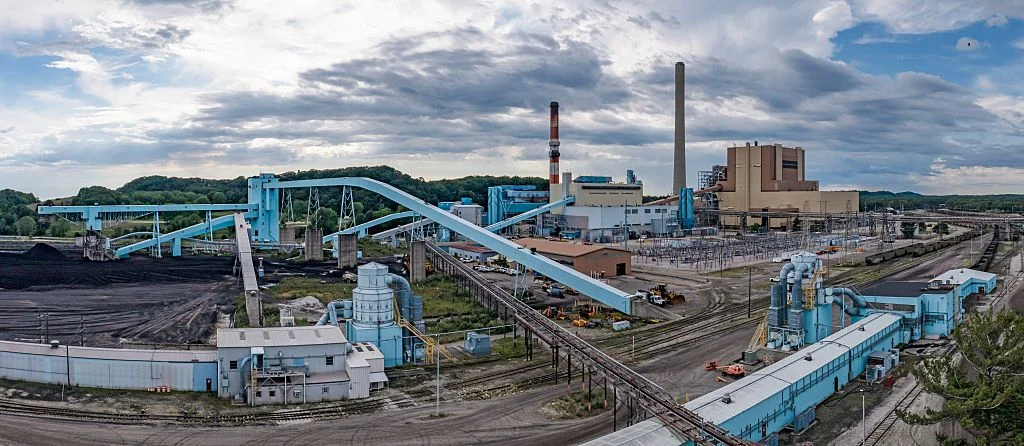
In a sweeping legal rebuke of federal energy policy, a federal court has struck down an emergency order issued by the United States Department of Energy (DOE) aimed at keeping a retiring coal-fired power plant operational. The judicial decision squarely limits federal overreach into local electricity markets, reinforcing the traditional jurisdictional boundaries that separate state-managed generation facilities from federally regulated interstate transmission lines.
The ruling centers on a carefully coordinated shutdown process in Michigan, where regional energy planners had arranged for a modern, more efficient replacement facility to compensate for the impending closure of an aging coal plant. Despite these orderly planning mechanisms, federal regulators intervened, invoking emergency powers to force the facility to remain open. The court’s decision not only clears the path for Michigan to proceed with its phased closure but also establishes a significant precedent that threatens to unravel dozens of similar administrative directives nationwide.
The Statutory Boundaries of the Federal Power Act
At the heart of the litigation lies a meticulous judicial examination of the Federal Power Act (FPA), the foundational statute governing the nation’s electric grid. Through a detailed historical and structural analysis, the court emphasized that Congress intentionally divided authority over the electrical system. Under the statutory framework, the regulation of power generation facilities is reserved almost exclusively for individual states. The federal government, conversely, holds jurisdiction primarily over interstate transmission lines and wholesale electricity markets.
The court pointed directly to the text of the FPA, noting that the legislation explicitly denies the Federal Energy Regulatory Commission (FERC) the authority to regulate generation facilities directly. This statutory omission was not viewed as an oversight, but rather as a deliberate legislative choice. According to the judiciary, Congress intended for federal intervention at the level of power generation to be exceptionally rare—reserved strictly for acute, unforeseen emergencies where an immediate shortfall could not possibly be resolved through any other means.
Throughout the history of the statute, this emergency authority had been utilized sparingly and precisely as Congress intended. The court dismissed the DOE’s justification for intervention, ruling that generalized, indeterminate projections of summer electricity shortfalls do not meet the legal threshold of an "emergency." To rule otherwise, the judges reasoned, would completely undermine the careful balance of federalism established by the legislature.
The Mechanics of Planned Plant Closures
The conflict in Michigan highlights the friction between state-level resource planning and aggressive federal intervention. State and regional grid operators utilize sophisticated resource adequacy planning mechanisms to manage the retirement of legacy infrastructure. In this instance, the closure of the coal plant was not a sudden or disruptive event; it was the result of a meticulously planned transition.
Local utility planners had ensured that a newer, cleaner, and more efficient generating facility would come online concurrently with the coal plant’s retirement, thereby maintaining grid reliability without missing a beat. Local ratepayers had been navigating the economic realities of this transition, anticipating the eventual relief from the heavy financial burdens required to maintain an aging coal-fired facility in a state of operational readiness.
The court observed that permitting the DOE to compel continued generation under such orderly conditions would render meaningless the statutory constraints imposed by Congress. If ordinary resource adequacy planning or standard regulatory requests can be overridden by executive fiat, the carefully constructed checks and balances of the Federal Power Act are effectively neutralized. Consequently, the court declared the DOE’s emergency order void, lifting the financial anchors that had forced local ratepayers to subsidize the mothballed plant.
An Explosion of Emergency Orders
While the immediate impact of the ruling is localized to Michigan, the broader national implications are profound. The legal reasoning articulated by the court applies universally to other instances where the DOE has leveraged emergency authorities to compel coal plants to remain online.
In recent years, the use of emergency administrative orders has escalated dramatically. According to official data from the Department of Energy, the agency issued more than 55 emergency orders under section 202(c) of the Federal Power Act in the year 2026 alone. To put this surge into historical perspective, that single-year total is more than double the cumulative number of emergency orders issued by the federal government across a 25-year span between 2000 and 2025.
This unprecedented reliance on emergency declarations was largely driven by federal efforts to stabilize legacy fossil-fuel assets in the face of rapid market transitions, economic pressures, and state-level decarbonization mandates. However, this aggressive strategy now faces a severe legal roadblock.
Implications for National Energy Policy
Legal analysts and energy market experts suggest that unless this judicial decision is overturned on appeal, it opens the door for widespread challenges to the Trump administration’s energy intervention playbook. Because the court ruled that routine projections of capacity shortages do not constitute a legal emergency, similar justifications used to keep coal plants operating across various regions are now legally vulnerable.
As long as affected states, utility companies, or consumer advocacy groups are willing to challenge these directives in court, the vast majority of the DOE’s recent emergency orders could be systematically reversed. This potential rollback would accelerate the retirement of uneconomical coal infrastructure, aligning federal realities more closely with prevailing economic trends and state-level clean energy policies.
For energy markets, the ruling provides a renewed sense of regulatory predictability, signaling that federal agencies cannot bypass established statutory frameworks simply to achieve political or short-term reliability goals. As the legal battle shifts toward a potential appellate review, the decision stands as a formidable defense of the statutory boundaries established by Congress nearly a century ago, reaffirming that managing the nation’s power generation fleet remains fundamentally a state responsibility.

