
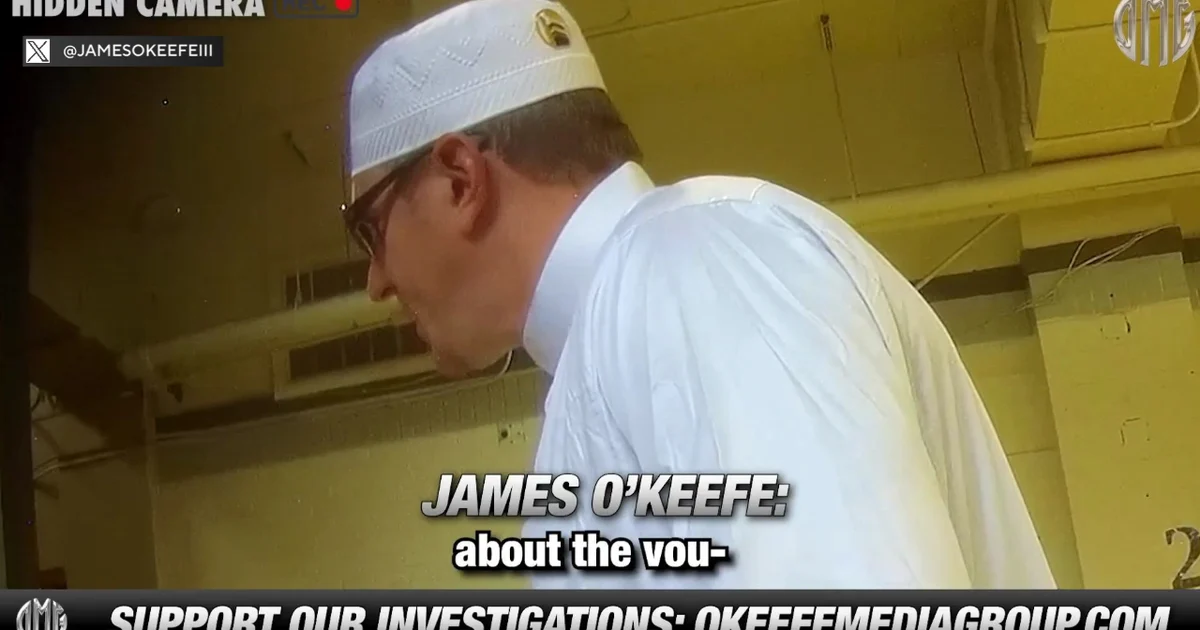
Hennepin County prosecutors officially filed felony charges against high-profile conservative activist James O’Keefe, 42, and his associate, Cam Higby, 26, following an investigation into an undercover operation conducted during Minnesota’s August 11 primary elections. According to charging documents released by the Hennepin County Attorney’s Office, both men are facing multiple felony counts, including unlawful voting and identity theft. The charges stem from a series of recorded incidents in which the activists allegedly walked into active polling precincts, assumed the identities of registered voters without their knowledge or consent, and applied for ballots in an attempt to expose perceived vulnerabilities in the state’s electoral framework.
The legal action marks a significant escalation in the ongoing debate over undercover journalism, election security theatrics, and the strict boundaries imposed by state and federal laws governing the integrity of the voting process. While O’Keefe and his legal representatives maintain that the exercise was a legitimate journalistic endeavor aimed at testing loopholes in a decades-old Minnesota statute, election officials and legal scholars argue that the actions crossed the definitive line from investigative reporting into deliberate criminal conduct.
Chronology of the August 11 Operation
The events leading to the criminal charges unfolded across several hours on the morning of Minnesota’s primary election day. Operating under the banner of the Citizen Justice League—a self-described independent media collective—O’Keefe and Higby targeted three distinct polling locations within Hennepin County, the state’s most populous county.
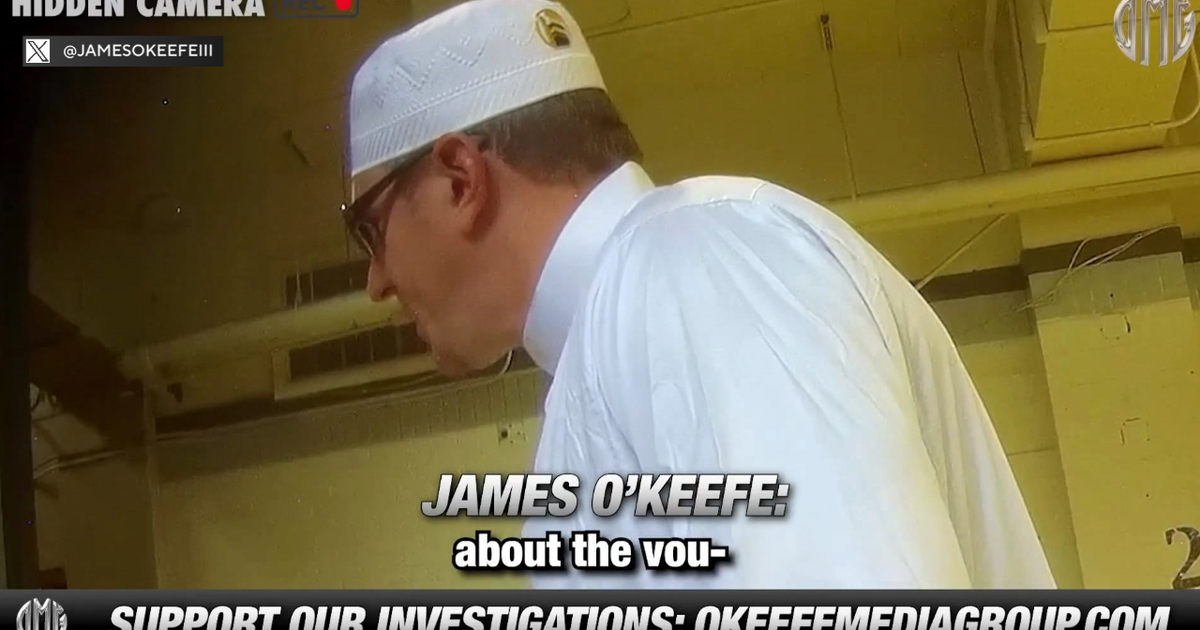
According to the investigative findings detailed by prosecutors, the activists deployed theatrical disguises, including what they described as traditional Muslim garments, and utilized modified accents as part of their persona while entering the precincts. Once inside, they approached election judges and explicitly provided the names and personal identifying details of real, registered voters who were completely unaware that their identities were being exploited.
While the men did not ultimately cast a ballot or sign the legally binding voter eligibility oaths, they successfully navigated the initial intake process to the point of applying for a ballot. Under Minnesota law, the mere act of intentionally misrepresenting a person’s identity when applying for a ballot, depositing a ballot into a ballot box, or attempting to vote by machine constitutes a severe statutory violation.
The resulting video footage was subsequently edited and published across various social media platforms, where it quickly went viral, accumulating upwards of seven million views by mid-August. The intent behind the publication, according to the state’s filing, was to manufacture a narrative that undermined public confidence in the security and reliability of Minnesota’s electoral administration.
The Center of the Controversy: Minnesota’s Voucher Law
At the heart of the defense presented by O’Keefe and Higby is Minnesota’s historic "voucher law," a 53-year-old legislative provision designed to assist individuals who have recently moved to the state and may not yet possess updated identification documents featuring their current residential address.
The statute allows a registered voter to "vouch" for a new resident, confirming their address so that the individual can register and cast a ballot. However, legal experts and state officials have repeatedly emphasized that the statute contains explicit boundaries: it facilitates legitimate community validation for new residents, but it under no circumstances grants permission for individuals to impersonate existing, registered voters.
In their published media, the activists claimed they were testing whether the voucher system could be exploited by bad actors. However, election officials noted that the system operated precisely as intended precisely because the poll workers recognized anomalies and flagged the suspicious interactions.
Direct Impact on Victims and the Public Record
Among those caught unaware by the stunt was William Pomeranz, a local resident whose identity was used by O’Keefe during the operation. Pomeranz recalled the shock of learning on the Friday following the primary election that his personal identity had been co-opted for an online video.
"I actually had a student contact me that had showed me what was online about my identity being misrepresented," Pomeranz said in an interview following the incident. Despite the shock, Pomeranz praised the diligence of the local election workers. "Kudos to the poll workers. They reported it afterwards, and frankly, I got to vote that evening without a problem. So, you know, the voting process, in my mind, worked."
Legal experts reviewing the initial footage in August concurred with Pomeranz’s assessment of the election workers’ response. David Schultz, a constitutional law professor at Hamline University, noted at the time that the recorded actions constituted a clear breach of state law. "It’s illegal in the state of Minnesota to impersonate another voter, and this is apparently what O’Keefe did," Schultz stated.
Official Reactions and Legal Posture
Hennepin County Attorney Mary Moriarty emphasized that the decision to press felony charges was rooted strictly in the rule of law rather than any desire to make a broader political statement. During a press briefing following the announcement of the charges, Moriarty made it clear that accountability is absolute when it comes to the integrity of the voting process.
"You cannot go into a polling place and misidentify yourself and use other people’s identities to our election judges as you apply for a ballot, whether or not you intend to vote," Moriarty stated. She added that the robust response from election judges during the primary demonstrates that the county’s safeguards are effective, noting that her office is fully prepared to maintain security and order for the upcoming general election.
Minnesota Secretary of State Steve Simon echoed these sentiments, reiterating that any deliberate attempt to deceive, disrupt, or manipulate poll workers and election infrastructure will be met with zero tolerance from state authorities.
Conversely, defendants have rejected the validity of the charges. In a direct statement provided to media outlets, Cam Higby defended his actions, stating, "I never voted, I never signed an affidavit, and I never violated a law."
O’Keefe, a polarizing figure in conservative media whose career has long been defined by undercover stops and controversial sting operations—including his previous tenure leading Project Veritas before founding the O’Keefe Media Group—has faced similar legal and professional scrutiny in other jurisdictions over past projects. Notably, a defamation lawsuit stemming from past 2020 videos in Pennsylvania resulted in public statements from Project Veritas acknowledging a lack of evidence to support claims of widespread postal election fraud.
Broader Implications for Election Security and Journalism
The filing of felony charges against O’Keefe and Higby highlights a growing tension between aggressive undercover journalism and the heightened security protocols protecting modern democratic infrastructure. In an era where misinformation and distrust in public institutions run high, state and local authorities are increasingly drawing a hard line between protected reporting and illegal interference.
Legal analysts point out that while investigative journalists and activists possess broad protections under the First Amendment to scrutinize public systems, those protections do not extend to committing overt crimes—such as identity theft and electoral fraud—in the name of gathering content. As the case proceeds through the Hennepin County court system, it is expected to establish a vital legal precedent regarding the limits of undercover activism inside polling precincts, reinforcing the message that the physical security of the ballot box remains paramount to the administration of free and fair elections.

