
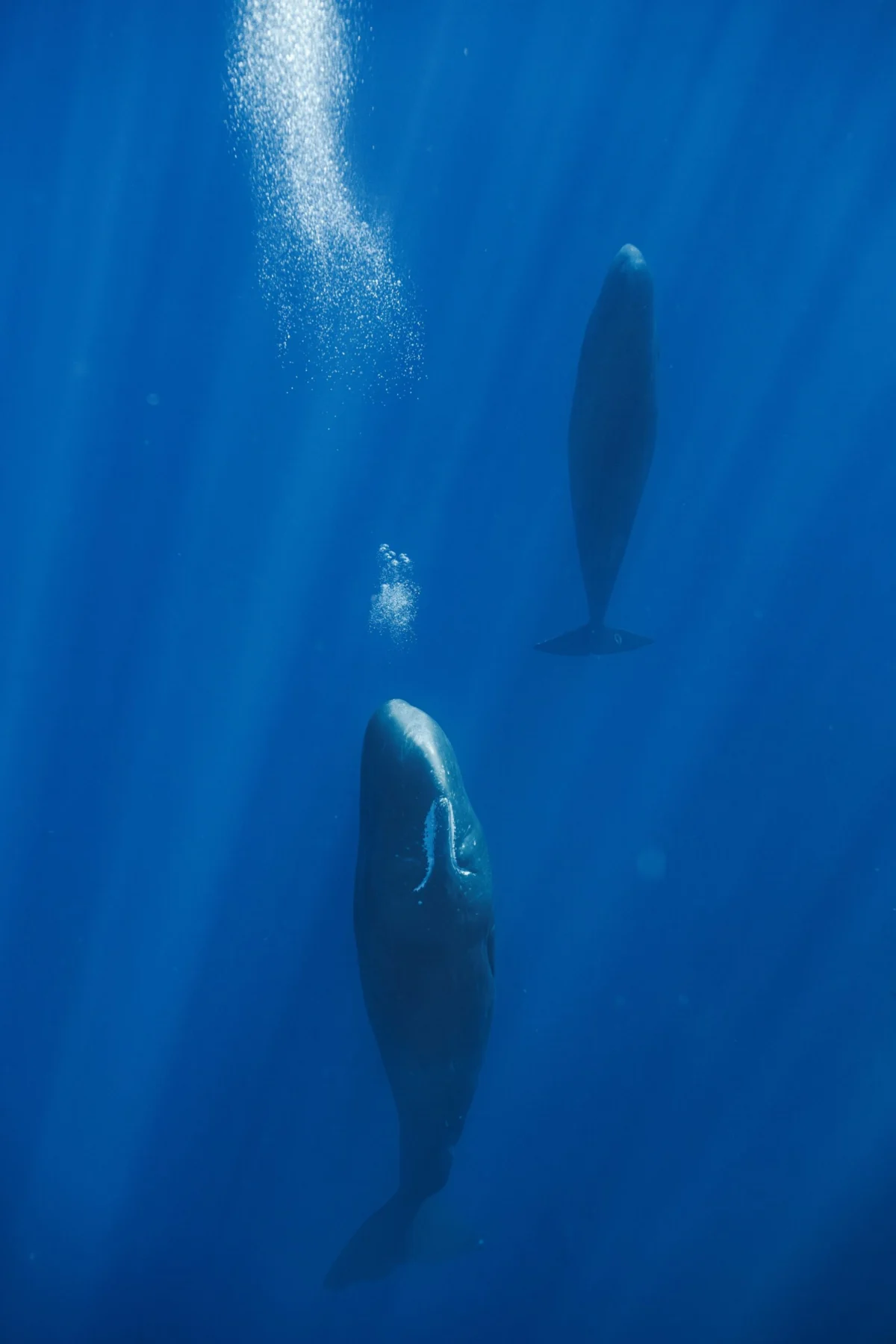
A growing body of scientific inquiry is unveiling a surprisingly complex and human-like behavioral repertoire in sperm whales ( Physeter macrocephalus ). Recent research has suggested these magnificent marine mammals may possess a form of communication akin to an alphabet, even employing vowel-like sounds in their vocalizations. Now, a new study delves into another deeply familiar aspect of mammalian life: sleep. Researchers have theorized that sperm whales engage in short, submerged naps, typically lasting between 10 to 15 minutes. During these periods of rest, they adopt a distinctive vertical posture, with their heads oriented upwards. This unique sleeping position allows them to remain out of reach of potentially turbulent surface waters while staying close enough to ascend rapidly for a breath when needed. However, the immense buoyancy of their large heads presents a logistical challenge: how do these cetaceans prevent themselves from passively drifting to the surface while asleep? The answer, according to a recent publication in the Journal of Experimental Biology, appears to be the controlled release of bubbles.
Unveiling the Mystery of Submerged Slumber
The groundbreaking research, spearheaded by Noémie Freymond, a PhD student at the University of Neuchâtel specializing in sleep in chimpanzees, and her co-author Patrick Miller, a researcher at the University of St Andrews’ School of Biology, sought to elucidate the functional purpose behind this observed bubble-blowing behavior. Miller, who had previously provided one of the first detailed accounts of sperm whale resting patterns, noted that whales released bubbles during their naps, but the underlying reason remained a subject of speculation. Freymond’s master’s thesis research directly addressed this question, leading to the findings now published.
"He observed that sperm whales release bubbles while sleeping, but it had never been demonstrated why they do so," Freymond explained to Popular Science. This observation served as the critical impetus for the subsequent investigation.
Methodical Monitoring in the Norwegian Fjords
To gather empirical evidence, the research team deployed specialized devices capable of recording whale vocalizations, specifically focusing on the acoustic signatures of bubble release. These devices were attached to the skin of 42 sperm whales in the Norwegian Lofoten Islands. Crucially, the monitoring equipment also recorded the depth at which the whales were resting and their body orientation, which served as reliable indicators of their sleeping state. The devices were designed to detach naturally and float to the surface after a predetermined period, allowing researchers to retrieve them and analyze the collected data in the laboratory. This innovative approach provided an unprecedented look into the whales’ resting habits without causing undue stress or disruption to the animals.
Diverse Resting Strategies of Sperm Whales
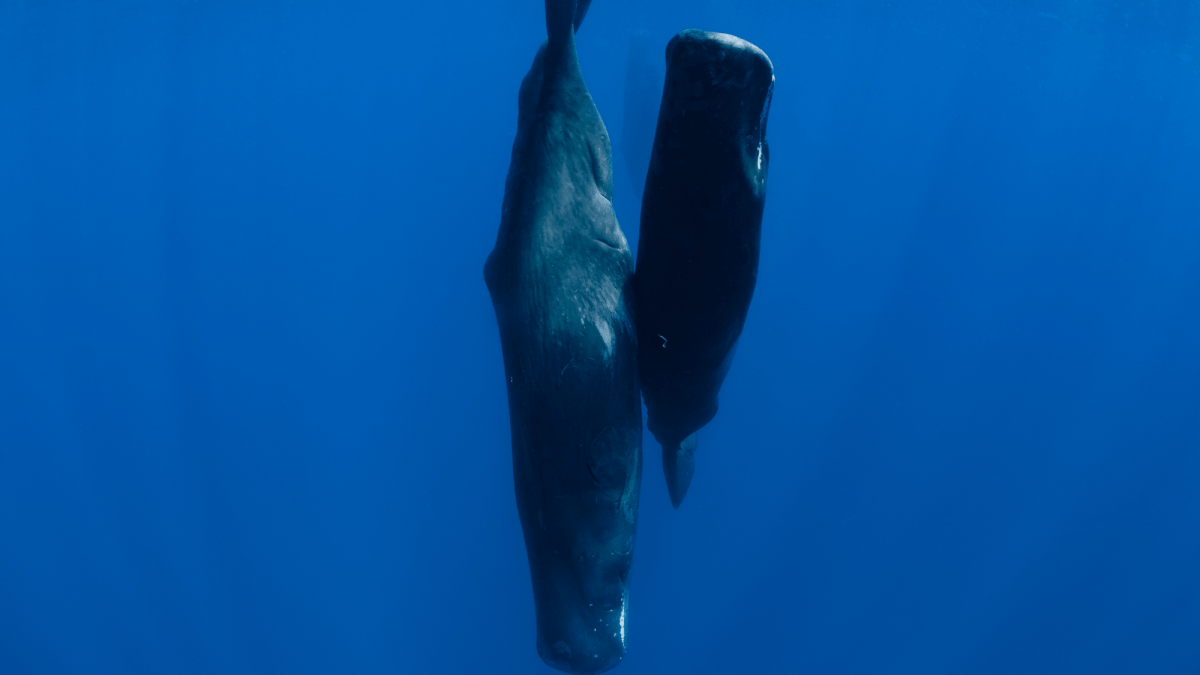
Sperm whales exhibit a remarkable range of resting behaviors, adapting their sleep strategies to different depths and environmental conditions. The researchers identified three primary modes of rest:
- Shallow Sinking: Whales may slowly descend approximately 26 feet (8 meters) tail-first. This method allows for a gradual immersion, potentially conserving energy.
- Mid-Depth Dives: Another strategy involves short dives, where whales descend to a moderate depth before their naturally buoyant heads begin to ascend, prompting them to return towards the surface.
- Deep-Water Drifting: The most profound resting state involves deep dives, reaching depths exceeding 656 feet (200 meters). During these descents, whales then drift back towards the surface, a process that can last for extended periods.
The study meticulously correlated these different resting postures with bubble-release frequency.
Bubble Release: A Buoyancy Control Mechanism
The findings revealed a significant correlation between the depth of a whale’s nap and the frequency of its bubble release. Whales resting in shallower waters, closer to the surface, were observed to release bubbles approximately 11 times during each short nap. In contrast, those undertaking deep-water drifts, ascending from greater depths, released bubbles significantly less frequently, averaging only three to four releases throughout their entire ascent.
The researchers posit that this disparity in bubble release is directly linked to buoyancy regulation. When napping near the surface, sperm whales must actively expel air from their lungs to counteract the strong upward force exerted by their buoyant heads, thereby preventing them from involuntarily surfacing. Conversely, during deep-water rests, the immense pressure of the water at greater depths naturally increases the whale’s density and reduces its overall buoyancy. Even with a significant volume of air in their lungs, the external water pressure effectively anchors them, negating the need for frequent bubble expulsion. This observation highlights a sophisticated, albeit potentially unconscious, physiological adaptation to their aquatic environment.
The Challenge of Tag Deployment and Data Acquisition
Freymond emphasized the logistical hurdles inherent in such research. "We were lucky to have access to such a large dataset with many tag deployments, because the main challenge is that a deployment must last long enough to capture resting behaviour," she stated. The extended duration of these successful tag deployments was instrumental in providing the robust data necessary to support their conclusions. The ability to capture multiple instances of resting behavior across numerous individuals was crucial for establishing statistically significant patterns.
Conscious or Unconscious: An Ongoing Enigma
Despite the compelling evidence for the functional role of bubble release in buoyancy control, a definitive answer regarding the conscious nature of this behavior remains elusive. Unlike dolphins, which exhibit unihemispheric slow-wave sleep (meaning one half of the brain remains awake while the other rests), the precise state of consciousness in sleeping sperm whales is not yet fully understood. The act of releasing air to manage buoyancy suggests a degree of environmental awareness, leading to the question of whether sperm whales are completely unconscious during their naps, akin to humans, or if they maintain some level of sensory engagement with their surroundings. Further research into their neurological activity during sleep will be necessary to resolve this intriguing aspect.
Future Directions and Implications
The findings from this study open up new avenues for future research into sperm whale behavior and physiology. Scientists are keen to explore other potential functions of bubble release, and the playful suggestion of investigating whether this behavior constitutes "cetacean snoring" adds a touch of human interest to the scientific endeavor.
The broader implications of this research extend beyond understanding sperm whale sleep. It contributes to a growing body of evidence that underscores the sophisticated cognitive and behavioral capabilities of these intelligent marine mammals. Their apparent ability to communicate in complex ways, coupled with the nuanced physiological adaptations for resting, paints a picture of a species with a rich inner life and a deep understanding of its environment. As our knowledge of sperm whales expands, so too does our appreciation for their intricate lives and the importance of their conservation. The ongoing exploration of their communication systems and resting behaviors promises to further illuminate the mysteries of the deep ocean and the remarkable creatures that inhabit it.

