
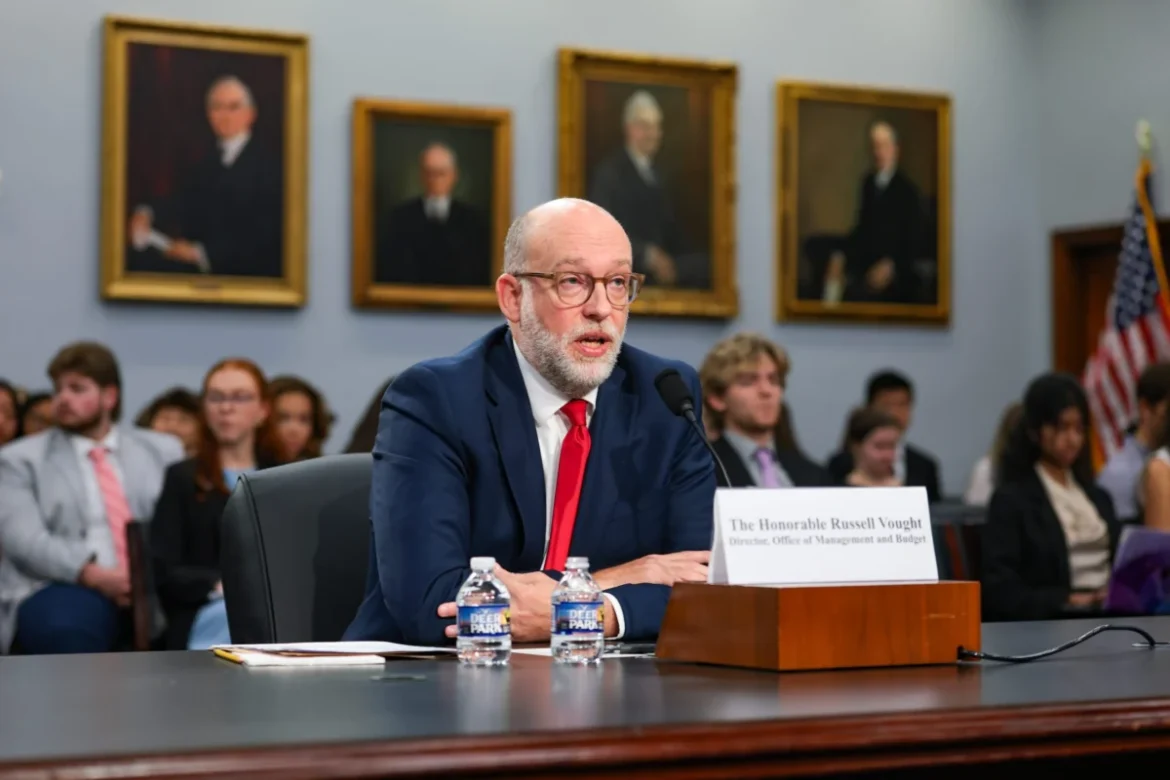
The landscape of American educational research faces a period of profound uncertainty as major academic organizations and scientific societies mobilize against a proposed 100-page overhaul of federal grant-making rules. The Office of Management and Budget (OMB) recently introduced a sweeping set of revisions that would fundamentally alter how taxpayer-funded research is awarded, overseen, and evaluated. While the federal government maintains that these changes are designed to bolster accountability and ensure that public funds serve the national interest, critics in the scientific community warn that the proposal could dismantle decades of progress in evidence-based policy. At the heart of the controversy is the "science of reading," a body of evidence built over nearly half a century through interdisciplinary research in cognitive science, linguistics, and psychology. Education advocates argue that if these new rules had been in place decades ago, the foundational research that currently guides literacy instruction for millions of American children might never have been funded.
The OMB proposal, officially entered into the federal register on May 29, seeks to revise the "Uniform Administrative Requirements, Cost Principles, and Audit Requirements for Federal Awards." These rules govern billions of dollars in grants issued by agencies including the Department of Education and the National Science Foundation (NSF). The administration’s stated goal is to tighten oversight and ensure that research aligns with executive priorities. However, the response from the research community has been one of overwhelming opposition. By the July 13 deadline for public comment, the OMB had received nearly half a million submissions—496,775 in total—representing a coordinated effort by scientific societies to slow the rulemaking process and build a legal record for future litigation.
Chronology of the Regulatory Overhaul
The path toward this proposed overhaul began in early 2025, following a series of executive orders aimed at streamlining federal agencies and reducing what the administration characterized as "wasteful" or "politically motivated" academic spending. In April 2025, the Department of Education took the unprecedented step of terminating dozens of active research studies mid-cycle. This move resulted in the immediate loss of services for approximately 1,600 high school students with disabilities who were participating in federally funded intervention programs. This event served as a precursor to the broader regulatory changes introduced in May 2026.
The OMB’s current timeline is aggressive. Following the May 29 proposal, a 45-day window was provided for public comment, ending on July 13. The administration has signaled its intent to finalize the rule and begin implementation by October 1, 2026. This rapid turnaround has alarmed education groups, who argue that the complexity of the 100-page document requires more thorough deliberation. Organizations such as the National Academy of Education (NAEd), the American Educational Research Association (AERA), and the Knowledge Alliance have led the charge, submitting detailed letters outlining the potential for "unintended and harmful consequences" that could disrupt the continuity of American scientific inquiry.
The Threat to Equity-Based Research and Disparate Impact Studies
One of the most contentious elements of the OMB proposal is a provision that would prohibit federal funds from supporting research related to "unlawful diversity, equity, and inclusion" (DEI) activities. Perhaps more significantly, the rule seeks to restrict funding for "disparate impact studies." These studies are a cornerstone of social science; they analyze whether policies that appear neutral on the surface—such as school discipline codes or standardized testing requirements—produce disproportionately negative outcomes for specific groups of students based on race, gender, disability status, or income.
The National Academy of Education, in a joint letter signed by 19 other education and science organizations, argued that these restrictions would effectively "blind" policymakers to systemic inequities. The organization noted that central questions of education policy—such as whether a specific reading intervention works effectively for English language learners or whether gifted education programs are under-identifying students with disabilities—are inherently tied to demographic analysis. Without the ability to study these differences, researchers argue that the federal government would be unable to meet its obligations under existing laws like Title I of the Elementary and Secondary Education Act. Title I currently mandates that states and districts track student outcomes by race and income to ensure that high-poverty schools receive adequate support.
The ambiguity of the term "unlawful DEI" has also created a "chilling effect" among researchers. Critics argue that the broad and vague language could discourage scholars from even proposing studies that involve demographic data, for fear of being flagged by federal auditors. This uncertainty, researchers claim, threatens to stall progress on closing the "achievement gap," a metric that has been a bipartisan priority in American education for decades.
Political Oversight and the "Gold Standard" of Science
Beyond the content of the research, the OMB proposal introduces significant changes to the process of awarding grants. Traditionally, federal research grants are awarded through a peer-review system, where independent subject-matter experts evaluate proposals based on their scientific rigor, methodology, and feasibility. The new proposal would shift this balance by requiring a secondary review by political appointees before any grant is finalized.

Under the new rules, agencies would be required to consider a proposal’s alignment with "federal priorities" and the "national interest"—terms that are not strictly defined in the document. This has led to fears that the direction of American science could shift radically every four years depending on which party holds the White house. The Knowledge Alliance expressed concern that this political layer of review would undermine the independence of the scientific process, potentially favoring projects that support a specific administration’s talking points while defunding those that might produce "inconvenient" data.
Furthermore, the proposal emphasizes a preference for "gold standard science." While the term sounds objective, education researchers point out that it is often used to refer exclusively to Randomized Controlled Trials (RCTs). While RCTs are valuable for testing specific interventions—much like a clinical trial for a new drug—they are often impractical or unethical in a classroom setting. Education research frequently relies on a diverse toolkit of methods, including longitudinal surveys, qualitative interviews, and quasi-experimental data analysis. By narrowing the definition of acceptable science, the OMB could disqualify a vast range of high-quality research that provides the context necessary to understand why certain educational outcomes occur.
Financial and Administrative Hurdles for Research Institutions
The OMB proposal also targets the financial structure of research grants, with changes that could disproportionately affect large research universities. One provision calls for agencies to give preference to grant proposals with low "overhead" or indirect costs. Indirect costs cover essential infrastructure, such as laboratory space, electricity, administrative support, and data security. By incentivizing lower overhead, the rule could make it financially impossible for top-tier universities to host large-scale federal research projects.
Additionally, the proposal seeks to cut federal funding for conference attendance and publication costs unless specifically justified and approved in writing. In the scientific community, conferences and peer-reviewed journals are the primary vehicles for disseminating findings and subjecting research to the scrutiny of the broader field. Researchers argue that these cuts would stifle the exchange of ideas and slow the pace of innovation. The requirement for detailed written justifications for every grant-related expense would also add a significant layer of "regulatory paperwork," which the Knowledge Alliance suggests contradicts the administration’s stated goal of increasing efficiency.
Longitudinal Integrity and International Standing
The potential for the abrupt termination of grants is perhaps the most immediate concern for those involved in longitudinal studies. These studies follow students over many years—sometimes decades—to understand the long-term impact of early childhood education, trauma, or specific pedagogical approaches. As the National Academy of Education pointed out, losing even a single year of data collection due to a funding interruption can permanently compromise the integrity of a decades-long study.
The implications also extend to the international stage. U.S. participation in global assessments like the Programme for International Student Assessment (PISA) and the Trends in International Mathematics and Science Study (TIMSS) relies on federal funding and international research partnerships. The OMB proposal includes broad limits on foreign collaborations, which researchers fear could hamper the United States’ ability to compare its educational performance against global competitors like China, Singapore, and Estonia.
Implications for the Future of Evidence-Based Policy
The "science of reading" serves as a cautionary tale for what might be lost under the new OMB rules. This body of work did not emerge from a single "breakthrough" study; it was the result of an accumulation of evidence across multiple administrations, funded by various federal agencies. It required the freedom to ask difficult questions about how different brains process language and how socio-economic factors influence literacy.
If the OMB’s proposed changes are implemented as written, the future of such comprehensive bodies of evidence may be at risk. Critics argue that the shift toward political review and the restriction of equity-based inquiry will lead to a fragmented research landscape, where "national interest" is defined by short-term political gains rather than long-term societal progress.
As the October 1 deadline approaches, the scientific community remains in a state of high alert. The massive influx of public comments indicates that the battle over the OMB’s proposal is likely to move from the halls of government to the courtrooms. The outcome will determine whether federal research remains an independent pillar of American policy or becomes a more direct tool of the executive branch. For now, the education research community continues to advocate for a withdrawal of the proposal, arguing that the cost of "accountability" should not be the sacrifice of scientific truth.
