
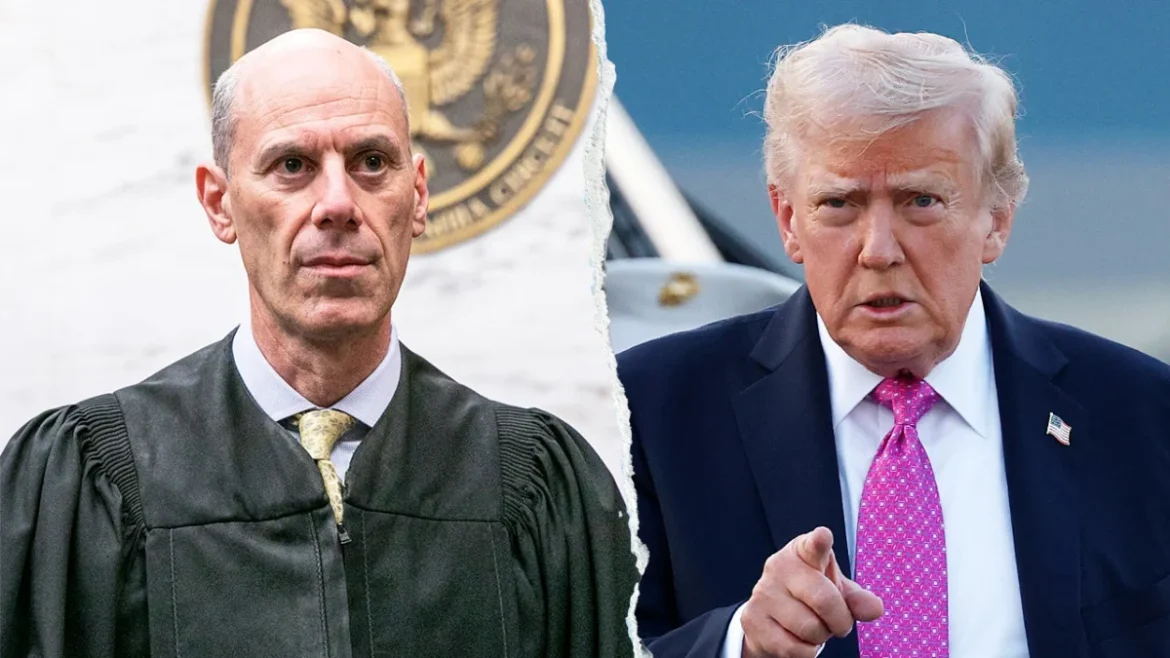
The Trump administration has initiated a significant and unprecedented move to deport an unnamed undocumented individual suspected of terrorism by invoking the Alien Terrorist Removal Court (ATRC), a specialized judicial body that has remained dormant since its creation nearly three decades ago. This marks the first time in the court’s history that an application for a removal order has been filed, potentially reactivating a powerful yet controversial tool for addressing national security threats posed by non-citizens.
The Justice Department officially filed its application with the ATRC on July 15, signaling a renewed strategic focus on utilizing all available legal mechanisms to counter terrorism. This unique court process allows the government to seek the deportation of non-citizens suspected of terrorist activities based on classified evidence, which is not fully disclosed to the respondent. Instead, the individual receives an unclassified summary of the allegations. Legal scholars have often referred to the ATRC as a "zombie" court due to its long period of inactivity, making this current development a pivotal moment in U.S. immigration and national security law.
Historical Context: The Genesis of the ATRC
The Alien Terrorist Removal Court was established as part of the Antiterrorism and Effective Death Penalty Act (AEDPA) of 1996. This landmark legislation was enacted in the wake of several high-profile domestic and international terrorist incidents, including the 1993 World Trade Center bombing and the 1995 Oklahoma City bombing. The political climate at the time demanded a robust response to perceived vulnerabilities in national security, leading Congress to pass AEDPA with bipartisan support.
President Bill Clinton, upon signing the bill into law, articulated its intent: "From now on we can quickly expel foreigners who dare to come to America and support terrorist activities." The act sought to streamline the deportation process for non-citizens involved in terrorism, creating a special court designed to handle cases where the government’s evidence was too sensitive to be disclosed publicly without compromising national security operations or intelligence sources. The ATRC is composed of five federal district judges, each serving a five-year term, appointed to this specialized panel. Their mandate is to review classified evidence in camera (in private) and determine if there is sufficient basis to order the removal of an alien.
However, despite its ambitious goals, the ATRC never heard a single case. The procedural complexities, due process concerns, and the challenges inherent in presenting classified intelligence in a judicial setting often led the Justice Department to pursue terrorism-related deportations through the conventional immigration court system or other legal avenues. According to a staff report by the 9/11 Commission, Justice Department attorneys considered approximately 50 cases for ATRC referral by 1998, and another 50 over the subsequent two years. Yet, every single one of these potential cases was ultimately rejected for use with the ATRC, underscoring the difficulties in activating this novel legal framework.
A "Zombie Court" Awakens: Decades of Dormancy
For nearly three decades, the ATRC remained a theoretical construct within U.S. law, never fulfilling its intended purpose. This dormancy can be attributed to several factors. Legal experts often pointed to the inherent tension between national security imperatives and fundamental due process rights. The ATRC’s reliance on sealed classified evidence and the provision of only an unclassified summary to the respondent raised significant concerns among civil liberties advocates and some legal scholars. Critics, including then-Senator Joe Biden, D-Del., voiced strong opposition during the bill’s passage. Biden famously stated, "You and me, Judge—me, the prosecutor; you, the judge—let’s deport him in a secret hearing, using secret evidence. We know you did it, and we can’t tell you how we know. Now I think that is about as un-American as it gets." Such criticisms highlighted the perceived erosion of traditional judicial transparency and an individual’s right to confront the evidence against them.
Furthermore, the legal thresholds and evidentiary standards required to successfully bring a case before the ATRC proved challenging. The government needed to demonstrate not only that an individual was a non-citizen but also that they engaged in, or supported, terrorist activity, and that disclosing the full evidence would harm national security. These stringent requirements, coupled with the potential for protracted legal battles over the court’s constitutionality and procedures, likely deterred previous administrations from utilizing it. Instead, they opted for more established, albeit sometimes slower, immigration court processes, which, while still allowing for national security considerations, often involved more public proceedings.
The Trump Administration’s Immigration Stance and Judicial Hurdles
The Trump administration has consistently prioritized aggressive immigration enforcement and national security throughout its tenure. Its policies, often framed under an "America First" agenda, have sought to strengthen border security, increase deportations, and implement stricter vetting processes for immigrants and travelers. This approach has, however, frequently placed the administration in direct conflict with federal courts, which have repeatedly blocked, delayed, or narrowed key components of its immigration enforcement agenda.
One such recent conflict involved the administration’s controversial attempt to use the Alien Enemies Act, a wartime statute from 1798, to deport alleged members of the Venezuelan gang Tren de Aragua. This move was met with strong judicial resistance. In March, Chief U.S. District Judge James Boasberg in Washington, D.C., presiding over litigation challenging the use of this archaic law, temporarily blocked the administration from employing it for these removals. He also took the extraordinary step of ordering deportation flights already in the air to return, igniting a high-profile legal battle between the executive and judicial branches.
It was during this contentious hearing that Judge Boasberg pointed to the long-dormant Alien Terrorist Removal Court as a potentially more appropriate alternative for handling terrorism-related deportation cases. "In fact, Congress has an answer for us, doesn’t it? Because they created the Alien Terrorist Removal Court," Boasberg remarked. "So if there’s a national security concern with having these hearings, whether via habeas or otherwise, you can always go to the ATRC, which would be a first, but that’s what it’s there for, right?" This judicial suggestion, coming from a federal judge pushing back on another of the administration’s aggressive tactics, appears to have directly influenced the Justice Department’s decision to finally activate the ATRC.

The Current Application: Unveiling the Process
The Justice Department’s application to the ATRC represents a bold new strategy. The initial filing, a single sealed page, was notably sparse on details. It did not identify the individual, specify the alleged conduct, or cite the precise section of anti-terrorism law the Justice Department invoked. This lack of information is characteristic of the ATRC’s design, where initial proceedings are highly secretive to protect classified intelligence.
However, even within the confines of this specialized court, judicial scrutiny is evident. After hearing initial arguments from Justice Department officials, ATRC Chief Judge Joan N. Erickson, an appointee of President George W. Bush, requested additional information. "The Court had questions about the nexus that the government alleges between the actions of the respondent and the specific sections and subsections it invokes with respect to those actions," Erickson wrote in her order. She added, "The answers persuaded the Court that the Government could benefit from the opportunity for more thoughtful consideration," and gave the Justice Department until the following Wednesday to provide the necessary supplementary documentation. This request highlights that even a court designed for national security expediency still demands a clear and coherent legal basis for its actions.
Legal Perspectives and Due Process Concerns
The activation of the ATRC reignites the long-standing debate about balancing national security with individual liberties. Proponents argue that the ATRC provides a crucial mechanism to remove dangerous individuals who pose a threat to the United States without compromising sensitive intelligence. A Justice Department spokesperson affirmed this stance, stating, "This Department of Justice will use every tool available to bring alien terrorists to justice and remove them from the United States, including by use of this court established by Congress in 1996." This reflects a belief that conventional judicial processes are insufficient when dealing with classified terrorism evidence.
However, civil liberties organizations and many legal scholars express profound concerns about the due process implications of the ATRC. The central point of contention remains the use of "secret evidence." While the respondent receives an unclassified summary, the inability to fully review, challenge, and rebut the specific classified evidence against them is seen by critics as a fundamental denial of due process rights, potentially leading to unfair or erroneous deportations. The lack of transparency also makes it difficult for the public or external legal bodies to scrutinize the court’s proceedings, raising questions about accountability. The very criticisms voiced by then-Senator Biden in 1996 remain highly relevant today, as the court’s unique procedures are finally put to the test.
Expert Commentary and Strategic Implications

Hans von Spakovsky, a senior legal fellow at Advancing American Freedom, a conservative advocacy group, welcomed the Justice Department’s decision, calling it a long-overdue development. "I think it is a sign of negligence, frankly, of prior presidents that they did not use this special court, this special procedure that was specifically set up by Congress, so that they could quickly get aliens — aliens who were either terrorists or supported terrorist activities — out of the U.S.," von Spakovsky told Fox News Digital. His comments underscore a common sentiment among some conservatives that past administrations were too hesitant to employ robust national security tools, even those explicitly provided by Congress.
Von Spakovsky further suggested that the use of the ATRC could offer a strategic advantage to the administration by circumventing the perceived obstacles posed by certain federal judges. "I think this court is a much stronger tool the Justice Department can use, and it’s going to make it much tougher for what I consider to be rogue judges to interfere with, and hopefully prevent, the removal of immigrants," he stated. This perspective highlights the administration’s broader frustration with judicial oversight of its immigration policies and its search for avenues that limit such interference. If the ATRC proves effective, it could become a preferred route for terrorism-related deportations, potentially reducing the ability of standard federal courts to intervene.
Potential Ramifications and Future Outlook
The activation of the Alien Terrorist Removal Court sets a significant precedent. If the Trump administration successfully navigates the ATRC’s procedures and secures a deportation order, it could fundamentally alter the landscape of immigration enforcement for suspected terrorists. This success might encourage future administrations to similarly utilize the court, transforming it from a "zombie" entity into a regularly employed tool in the national security arsenal.
Such a shift would have profound implications. It could streamline the deportation process for certain high-risk individuals, but it would also intensify the debate over due process and the balance of power between the executive and judiciary. The ability of the government to rely on classified evidence in a specialized, less transparent court system will undoubtedly face continued legal challenges and scrutiny from civil liberties groups. The outcome of this first-ever ATRC case will be closely watched by legal experts, national security officials, and human rights advocates alike, as it will likely shape the future role and legitimacy of this unique and long-dormant judicial body in American law. The ongoing legal battle underscores the complex and often contentious intersection of national security, immigration, and constitutional rights in the United States.
