
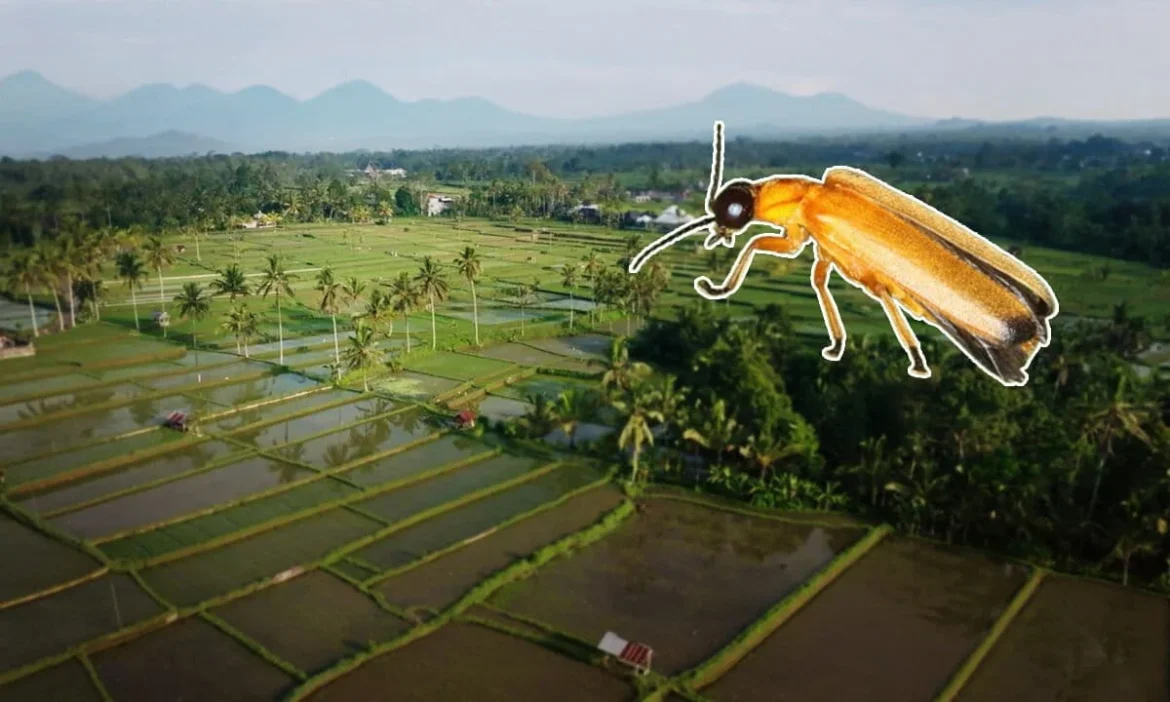
For decades, the nocturnal landscape of rural Bali was defined by the ethereal, rhythmic pulsing of fireflies—a natural bioluminescence that served as both a cultural touchstone and a childhood companion for generations. Wayan Wardika, a Balinese local, recalls his youth as a time when electricity was scarce, and “clouds of fireflies” provided the primary illumination for his village’s rice fields. However, the rapid modernization of the Indonesian island over the last 40 years has fundamentally altered this environment. Today, these insects have all but vanished from their traditional habitats, signaling a broader ecological crisis that threatens not only biodiversity but also the agricultural stability of the region.
The decline of firefly populations in Southeast Asia is not an isolated incident but a symptom of rapid environmental degradation. Driven by a convergence of habitat loss, widespread light pollution, the intensive use of synthetic pesticides, and the overarching pressures of climate change, the extinction risk for these beetles is mounting. In response, Wardika launched "Bring Back the Light" in 2020, the only formal firefly conservation initiative in Indonesia, aiming to reverse the damage through scientific intervention and community-led agricultural reform.
The Ecological Significance of Fireflies
Fireflies, members of the Lampyridae family, are far more than aesthetic ornaments of the night. They serve as vital bioindicators—organisms whose presence, absence, or behavior provides a reliable measure of the health of an ecosystem. Because they are highly sensitive to changes in air, water, and soil quality, their disappearance acts as an early warning system for environmental collapse.
Furthermore, these insects provide essential ecological services. Many species of fireflies are predatory in their larval stage, feeding on snails and slugs that frequently damage rice crops. By acting as a form of natural pest control, they reduce the necessity for toxic chemical inputs. Additionally, their role in pollination supports local plant diversity, ensuring the resilience of the surrounding flora. The loss of these insects disrupts a delicate food web, leading to cascading effects that can diminish crop yields and weaken the natural regenerative capacity of the soil.
A Chronology of the Decline and Restoration Effort
The erosion of the firefly habitat in Bali followed the island’s push toward intensive, industrialized agriculture and tourism-led development. Throughout the 1990s and early 2000s, the introduction of high-intensity synthetic fertilizers and chemical pesticides became the standard practice for rice farmers aiming to maximize output. Concurrently, the installation of high-intensity artificial lighting in residential and tourist areas began to interfere with the fireflies’ complex mating rituals, which rely on the precise timing and intensity of bioluminescent signals to attract mates.
By 2020, realizing that the fireflies he remembered from childhood were nearing local extinction, Wardika established his conservation center on his family’s farm. The initiative began with the arduous task of understanding the firefly life cycle, a subject on which there is surprisingly little documented research in Indonesia.
The developmental timeline of a firefly is extensive and fragile:
- Egg Stage: Lasts several weeks before hatching into larvae.
- Larval Stage: The most critical growth phase, lasting up to two years, during which the larvae require clean soil and water to thrive.
- Pupal Stage: A transformation period of approximately two weeks.
- Adult Stage: The final, brief life phase, lasting only about three weeks, dedicated almost exclusively to mating and reproduction.
Wardika’s team has managed to release nearly 20,000 larvae and adults into the wild since the program’s inception. While this is a significant achievement, the team acknowledges that repopulation is a slow, incremental process.
Shifting Agricultural Paradigms: The Role of Organic Farming
As the conservation project matured, Wardika realized that breeding fireflies in isolation was insufficient. Sustainable recovery required a fundamental restoration of the environment. In 2022, he expanded the scope of his mission to include the systemic regeneration of the local ecosystem.
The primary barrier to this restoration was the reliance on chemical fertilizers and pesticides. To combat this, the "Bring Back the Light" team turned to traditional, circular agricultural practices. By utilizing cow manure collected from local conservation efforts and integrating it with microbial-rich compost, they have begun to revitalize the soil. Furthermore, the team manufactures "eco-enzymes" from fruit waste gathered at local markets, providing farmers with a potent, cost-effective, and non-toxic alternative to synthetic pesticides.
This initiative is not merely an environmental project; it is an economic model. Wardika’s strategy involves demonstrating the efficacy of organic farming on his own plots. As the soil regains its vitality, the crops become healthier and more resilient, often commanding higher market prices. By proving that organic methods can be more profitable than chemical-heavy farming, he aims to influence the 35 neighboring farmers to adopt similar practices, effectively creating a pesticide-free zone that can sustain a larger firefly population.
Addressing the Human Element in Conservation
A significant challenge in environmental conservation is the economic reality faced by local communities. Transitioning away from established chemical practices involves risk, particularly during the initial shift when soil health is still recovering. Wardika has implemented a pragmatic approach to address this: his project provides organic fertilizers and pesticides to local farmers free of charge. More importantly, he offers to compensate farmers for any potential losses incurred during the transition period.
This financial support is largely funded through a combination of ecotourism—where visitors pay to observe firefly habitats—and the sale of organic produce grown on the project’s own land. As Wardika notes, the initial strategy of appealing to the farmers’ sense of environmental stewardship was insufficient; he found that he had to “fill up the pockets” before he could “change the hearts.” By aligning environmental health with economic prosperity, the project has secured the participation of four local farmers, with plans to expand as the model proves its scalability.
Implications and Future Outlook
The "Bring Back the Light" initiative serves as a microcosm for global conservation challenges. The project highlights that biodiversity loss cannot be separated from the socioeconomic status of the communities that inhabit those ecosystems. As of 2024, the project is breaking new ground in Indonesian entomology, providing essential data on species that were previously unstudied.
However, the broader implications are sobering. The decline of fireflies serves as a definitive indicator that current land-use policies are unsustainable. If the ecosystem cannot support the basic survival of these insects, it is increasingly unlikely to support the long-term nutritional and environmental needs of the human population. The transition to regenerative, circular agriculture—as advocated by Wardika—may be the only path forward to ensure that both food security and biodiversity are maintained for future generations.
As Wardika continues to refine his methodology, the success of his program will be measured not just by the count of fireflies, but by the resilience of the ecosystem he is helping to rebuild. His work underscores a profound truth: humanity does not exist in a vacuum, and the health of our environment is inextricably linked to the health of our own future. The ripple effect of his small-scale intervention suggests that local, grassroots action, when backed by scientific rigor and economic pragmatism, can spark the necessary change to restore what has been lost. For now, the flickering lights in the Balinese night sky remain a fragile but growing testament to the power of community-led conservation.
