
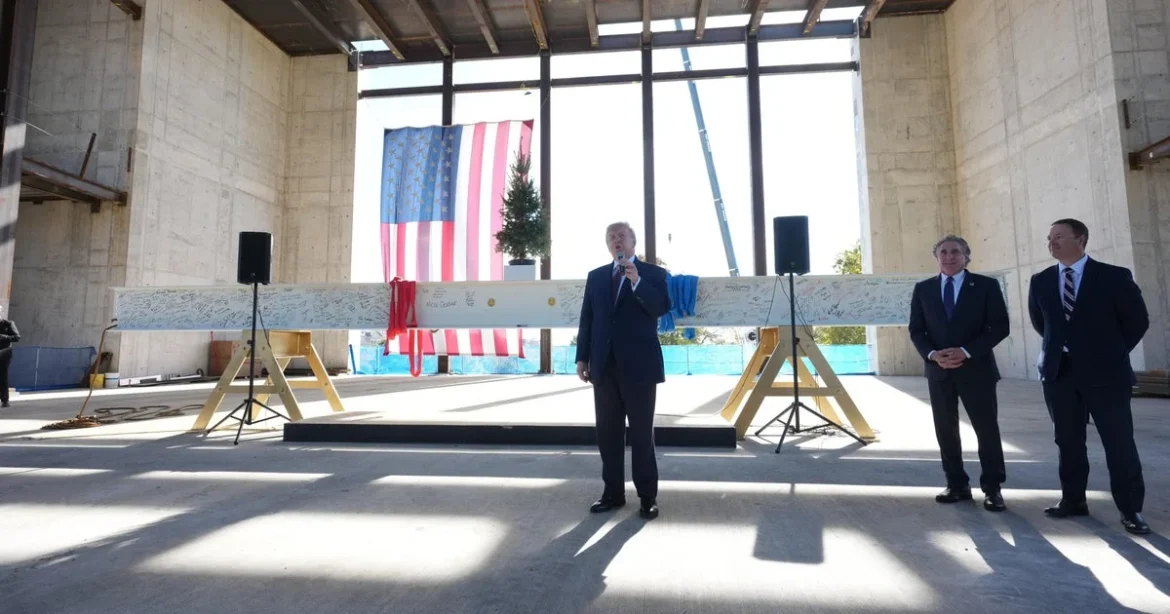
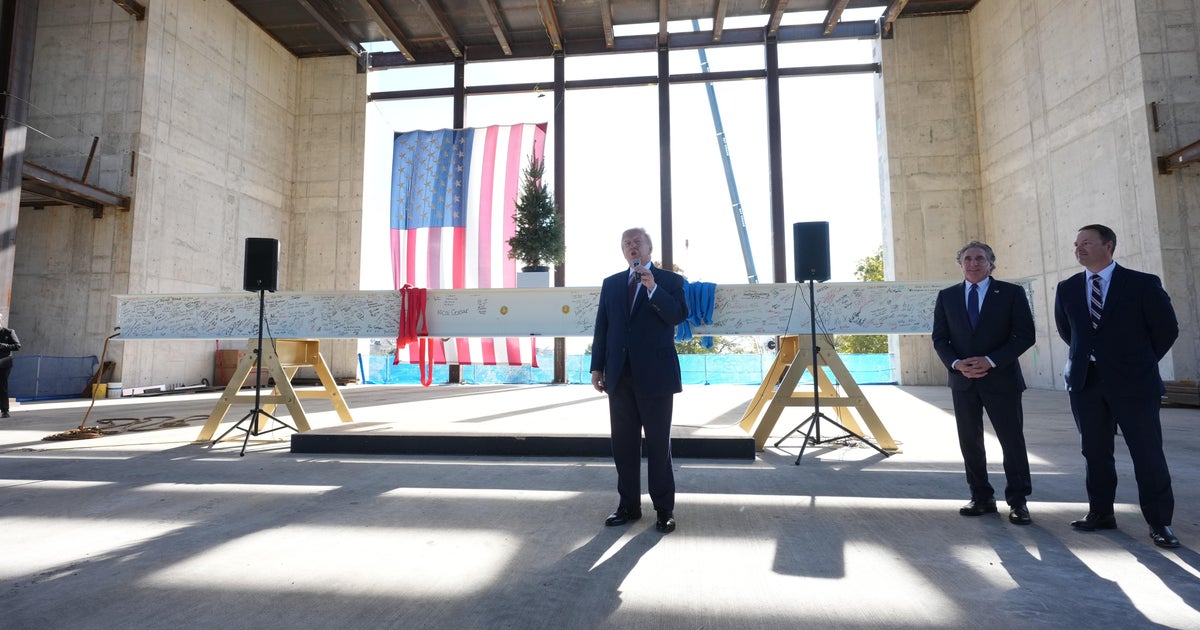
WASHINGTON — President Trump made his first public appearance since the Republican Party’s significant setbacks in the 2026 midterm elections on November 4, choosing to host a ceremonial event at the construction site of the new White House ballroom rather than addressing the political fallout directly from the Oval Office. Standing amidst the skeletal steel framework of the massive expansion project, the President oversaw the placement of the final structural beam, an act that served as a stark, if deliberate, contrast to the shifting power dynamics currently unfolding on Capitol Hill.
The event, attended by construction personnel, administrative staff, and a contingent of the press, was framed by the administration as a triumph of infrastructure and aesthetics. President Trump, frequently referencing his background as a real estate developer, spent much of the afternoon discussing the structural integrity and design of the addition, which includes a new ballroom and a modernized helipad. He described the project as a long-overdue modernization of the Executive Mansion, asserting that his administration has effectively "beautified" the federal district.
A Study in Political Contrast
The optics of the event were striking. While Democratic leaders in Congress were reportedly coordinating their strategies to leverage their new majorities, the President focused on the tactile aspects of governance—welding, steel beams, and architectural legacy. When pressed by reporters regarding the disconnect between his focus on construction and the voter concerns that contributed to the Republican electoral defeat, the President maintained that the work is a vital aspect of preserving the "ultimate symbol of America."
"I like beautiful things, and especially when it comes to the White House," the President remarked, noting that he finds the oversight of such capital projects "relaxing" amidst the pressures of the presidency. His dismissive approach to the election results suggests a desire to project stability and normalcy, prioritizing physical improvements to the seat of power over immediate political concessions.
Chronology of the 2026 Midterm Fallout
The midterm elections, which concluded on November 3, saw a decisive swing against the incumbent administration. Analysts attribute the shift to a confluence of factors, most notably the prolonged conflict in Iran and its subsequent impact on the domestic economy.
- October 2026: Leading up to the election, rising fuel costs and supply chain disruptions driven by the Iran conflict became the dominant campaign issue.
- November 3, 2026: Polls closed across the United States, with initial returns signaling a clear Democratic surge in both the House and the Senate.
- November 4, 2026 (Morning): Vice President JD Vance issued a public statement attributing the GOP losses directly to the economic fallout of the Iran war, a sentiment the President later echoed.
- November 4, 2026 (Afternoon): President Trump appeared at the ballroom construction site, signaling his intent to pivot away from election post-mortems and toward administrative legacy projects.
Economic and Political Implications
The defeat of Republican candidates in key districts has fundamentally altered the legislative landscape. With Democratic majorities now in place, the President’s agenda faces a more rigorous vetting process. However, the President appeared unfazed by the prospect of divided government. In his remarks on Wednesday, he noted that he remains open to cooperation with the opposition, provided that their legislative agenda is not "destructive."
"I’ll get along probably with the Democrats, unless they want to be destructive, but I have the power of the veto," he stated. This assertion of executive authority highlights the tension expected in the coming year, as the White House prepares to navigate a Congress that is likely to prioritize oversight and investigations into the administration’s handling of the Iran conflict.
Furthermore, the President addressed rumors regarding the potential replacement of Defense Secretary Pete Hegseth. Despite reports circulating within the capital that the administration is considering a shake-up of the national security team to address the perceived failures of the midterm cycle, the President offered a vote of confidence, insisting that Hegseth has performed his duties effectively.
Official Responses and Internal Dynamics
Interior Secretary Doug Burgum served as a key speaker during the event, reinforcing the administration’s narrative of the President as a "builder-in-chief." Burgum’s comments, which characterized the day as one of "gratitude" and "celebration," served to insulate the President from the immediate political criticism following the election.
Conversely, political observers suggest that the administration’s focus on the ballroom may be a strategic attempt to project strength. By surrounding himself with workers and focusing on a long-term capital improvement, the President is attempting to define his tenure through tangible, permanent changes to the Washington landscape, rather than allowing his legacy to be defined by the results of the 2026 midterms.
Data and Infrastructure Context
The White House ballroom project has been a subject of significant internal debate since its inception. While proponents argue that the space was necessary for large-scale diplomatic and social events, critics have frequently pointed to the cost and the diversion of resources from other policy areas.
According to preliminary briefings, the new structure is designed to be one of the most secure event spaces in the country, incorporating advanced reinforced materials and specialized HVAC and security systems. The project, which involves a massive expansion of the East Wing, is expected to be completed in the final quarter of the President’s term.
From a fiscal perspective, the construction has been funded through existing discretionary allocations for the maintenance and improvement of the White House complex. However, the timing of the project—coinciding with high inflation and a volatile energy market—has made it a frequent talking point for opposition politicians who argue that the funds could have been better utilized in addressing the cost-of-living crisis.
Future Outlook
As the dust settles on the midterm elections, the political reality is that the President must now work within a framework of increased scrutiny. The construction of the ballroom, while a point of personal pride for the President, stands as a symbol of the broader divide between the executive branch and the legislative branch.
Looking ahead, the focus of the administration will likely shift toward reconciling with the new congressional reality. Whether the President chooses to lean into his veto power or seek a bipartisan path will be the primary question of the next session. For now, however, the administration remains focused on the "beautification" of Washington, a theme that provides a temporary buffer against the immediate political pressures of a changed Washington.
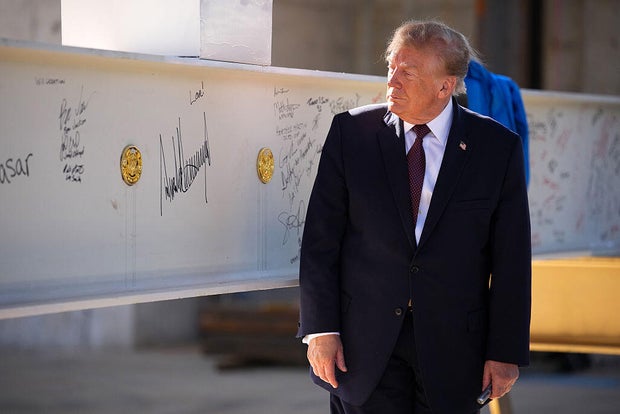
The event concluded with the President signing the final steel beam, a symbolic act that solidified his personal brand on the architecture of the capital. As the crane hoisted the steel into the structure, the crowd of workers and staff provided a moment of unified support, a sharp contrast to the fragmented political landscape that awaited the President back in the West Wing. The building of the ballroom, therefore, is not merely a construction project; it is a declaration of continuity and an assertion of executive priority in an era of political uncertainty.
