
Austin, Texas, proudly promotes itself as the Live Music Capital of the World, drawing millions of tourists annually and generating substantial economic activity through its vibrant cultural landscape. Yet, beneath the neon lights and packed venues of Sixth Street and South Congress lies a stark economic reality: the artists who form the backbone of this multi-million-dollar industry often struggle to afford basic necessities, most notably healthcare. In a state with the highest uninsured rate in the nation, local musicians face a precarious balancing act between pursuing their creative passions and securing their physical well-being.
Musician Zack Morgan often jokes that losing his corporate job in 2015 felt less like a career pivot and more like being shoved off a cliff. For years, Morgan had maintained a double life—working a corporate tech job by day while moonlighting as a funk keyboardist by night. When the layoff finally arrived, he faced a defining crossroads.
"Maybe this is my sign to try the full-time music thing," Morgan recalled thinking. "Step one in that was: Get health insurance again."
To make that leap sustainable, Morgan turned to the Health Alliance for Austin Musicians, widely known as HAAM. Through a unique collaborative model uniting local nonprofits, public agencies, and the Affordable Care Act (ACA) marketplace, Morgan and thousands of other artists have found a vital safety net. However, as federal subsidies shift and healthcare costs surge, the long-term viability of keeping America’s artists healthy faces unprecedented stress tests.
The Evolution of a Lifeline: From Basic Clinics to Full Coverage
Texas has long grappled with severe healthcare gaps. As of 2024, the state maintained the highest uninsured rate in the United States, with approximately 19% of residents aged 64 and younger lacking any form of health insurance. Within this challenging environment, HAAM has spent nearly two decades striving to protect Austin’s creative workforce.
Long before the ACA marketplace opened its virtual doors in 2014, HAAM operated as a connector, linking local musicians with free or low-cost care at community clinics and hospitals throughout Austin and Travis County. Despite these efforts, roughly 85% of HAAM members remained entirely uninsured. This left them dangerously exposed to financial ruin, particularly when touring or traveling to out-of-state gigs where local clinic networks held no jurisdiction.
The advent of the Affordable Care Act changed the organizational strategy entirely.

"When the Affordable Care Act came out, and we knew it was here to stay, it really made sense for us to start getting our musicians fully insured," said Rachel Blair, HAAM’s chief strategy officer.
Recognizing that average HAAM members earn roughly $30,000 annually, leadership realized that standard marketplace plans remained completely out of reach.
"When you think about the average HAAM member making about $30,000 a year, there’s no way that they would be able to spend a third of their income on healthcare," Blair noted.
To bridge this financial chasm, HAAM forged a strategic partnership with Central Health, Travis County’s public hospital district. Central Health utilizes local tax dollars to fund safety-net healthcare for low-income residents and operates Sendero Health Plans, a nonprofit insurance provider offering marketplace coverage tailored to Travis County residents.
Under the qualifying framework, HAAM members enroll in silver-level benchmark plans through Sendero. For musicians whose household incomes fall between 100% and 200% of the federal poverty level, Central Health covers the balance of the monthly premium after federal tax credits are applied. For members earning above that specific threshold, HAAM provides a secondary subsidy, covering half of their remaining monthly premium balances.
Since implementing this robust premium assistance program, HAAM’s membership has surged by 77%, expanding to more than 3,300 active participants. Today, over 90% of HAAM members maintain active health insurance coverage—a staggering turnaround for a traditionally vulnerable demographic.
Navigating Federal Headwinds and Surging Premiums
Despite the program’s localized success, broader economic forces and legislative decisions at the federal level have created severe turbulence. The 2026 plan year proved exceptionally punishing for insured Americans nationwide. Following the expiration of pandemic-era enhanced premium tax credits authorized by Congress, baseline marketplace premiums skyrocketed. A comprehensive national report indicated that nearly 5 million people across the country dropped their ACA coverage due to these exponential cost increases.
Concurrently, Sendero Health Plans raised its own rates by an average of 16% for enrollees, citing escalating medical and pharmacy expenditures. Across the broader ACA marketplace, average rates spiked by as much as 58%.

"Our premiums for our members went up 60% from one year to the next," Blair stated, outlining the stark fiscal challenge facing the organization.
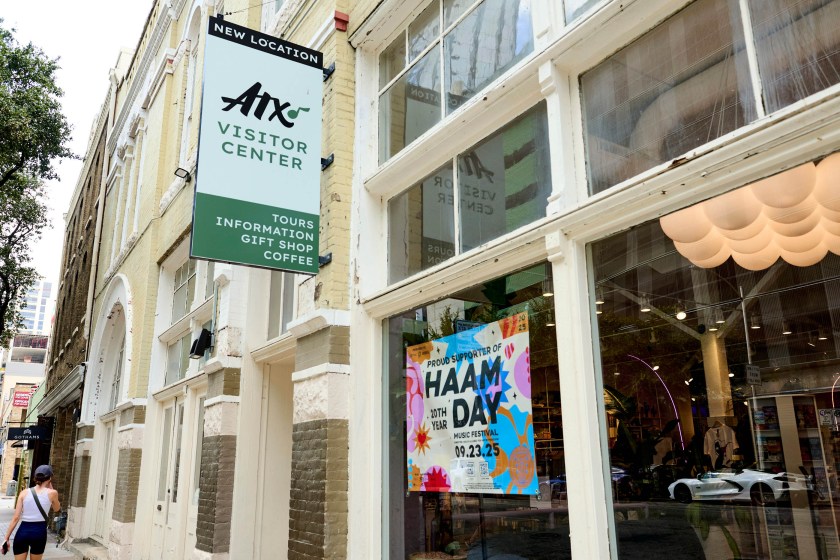
In response, HAAM intensified its fundraising efforts throughout 2025 and into 2026, relying heavily on community-driven initiatives like the annual HAAM Day Music Festival—where local bands perform in unconventional spaces ranging from grocery store lobbies to the steps of the Texas Capitol. While these fundraising events generate crucial capital, the sheer velocity of the price hikes meant that HAAM could not absorb every applicant seeking aid. For the first time in years, the organization was forced to turn away hundreds of qualified musicians requesting financial support.
Nevertheless, existing members found a protective shield against the worst of the market volatility. Kit Abney Spelce, vice president of operations for Central Health, emphasized that safeguarding current enrollees remained a top priority.
"We’re going to make sure their monthly premium is paid every month," Spelce affirmed, highlighting the collaborative commitment to protecting the foundational membership base.
Expanding the Model: Replicating Success Across Sectors and Cities
The success of Austin’s musician-centric healthcare model has not gone unnoticed. Other Texas communities with rich musical traditions have sought to replicate or adapt the strategy.
In 2017, HAAM helped establish a similar initiative in Denton, a vibrant college town north of Dallas known for fostering renowned musical acts from jazz artists to indie rock icons. The Denton Music and Arts Collaborative approaches the challenge slightly differently: it connects members with an independent insurance agent to identify optimal healthcare plans, followed by a direct monthly subsidy of $100 provided by the nonprofit.
Jennifer Kapinos, president of the Denton collaborative, emphasized that these financial interventions are critical to preserving the city’s unique cultural identity.
"More and more people were maybe graduating college and leaving and going to find better opportunities in other places," Kapinos explained. "People who had lived here a long time suddenly were finding it harder and harder to afford to be here."
Back in Austin, the underlying philosophy of workforce-specific healthcare advocacy is beginning to cross industrial lines. In 2025, Good Work Austin—a nonprofit advocacy group representing local food service and restaurant workers—launched a pilot program in partnership with Central Health. The initiative helps hospitality employees enroll in Sendero health plans and subsidizes their monthly premiums.
Spelce noted that partnering with established advocacy groups representing specific labor sectors is essential for long-term outreach success. Simply broadcasting public announcements about available insurance coverage rarely yields high enrollment numbers.
"We are very much dependent on our partner entity to go out and connect with the community, to have that relationship and that trust," Spelce said.
The Persistent Gap: The Medicaid Expansion Dilemma
Despite the considerable triumphs of HAAM and Central Health, structural limitations continue to leave certain populations outside the reach of premium assistance. Under the parameters of the Affordable Care Act, marketplace insurance plans are engineered for low- and middle-income earners. Individuals living in deep poverty—defined as those with incomes falling below 100% of the federal poverty level, roughly $15,000 annually—were originally intended to be absorbed by nationwide Medicaid expansion.
However, Texas remains one of a dwindling number of states that have consistently refused to expand Medicaid under the ACA. Consequently, the poorest musicians and low-income workers in Austin often remain entirely locked out of federal marketplace subsidies.
To address this systemic shortfall, Central Health and HAAM have developed localized workarounds. Central Health operates the Medical Access Program (MAP), an alternative healthcare network that grants uninsured, low-income residents access to local providers without requiring traditional commercial insurance. Similarly, HAAM has established direct partnerships with primary care clinics to serve its uninsured members, though leadership readily admits these stopgap measures fall short of the comprehensive care promised by Medicaid expansion.
"It’s not a very sustainable solution, especially when there’s a really good alternative," Blair acknowledged, pointing to the ongoing policy battles over state-level healthcare access.
As Austin continues to experience rapid urban growth, housing market pressures, and economic shifts, the future of its cultural identity remains inextricably linked to the health and financial security of its creative class. While federal headwinds and legislative stalemates present continuous obstacles, the resilience demonstrated by organizations like HAAM showcases a community-driven blueprint for protecting the vulnerable populations that define America’s cultural landscape.