
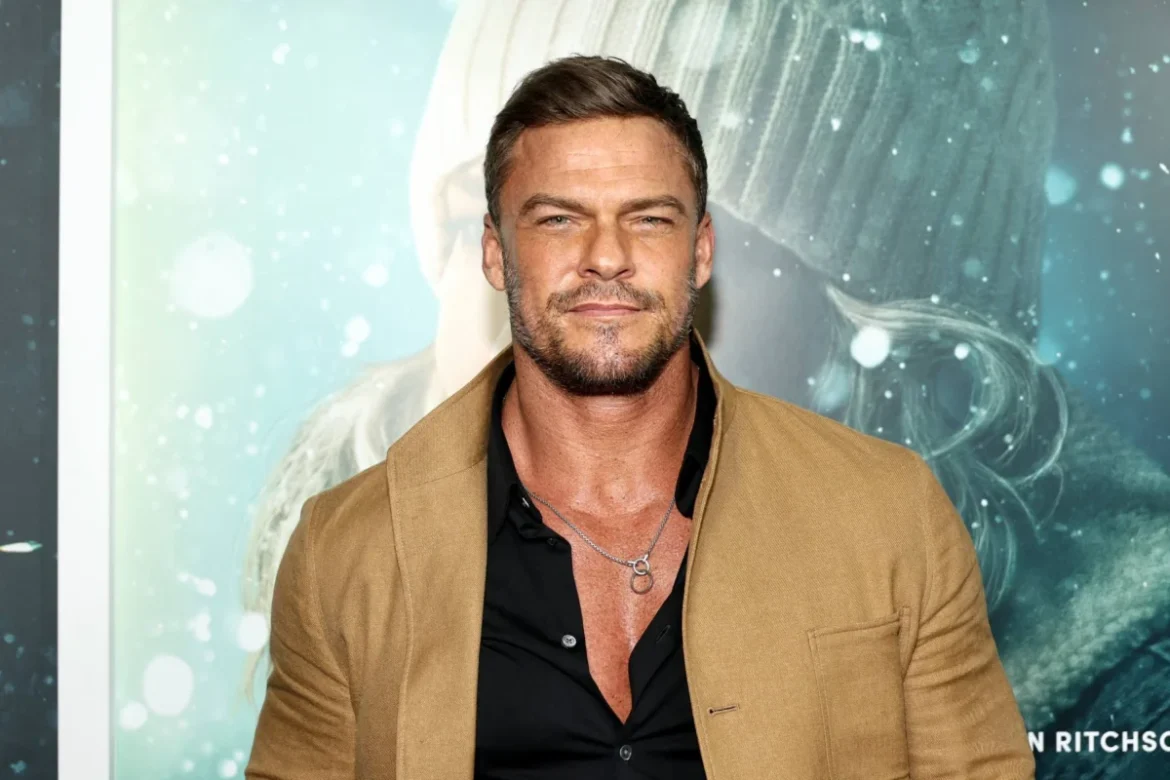
Alan Ritchson, the star of the hit Amazon Prime Video series Reacher, has ignited a political firestorm with his recent appearance on the Happy Sad Confused podcast. During the interview, Ritchson launched a blistering critique of former President Donald Trump, employing highly charged language and directly questioning Trump’s alleged connections to convicted sex offender Jeffrey Epstein. The actor’s controversial remarks have prompted a swift and defensive response from the White House, underscoring the ongoing political sensitivities surrounding the Epstein case and its associated figures.
The controversy began when Ritchson, discussing the protracted release of the Jeffrey Epstein files, expressed extreme frustration. "The Epstein files, the fucking Epstein files!" he exclaimed during the podcast. "Goddamn it! Where are they? It’s a fucking law, bitch. Show it. You fucking pedophiles!" He further escalated his rhetoric, stating, "Just as President Trump has said, he’s been totally exonerated on anything relating to Epstein," White House spokeswoman Abigail Jackson said in a statement to Entertainment Weekly. "And by releasing thousands of pages of documents, cooperating with the House Oversight Committee’s subpoena request, signing the Epstein Files Transparency Act, and calling for more investigations into Epstein’s Democrat friends, President Trump has done more for Epstein’s victims than anyone before him."
Ritchson’s comments also directly targeted Trump, whom he labeled a "bitch" and a "fucking rapist," although it is important to note that Trump has consistently denied all allegations of sexual assault made against him. The actor’s impassioned plea for transparency and accountability regarding the Epstein files was framed within a broader political context. "This is my fucking politics, dude," Ritchson declared. "I would fucking railroad these fuckers. I would get those Epstein files out in two seconds. Fucking move out of the way. I don’t care what room they’re in, bitch, move. Give me the fucking manila envelope. I will get you the Epstein files. Don’t you want to see what’s in there, so that we can hold people accountable? These fucking rapists! We’re just cool with it?"
The Epstein Files: A Lingering Shadow
The Jeffrey Epstein case has cast a long and disturbing shadow over powerful figures across various sectors for years. Epstein, a financier with extensive connections in business, politics, and entertainment, was arrested in July 2019 on federal sex trafficking charges. He died by suicide in a Manhattan federal jail cell in August 2019 while awaiting trial. The subsequent investigations and the ongoing release of court documents have aimed to shed light on his alleged sex trafficking network, which is believed to have involved numerous prominent individuals.
The "Epstein files," often referring to unsealed court documents related to the legal proceedings against Epstein and his associates, have been a subject of intense public interest and scrutiny. These documents often contain names of individuals who had connections with Epstein, leading to speculation and further investigations. The slow pace of their release has been a source of frustration for victims and the public alike, fueling demands for greater transparency and accountability.
White House Rebuttal and Political Maneuvering
The White House’s immediate and robust defense of Donald Trump in response to Ritchson’s remarks highlights the sensitive nature of the Epstein case for political figures. The statement from spokeswoman Abigail Jackson sought to reframe Trump’s actions as proactive and beneficial to victims.
"Just as President Trump has said, he’s been totally exonerated on anything relating to Epstein," Jackson stated. The White House spokesperson emphasized Trump’s purported contributions to transparency, including:
- Releasing Documents: The statement suggests Trump has been instrumental in the release of thousands of pages of documents related to the case.
- Cooperating with Subpoenas: Cooperation with the House Oversight Committee’s subpoena requests was cited as evidence of his commitment to the process.
- Signing Legislation: The signing of the "Epstein Files Transparency Act" was presented as a significant step toward accountability.
- Calling for Investigations: The White House asserted that Trump has called for further investigations into Epstein’s "Democrat friends," aiming to deflect criticism and suggest a broader pattern of wrongdoing among political opponents.
This defense strategy appears designed to position Trump as a victim of political attacks while simultaneously portraying him as a champion of justice for Epstein’s victims. It also seeks to shift the focus away from any potential associations Trump may have had with Epstein and towards what the White House describes as Trump’s efforts to expose others involved.
Timeline of Events and Public Interest
The public’s engagement with the Epstein case has unfolded over several years, marked by key developments:
- 2019: Jeffrey Epstein’s arrest and subsequent death in custody brought the full scope of his alleged crimes to the forefront of public consciousness.
- 2020-2023: Ongoing investigations and legal proceedings led to the unsealing of various court documents, revealing a wider network of individuals connected to Epstein. Public demand for further transparency intensified during this period.
- 2025-2026: The release of significant batches of unsealed documents, particularly in late 2025 and early 2026, generated renewed media attention and public discussion. These releases have included names of individuals previously not widely associated with Epstein’s network, leading to considerable public interest and debate.
- Recent: Alan Ritchson’s podcast interview in early 2026 and the subsequent White House response mark the latest chapter in the ongoing public discourse surrounding the Epstein case.
While the UK has seen legal and political repercussions following the release of documents, the US has yet to witness a similar level of direct judicial action stemming from these recent unsealings. This disparity has contributed to the ongoing frustration and calls for further action within the United States.
Analysis of Implications and Broader Impact
Alan Ritchson’s outspoken criticism, while using inflammatory language, taps into a broader public sentiment of impatience and a desire for complete transparency regarding the Epstein affair. The actor, with his significant following from the Reacher series, brings a prominent voice to this issue, amplifying calls for accountability.
The White House’s response underscores the political tightrope that figures like Donald Trump must walk concerning the Epstein case. Any association, however distant, can be weaponized by opponents, and a strong defensive posture is often employed to mitigate potential damage. The strategy of highlighting actions taken towards transparency, while simultaneously attempting to link political adversaries to Epstein, is a common tactic in partisan political discourse.
The ongoing release of the Epstein files continues to have far-reaching implications. It not only has the potential to uncover further details about Epstein’s network but also raises questions about the extent of complicity and the effectiveness of legal and regulatory systems in preventing such egregious crimes. The public’s continued demand for information suggests a persistent desire to see all individuals involved held accountable, regardless of their status or influence. The disparity in legal outcomes between the US and the UK following document releases also invites scrutiny of the judicial processes and the political will to pursue justice in high-profile cases. As more information emerges, the Epstein saga is likely to remain a significant point of discussion and a catalyst for calls for reform and accountability within the American political and legal landscape.
