
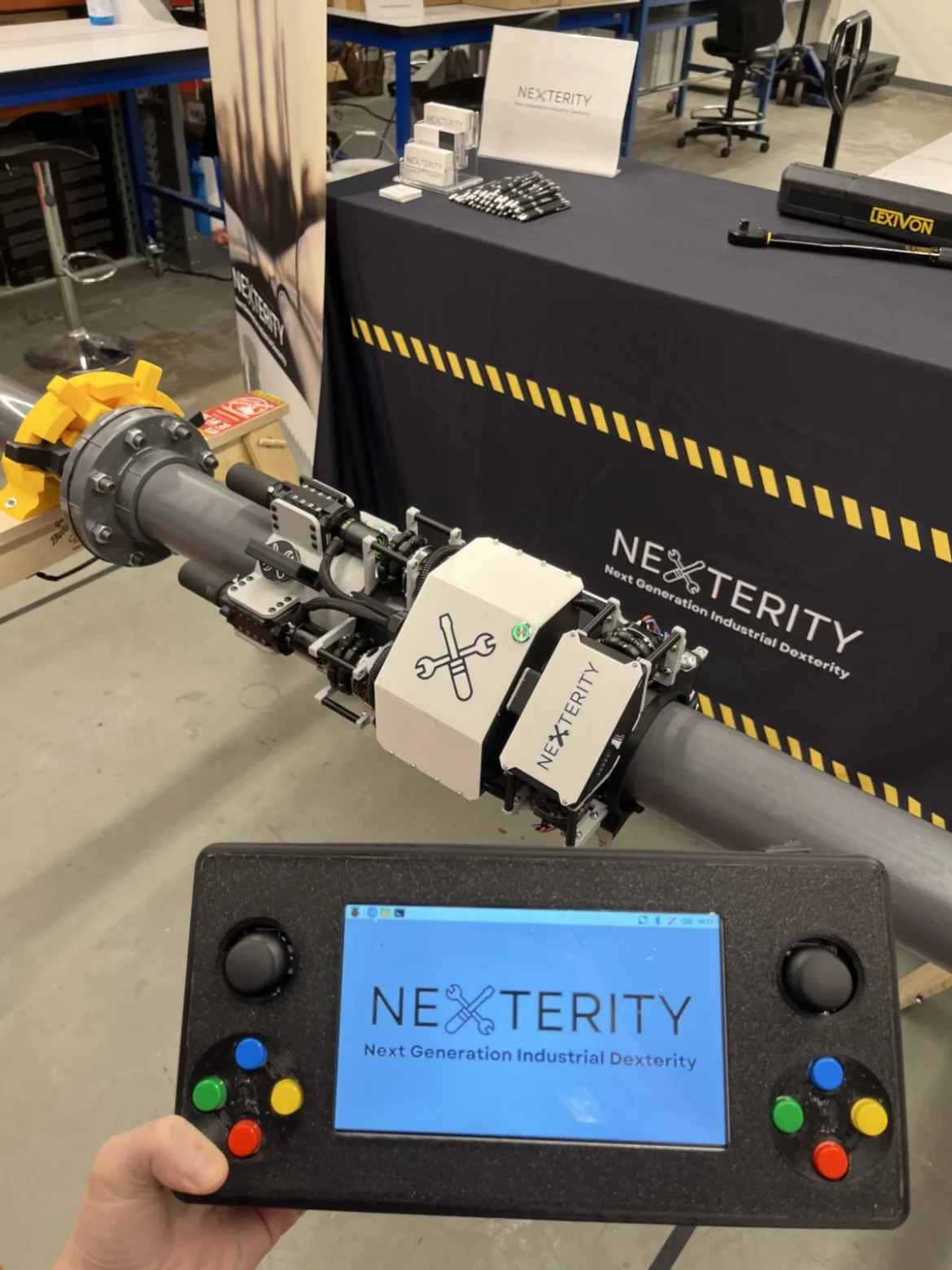
The global industrial landscape relies on a vast, often invisible web of piping infrastructure that facilitates the movement of oil, gas, water, and chemical products. At the heart of this complex network are bolted flange joints, the critical connection points that hold the system together. Despite their ubiquity, the maintenance of these joints remains a physically grueling, high-risk, and inefficient manual task. Lindsey Elliott, a former engineer and planner at ExxonMobil, is spearheading a technological intervention to address these systemic inefficiencies through her startup, Nexterity. As a participant in the Startup Battlefield 200 at TechCrunch Disrupt, Nexterity is positioning its remote-controlled bolting robots as a necessary evolution for a sector grappling with labor shortages and stagnant productivity.
The Problem: Manual Labor in a Modern Industrial World
The act of tightening or loosening bolts on industrial pipe flanges is a cornerstone of the pipefitting trade, yet it is fraught with ergonomic hazards and repetitive strain. Pipefitters frequently operate in hazardous environments, enduring long shifts that can span 12 hours a day for months at a time. The physical nature of the work—which requires significant torque application in cramped or precarious conditions—contributes to high injury rates and rapid worker fatigue.
Furthermore, the industrial sector is currently facing a significant labor crunch. An aging workforce, coupled with a diminishing pipeline of skilled tradespeople, has created a productivity crisis. According to reports from various trade organizations, the labor gap in North American pipefitting is projected to widen over the next decade. Elliott, drawing on her extensive experience at ExxonMobil, noted that productivity levels in the industry have remained stagnant for years, hampered by the reliance on outdated manual methods that have not kept pace with advancements in other engineering fields.
From the Bolting Symposium to Startup Innovation
The genesis of Nexterity’s technological solution began not in a vacuum, but within the professional communities that maintain this infrastructure. Elliott’s participation in the annual Bolting Symposium—a specialized gathering of industry experts often affectionately referred to as “torque dorks”—provided the necessary feedback loop to refine her concept.
In the years leading up to the development of the Nexterity robot, Elliott engaged in consistent dialogue with the Pressure Vessels & Piping Division of the American Society of Mechanical Engineers (ASME). These conversations were instrumental in identifying the most critical pain points. Her research revealed that approximately 80% of industrial piping falls within the Nominal Pipe Size (NPS) range of two to eight inches. This discovery was a "lightbulb moment," as it highlighted a clear opportunity for standardization and automation. By targeting this specific size range, Nexterity could provide a scalable solution that addresses the vast majority of common pipe configurations found in oil refineries, water treatment plants, and manufacturing facilities.
The Technology: Engineering for Efficiency
The Nexterity robot is designed as a modular, battery-operated system that physically clamps around a pipe. Once secured, the device operates autonomously or via remote control to loosen or tighten up to four bolts simultaneously. The modular nature of the system allows for different configurations, ensuring compatibility with the most common pipe sizes identified in Elliott’s market research.
Portability was a primary design requirement. Recognizing that industrial maintenance often takes place in remote or difficult-to-reach areas, the robot is engineered to be compact enough to fit within a standard Pelican case. A single technician can transport, deploy, and operate the unit, effectively shifting the role of the worker from a manual laborer to a robotics operator. This transition not only mitigates the risk of workplace injuries but also enables a single worker to manage multiple bolting operations simultaneously, theoretically multiplying the productivity of a maintenance crew.
Market Dynamics and Economic Implications
The market for industrial maintenance robotics is poised for significant expansion as firms look to offset labor costs and improve safety metrics. Nexterity’s business model centers on the “rental” of its robotic units, similar to how specialized construction equipment is currently managed. This approach lowers the barrier to entry for smaller contractors who may not have the capital to invest in proprietary technology but still require high-efficiency tools for project-based work.
The potential application of this technology extends far beyond the oil and gas sector. The same fundamental piping infrastructure is used in water and wastewater management, the food and beverage industry, mining, nuclear energy, and the rapidly growing sector of green hydrogen and sustainable manufacturing. As these industries face increasing regulatory pressure to ensure the integrity of their infrastructure and the safety of their workforce, the adoption of automated bolting solutions is likely to transition from an "innovation" to a "standard practice."
Analysis: The Impact on the Future of Trade Labor
The introduction of robotics into the pipefitting trade has historically been met with apprehension regarding job displacement. However, industry analysts suggest that the Nexterity approach may actually stabilize the workforce. By offloading the most physically taxing and repetitive tasks to robots, companies can extend the careers of experienced tradespeople, allowing them to focus on high-level diagnostic and complex assembly work rather than the brute force application of torque.
From an economic perspective, the integration of robotics into industrial maintenance could lead to shorter plant downtime. In industries like petrochemical processing, a single day of unplanned downtime can cost millions of dollars. If a bolting robot can complete a maintenance cycle in a fraction of the time required by a human crew, the return on investment for the facility owner becomes immediately apparent.
Challenges and Future Trajectory
Despite the clear technical and economic benefits, the transition to automated bolting is not without hurdles. The industrial environment is inherently harsh, characterized by extreme temperatures, vibration, and exposure to corrosive materials. Nexterity will need to demonstrate that its hardware can withstand these conditions over long, continuous deployments. Furthermore, the company will need to navigate the conservative nature of industrial procurement, where safety standards often require extensive testing and certification before new technology is adopted on a wide scale.
However, the momentum behind Nexterity is reflective of a broader trend in the industrial tech sector: the "digitization of the physical." As the Startup Battlefield 200 platform at TechCrunch Disrupt highlights, the intersection of mechanical engineering and automation is where some of the most significant gains in global productivity are being made.
Conclusion
Lindsey Elliott’s vision for Nexterity is a testament to the power of domain expertise in identifying overlooked opportunities for innovation. By focusing on the "torque dorks" and the mechanical minutiae of industrial maintenance, she has identified a niche that is both ripe for disruption and essential for the functioning of modern infrastructure. As the company moves from the startup phase into broader commercialization, its success will likely depend on its ability to prove that it can bring more than just engineering ingenuity to the field—it must provide a robust, reliable, and safer alternative to the manual methods that have dominated the industry for nearly a century. If successful, the Nexterity robot will not only change how pipes are bolted but also redefine the role of the industrial tradesperson in an increasingly automated world.
