
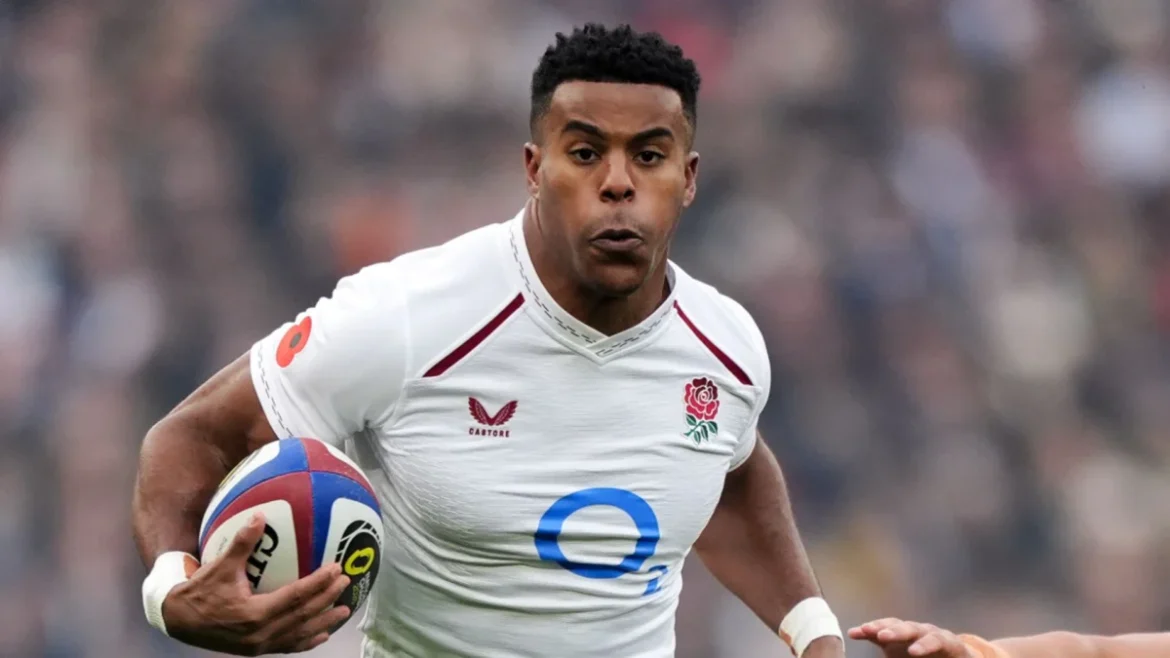
England’s preparations for the remainder of the Nations Championship have been thrown into disarray following confirmation that both Immanuel Feyi-Waboso and Tom Curry will play no further part in the current campaign. The duo, both integral figures in Steve Borthwick’s tactical framework, have been sidelined due to persistent injury concerns, compounding an already difficult period for the national setup as they pivot their focus toward the upcoming Test match against Japan this Saturday.
The medical bulletin issued by the England management on Monday serves as a significant blow to the team’s momentum. While England recently enjoyed a morale-boosting 45-22 victory over Australia at Twickenham, the physical toll of that encounter, combined with lingering issues from the training ground, has left the squad’s depth severely tested. Alongside the confirmed departures of Feyi-Waboso and Curry, Borthwick must contend with the absences of Seb Atkinson (hip), Ollie Chessum (shoulder), and George Furbank (groin), all of whom are currently undergoing intensive rehabilitation protocols.
A Chronology of the Injury Setbacks
The disruption began in the lead-up to the Australia fixture. Tom Curry, the Sale Sharks stalwart, was unable to feature in the matchday squad after sustaining a hip injury during a training session last week. Despite his absence, England produced a commanding performance, but the physical intensity of the game exacted a heavy price.
During the first half of the clash against the Wallabies, Exeter Chiefs winger Immanuel Feyi-Waboso was forced from the field. The injury was the direct result of a controversial "hip-drop" tackle executed by Australia prop Angus Bell. The incident, which led to a yellow card for Bell, left Feyi-Waboso with a significant right ankle injury. His replacement, Henry Pollock, proved to be an inspired substitute, marking his arrival with two clinical tries. However, the loss of Feyi-Waboso removes a dynamic, high-impact carrier from the backline at a time when England is looking to consolidate its attacking patterns.
The medical team is currently expressing cautious optimism that Atkinson, Chessum, and Furbank could return to the fold for the high-profile fixture against New Zealand at Allianz Stadium on November 21. Nevertheless, for the immediate challenge against Japan, Borthwick is forced into a wholesale reconfiguration of his starting XV.
Tactical Implications and Squad Rotation
The absence of Feyi-Waboso creates a void on the wing that necessitates tactical flexibility. Borthwick has several avenues to explore, with Saracens’ Noah Caluori and Tobias Elliott emerging as the primary candidates to fill the gap. Caluori, who earned his first senior cap against Fiji in July, represents an opportunity for the coaching staff to continue their policy of blooding younger talent in high-pressure environments.
In the center, the vacancy created by Seb Atkinson’s hip injury—sustained during the second half of the win over Australia—will likely see a shift in the midfield structure. Fraser Dingwall and Max Ojomoh are the leading contenders to don the No 12 jersey. Both players offer a blend of technical proficiency and defensive reliability, which will be essential against a Japanese side known for its high-tempo, expansive style of play.
At the back, the situation regarding George Furbank’s groin injury points toward a likely start for the reliable Freddie Steward at full-back. Steward’s aerial prowess and tactical kicking game remain significant assets, and his inclusion would allow Marcus Smith to serve as a versatile utility cover from the bench, providing the tactical flexibility Borthwick often utilizes to close out games.
Expanding the Squad Depth
In response to these developments, the England management has acted swiftly to maintain training intensity. On Monday, the 36-man squad returned to the Pennyhill Park training base, where Jack Kenningham and Max Hicks were drafted in as reinforcements for the back-row. The return of Archie McParland, who has successfully completed his recovery from a calf injury, provides a necessary boost to the half-back depth.
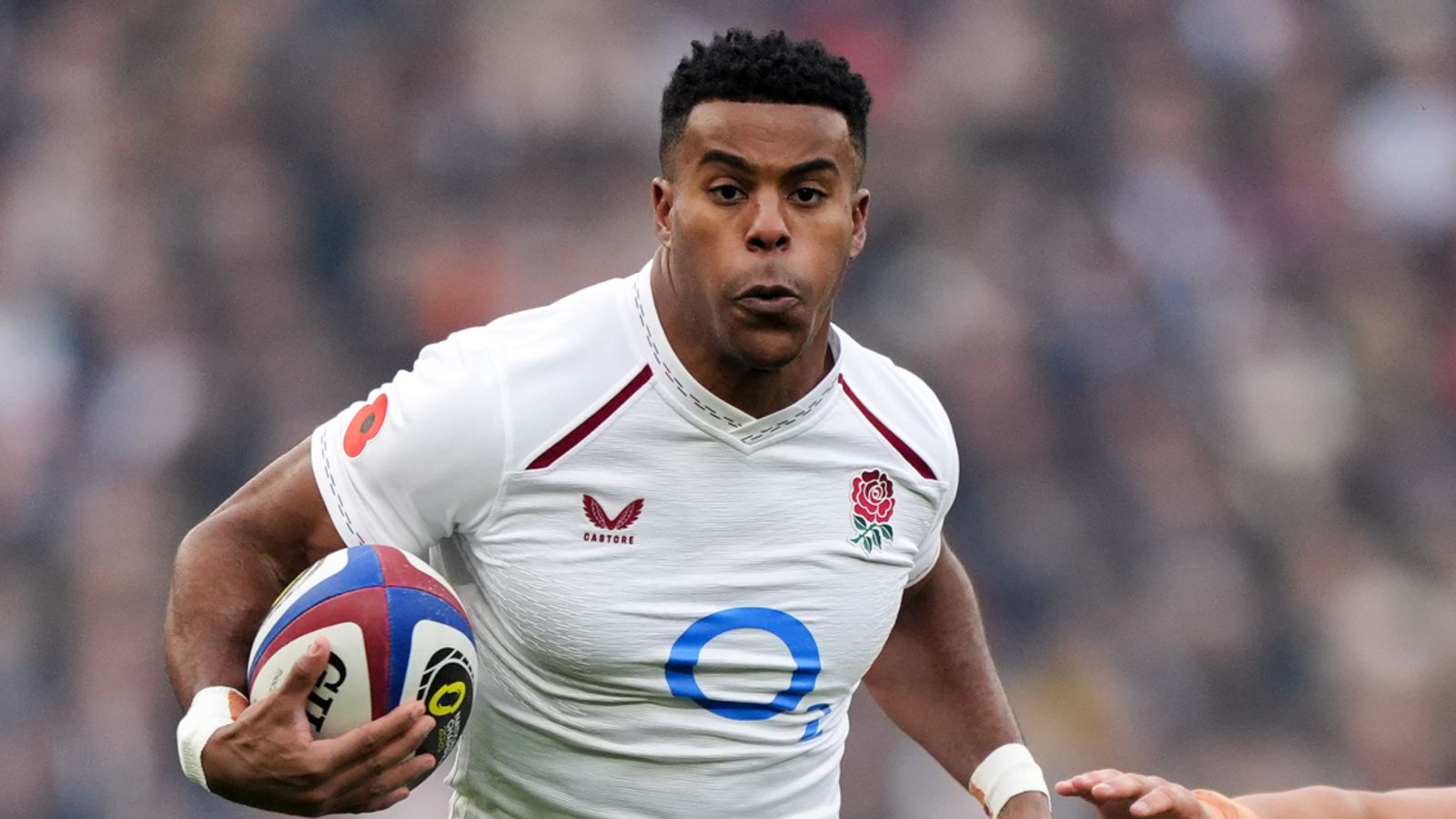
The inclusion of players like Kenningham and Hicks is not merely a stop-gap measure; it is an acknowledgement of the brutal physical attrition rate inherent in modern international rugby. Borthwick’s philosophy of a "squad-wide" approach is currently being put to its ultimate test. By integrating younger, hungry players into the senior environment, the coaching staff aims to ensure that the drop-off in quality remains minimal, regardless of the injury list.
Analysis: The "Borthwick Doctrine" Under Pressure
Steve Borthwick’s tenure as England head coach has been characterized by a meticulous, data-driven approach to player management. However, the recent spate of injuries has challenged his ability to maintain consistency in selection. Following the win over Australia, Maro Itoje issued a passionate defense of his head coach, suggesting that the team’s cohesion is stronger than the external narrative might imply.
Statistically, England’s ability to score 45 points against Australia despite the absences of players like Curry demonstrates that the team has successfully diversified its attacking threats. However, the defense will face a different test against Japan. The Japanese team, coached with an emphasis on speed and ball retention, will look to exploit any lack of familiarity in a patched-together English defensive line.
The decision to keep players like Ben Curry on a limited rotation—despite his standout performance against the Wallabies—suggests that Borthwick is prioritizing long-term squad health for the New Zealand fixture. This "long-game" strategy is indicative of a coaching staff looking beyond a single result to the broader goal of building a squad capable of sustained success over the entire Nations Championship window.
Official Training Squad Composition
The current depth of the squad, as confirmed by the latest training announcement, reflects the challenges faced:
Forwards:
The pack remains the engine room of the side. With the return of veterans like Jamie George and Ellis Genge, the foundation remains solid. The inclusion of Max Hicks and Jack Kenningham highlights the need for specialized cover in the back row, particularly with Tom Curry sidelined. The presence of young talent such as Henry Pollock—fresh from his two-try heroics—suggests that Borthwick is unafraid to reward form, regardless of the player’s experience level.
Backs:
The backline remains the most fluid area of the pitch. While the core of Marcus Smith, George Ford, and Henry Slade provides stability, the competition for the wing and center positions is intense. The potential involvement of Noah Caluori and Tobias Elliott will be closely watched, as these players represent the next generation of English wide attackers.
Looking Ahead to the Japan Test
The upcoming match against Japan is a critical juncture. While England enters as the clear favorite, the injuries to key personnel provide an opening for the visitors. For England, the primary objective is to maintain the tactical discipline shown against Australia while integrating the new faces into the system seamlessly.
The medical staff’s progress reports on the injured trio—Atkinson, Chessum, and Furbank—will dominate the news cycle over the next ten days. The objective is clearly to have these players available for the visit of the All Blacks, a game that will likely serve as the litmus test for England’s progress under Borthwick.
As the squad settles into their training routine at Pennyhill Park, the narrative is one of resilience. While the loss of experienced campaigners like Curry and the dynamic Feyi-Waboso is undeniable, the focus within the camp remains strictly on the next 80 minutes of international rugby. The adaptability shown by the squad thus far suggests that England remains a formidable unit, capable of navigating the difficulties of a demanding international calendar. Whether the next wave of players can uphold the standard set at Twickenham remains the central question of the week.
