
A significant majority of Utah residents opposed the drastic reduction of Bears Ears National Monument prior to President Donald Trump’s executive orders last week, which slashed the protected area by approximately 90 percent. According to multiple independent polls conducted over the last several years, the public sentiment within the state stands in stark contrast to the narratives presented by Utah’s top Republican leaders. While elected officials have argued that the cuts represent the will of the local populace and a return to "fairness," data suggests that most Utahns, including a surprising percentage of conservative voters, favored maintaining the original monument boundaries.
Last week, President Donald Trump signed two executive orders that fundamentally altered the landscape of federal land management in the American West. The orders targeted Grand Staircase-Escalante and Bears Ears national monuments, both located in southern Utah, reducing their combined acreage from roughly 3.3 million acres to a mere fraction of their former size. The announcement was made during a ceremony in the Oval Office, where the President was joined by Utah Governor Spencer Cox and members of the state’s congressional delegation, including Representative Celeste Maloy and Senator Mike Lee.
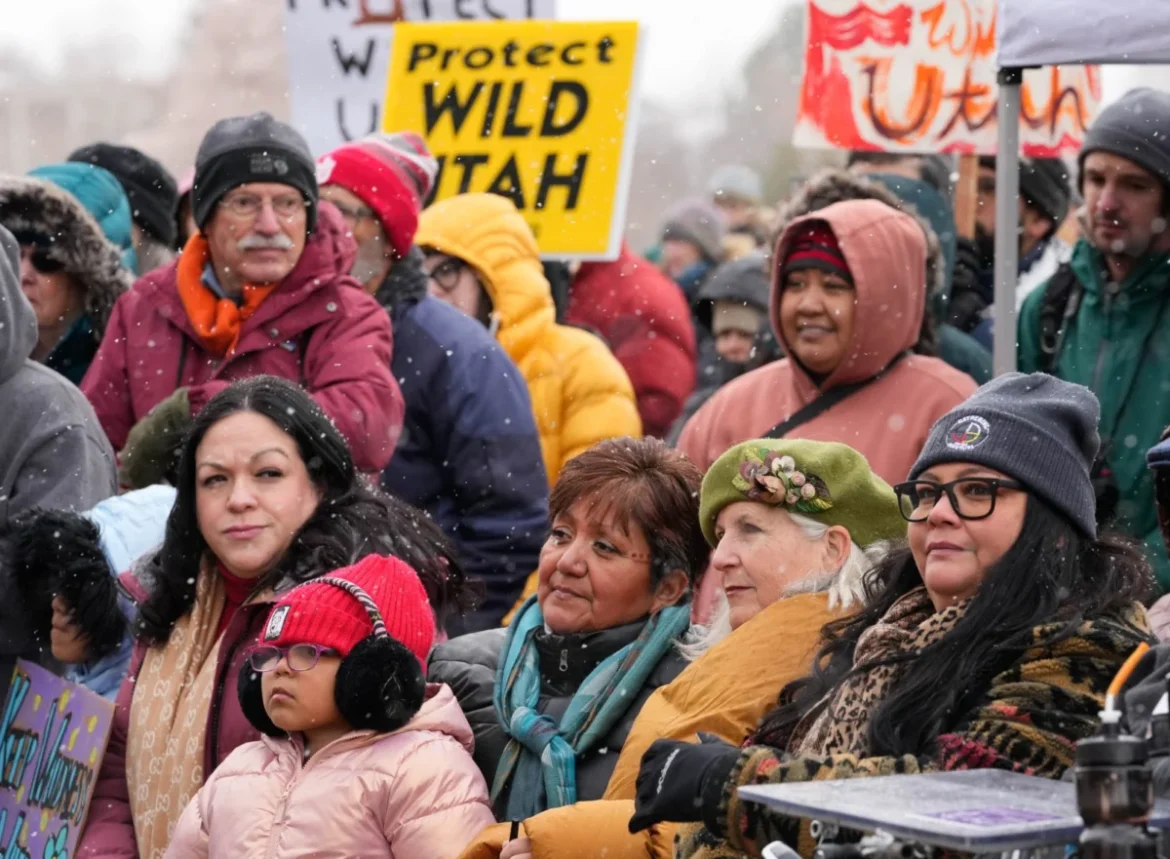
In his proclamation, Trump stated that the reductions were necessary to "better align the use of these public lands with the public interest." He specifically highlighted the presence of critical mineral deposits within the former monument boundaries, including copper, nickel, and uranium. However, the move has ignited a firestorm of protest across the state, with hundreds of citizens gathering outside the Governor’s Mansion in Salt Lake City this Monday to voice their opposition. Organized by groups such as the Southern Utah Wilderness Alliance (SUWA), these demonstrations reflect a growing divide between the state’s political establishment and its residents.
The Statistical Reality of Public Opinion in Utah
The argument that Utahns overwhelmingly desired the shrinkage of these monuments is not supported by recent academic and non-partisan research. In surveys conducted between 2024 and 2025, researchers at Utah State University (USU) found that 61 percent of Utahns either supported or strongly supported the preservation of Bears Ears as a national monument. In contrast, only 19 percent expressed opposition.
When specifically asked about reducing the size of the monument, 53 percent of respondents were opposed or strongly opposed to the idea, while only 26 percent supported the reduction. The remaining 21 percent of participants held a neutral stance. Michaelann Nelson, a professor of environmental rhetoric at USU’s Price campus and lead author of the study, noted the discrepancy between the data and the political rhetoric. "It is very contradictive of our findings," Nelson said. "They’re kind of picking and choosing which Utahns they’re paying attention to and listening to."
The USU study was designed with rigorous methodology to ensure that the voices of rural Utahns—often cited by politicians as the primary victims of "monument overreach"—were accurately represented. By utilizing sociologists based in rural regions, the researchers ensured the data was not skewed by the more urban, liberal-leaning populations of the Wasatch Front. Jessica Schad, a professor of sociology and director of USU’s Community and Natural Resources Institute, emphasized that public attitudes have remained remarkably stable despite the increasing politicization of the issue.
Broader Trends Across the Mountain West
The sentiment in Utah reflects a broader trend across the Mountain West. The annual "Conservation in the West" poll, conducted by Colorado College, has tracked public opinion on public lands for over a decade. The 2026 data shows that 91 percent of voters in eight Western states—Arizona, Colorado, Idaho, Montana, Nevada, New Mexico, Utah, and Wyoming—want existing national monument designations kept in place. This represents a steady increase from 80 percent in 2017 and 88 percent in 2025.
Perhaps most surprising is the cross-partisan nature of this support. The Colorado College poll found that 87 percent of Republicans, 92 percent of independents, and 96 percent of Democrats in the West favor keeping national monuments intact. Even among those identifying as supporters of the MAGA movement, support for maintaining monument designations rose from 81 percent in 2025 to 87 percent this year.
Lori Weigel, a principal with the Republican public opinion research firm New Bridge Strategies, which assists with the Colorado College poll, noted that Westerners consistently prioritize conservation over industrial development. "What we have seen very consistently in the data is that people want additional protections for these public lands," Weigel said. The data further indicates that voters prefer prioritizing recreation and renewable energy over fossil fuel extraction and mining on federal land.
A Timeline of Monument Designation and Conflict
The conflict over these lands spans decades and multiple presidential administrations, highlighting a fundamental disagreement over the interpretation of the 1906 Antiquities Act.
- 1906: The Antiquities Act is signed into law by Theodore Roosevelt, giving presidents the authority to protect "historic landmarks, historic and prehistoric structures, and other objects of historic or scientific interest."
- 1996: President Bill Clinton designates the Grand Staircase-Escalante National Monument, encompassing roughly 1.7 million acres (later expanded to 1.9 million). The move was met with immediate hostility from Utah Republicans, who viewed it as a "midnight" land grab.
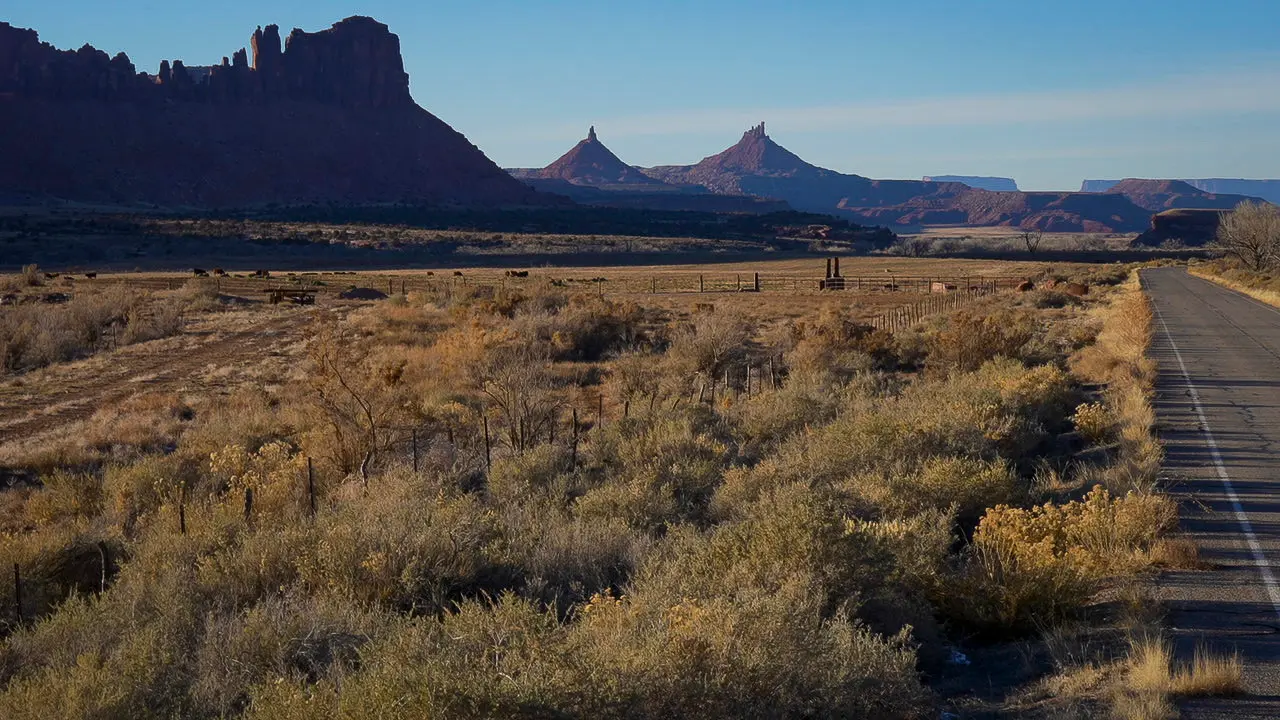
- 2016: President Barack Obama designates the Bears Ears National Monument, covering 1.35 million acres of land sacred to five Native American tribes. This was the first monument created at the specific request of a coalition of tribal nations.
- 2017: During his first term, President Trump drastically reduces both monuments. Investigations later revealed that uranium mining companies had lobbied the administration to adjust boundaries to allow for mineral extraction.
- 2021: President Joe Biden restores the original boundaries of both monuments, citing their cultural and ecological importance.
- 2026: President Trump, following his return to office, issues the latest round of executive orders, reducing Bears Ears to approximately 121,000 acres and Grand Staircase-Escalante to 181,500 acres.
Utah politicians, such as Senator Mike Lee and Governor Cox, argue that the massive size of these monuments violates the Antiquities Act’s requirement that designations be limited to the "smallest area compatible" with the protection of the objects of interest. "These multimillion-acre monuments that are bigger than the state of Delaware certainly do not fit that designation," Cox stated during the signing ceremony.
The Impact on Tribal Sovereignty and Cultural Heritage
One of the most significant casualties of the recent executive orders is the formal role of Native American tribes in land management. Bears Ears was unique for its Inter-Tribal Commission, which allowed the Hopi Tribe, Navajo Nation, Ute Mountain Ute Tribe, Pueblo of Zuni, and Ute Indian Tribe to consult with federal agencies on the protection of ancestral lands, archaeological sites, and traditional gathering grounds.
Trump’s order effectively disbanded this commission, a move that flies in the face of public opinion. A December 2024 survey by New Bridge Strategies found that nearly 90 percent of Utahns support Native American tribes having a strong role in managing their ancestral lands. Furthermore, 81 percent of respondents believed the administration should honor existing agreements with tribes regarding Bears Ears.
Tribal leaders have expressed profound disappointment, noting that the lands contain tens of thousands of sacred sites that are now vulnerable to looting, vandalism, and industrial destruction. Autumn Gillard of the Piute Indian Tribe of Utah was among those protesting at the Utah Capitol, emphasizing that the protection of these lands is not a partisan issue for Indigenous people, but a matter of cultural survival.
Economic and Recreational Misconceptions
During the signing ceremony, President Trump claimed that monument designations prevented residents from enjoying the land. "You can’t do anything. You can’t go hunting. You can’t go fishing. You can’t do anything. You can virtually not even walk on it," he asserted.
However, fact-checking of land management policies reveals these claims to be largely inaccurate. In both Bears Ears and Grand Staircase-Escalante, hunting and fishing are permitted under state regulations. Most existing grazing permits are honored, and traditional activities like wood hauling and herb gathering are generally allowed. While new mining claims and large-scale industrial developments are prohibited within monument boundaries, motorized vehicle use is permitted on designated trails and roads.
The shift toward smaller monuments appears less about "public access" and more about "industrial access." The inclusion of critical minerals in the President’s justification aligns with long-standing efforts by mining interests to tap into the region’s uranium and copper deposits. While proponents argue this boosts the local economy, conservationists point out that the outdoor recreation economy in Utah—driven largely by the state’s "Mighty 5" national parks and its sprawling monuments—generates billions of dollars in annual revenue and supports tens of thousands of jobs, often providing a more stable economic base than the boom-and-bust cycle of mining.
Legal and Environmental Implications
The reduction of these monuments is expected to trigger a protracted legal battle. Environmental groups and tribal nations have historically argued that while the Antiquities Act grants a president the power to create a monument, it does not explicitly grant the power to abolish or significantly diminish one. This legal question remains one of the most contentious issues in federal land law.
The environmental implications are equally significant. Grand Staircase-Escalante is often referred to as the "Science Frontier" due to its rich paleontological resources; more than a dozen new dinosaur species have been discovered there in the last two decades. By removing protections, these sites become vulnerable to disturbance.
As the state of Utah moves forward with these changes, the disconnect between the electorate and the elected remains a central theme. While political leaders frame the monument reductions as a victory for "the people," the data suggests that for the majority of Utahns, the loss of protected public lands is viewed not as a gain in fairness, but as a loss of heritage. The coming months will likely see these tensions play out in federal courts and at the ballot box, as the public grapples with the future of the American West’s most iconic landscapes.
