
Escalation in Crucial Waterways
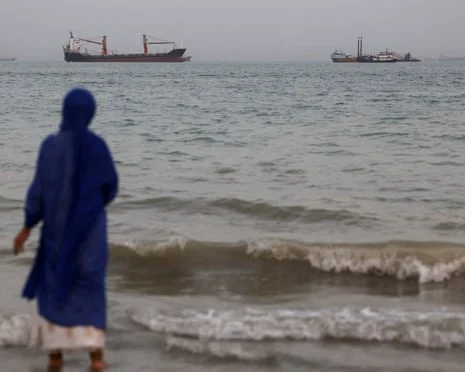
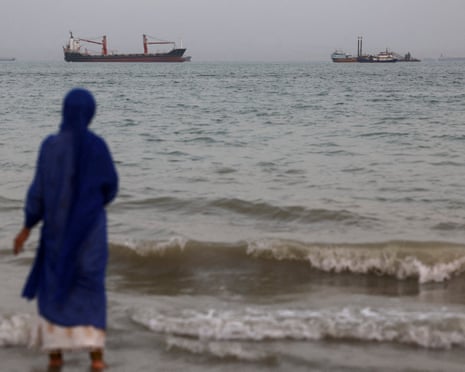
The Strait of Hormuz, a narrow choke point through which approximately one-fifth of the world’s total oil consumption passes daily, became the immediate flashpoint for this latest escalation. Early on Tuesday, a tanker was struck off the coast of Oman, compelling its crew to abandon the vessel. The UK Maritime Trade Operations (UKMTO) centre reported the incident, with Iran’s Islamic Revolutionary Guard Corps (IRGC) swiftly claiming responsibility not only for this attack but also for two other ship assaults in the waterway on Monday. This direct assertion of responsibility by the IRGC marks a significant shift, intensifying concerns over the security of global energy supplies and maritime trade.

Further south, the Bab al-Mandeb strait, located at the southern end of the Red Sea, also emerged as a critical theatre. The Houthis, a powerful armed group in Yemen supported by Iran, announced a sweeping maritime blockade against Saudi Arabia. A Houthi official justified the blockade by citing the kingdom’s "unjust blockade on Yemenis for over 10 years," a reference to the protracted conflict in Yemen. The Bab al-Mandeb strait is another crucial maritime artery, typically facilitating about 12% of the world’s seaborne trade. The threat of its closure to Saudi vessels immediately triggered alarm, with Riyadh responding by stating it would take "all necessary measures to protect its vessels in accordance with international law," underscoring the potential for direct confrontation in the Red Sea. The simultaneous targeting of these two vital maritime passages suggests a coordinated strategy by Iran and its proxies to exert pressure on regional rivals and international powers, particularly the United States.
US-Iran Confrontation Deepens
The current surge in tensions follows a period of renewed, albeit fragile, diplomatic engagement. An April ceasefire agreement between the US and Iran, aimed at de-escalating regional proxy conflicts, proved short-lived. A subsequent agreement signed last month also quickly crumbled, paving the way for a rapid return to a cycle of reciprocal strikes. The US has launched a sustained campaign of airstrikes, now in its tenth consecutive night, ostensibly to "degrade" Iran’s capacity to threaten commercial shipping and to respond to attacks on US personnel. These US strikes have targeted Iranian military command centers, missile, and drone launch sites.
The US military’s Central Command confirmed the objectives of these airstrikes, emphasizing their intent to diminish Iran’s offensive capabilities in the region. However, these sustained attacks have failed to deter Tehran, which has vowed robust retaliation. Iran’s president, speaking publicly, declared the country had returned to "full-scale war," a stark pronouncement that ratchets up the rhetoric and signals a potential for even broader conflict. Iranian state media reported that US strikes hit several parts of the country, including critical areas like Bandar Abbas, a major port city, Tabriz, and Bushehr, home to Iran’s only operational civilian nuclear power plant. The targeting of such sensitive locations, whether confirmed by independent sources or not, further inflames an already volatile situation.
Rising Casualties and Political Fallout
The escalating conflict has come at a human cost. The Pentagon acknowledged that nearly 100 US service members have been injured over the past two weeks due to Iranian strikes on US facilities across the region. While Pentagon spokesperson Sean Parnell stated that the majority sustained "minor concussions" and 96% had returned to duty, the admission highlights the intensity of Iran’s retaliatory capacity. Parnell also vehemently denied accusations from a New York Times report that the Pentagon was withholding information about troop injuries. This transparency issue is likely to fuel domestic debate, particularly after three US soldiers were recently killed in action in Jordan and Iraq following Iranian strikes.
The casualties have galvanized political reactions in the United States. Democrats have seized upon the deaths of US troops to pressure President Donald Trump to reverse his administration’s resumption of the conflict with Iran. There is widespread anxiety among lawmakers and the public over the climbing casualty count and the potential for the US to be drawn into a prolonged and costly war in the Middle East. The political stakes are high, with the administration facing increasing scrutiny over its strategy and the perceived lack of a clear exit path from the escalating confrontation.
Regional Responses and Counter-Retaliation
In response to US military actions, Iran has launched its own wave of retaliatory attacks targeting countries in the Gulf region that host US forces. Bahrain, Kuwait, and Jordan have all reported being struck by Iranian drones or missiles. The Iranian army specifically claimed a drone attack against US military targets at the Sheikh Isa airbase in Bahrain, which it alleged was a launchpad for attacks against Tehran. Bahrain’s military confirmed intercepting "a number of Iranian aerial aggressions," stating they destroyed the incoming drones.
Separately, Iran’s IRGC claimed to have targeted infrastructure belonging to the US company Amazon in Bahrain. While there was no immediate official confirmation from Bahrain, and Reuters could not independently verify the incident, the claim signals a potential expansion of targets beyond purely military installations, raising concerns about cyber warfare or attacks on civilian infrastructure linked to US interests.
Jordan also reported being hit, with its military confirming that five Iranian drones launched overnight were shot down. Jordanian state TV had earlier reported sirens sounding in Amman and the interception of three missiles. The fact that Jordan, Kuwait, and Bahrain have all activated their defenses and reported intercepts underscores the widespread nature of Iran’s retaliatory strikes and the perilous regional ripple effect of the US-Iran confrontation.
Fragmented Diplomacy and Local Conflicts
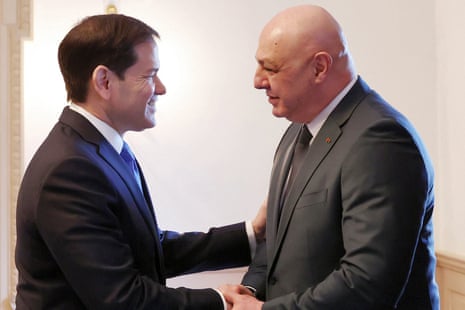
Amidst the broader US-Iran tensions, fragmented diplomatic efforts continue to unfold in parallel, albeit with mixed success. On the diplomatic front, the Iranian interior minister traveled to Pakistan, a nation often seen as a potential mediator in regional conflicts, for talks. This move suggests Iran may be seeking to leverage diplomatic channels even as it escalates military actions.
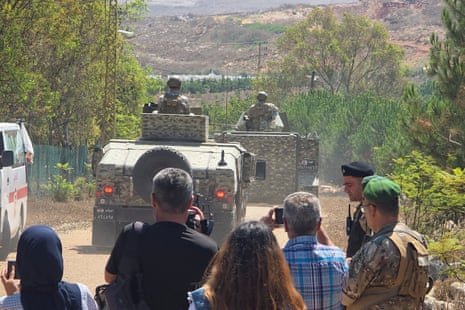
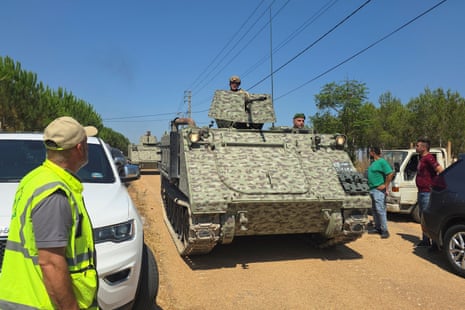
In Lebanon, a significant development in the country’s long-standing conflict with Israel has occurred. The Lebanese army has begun deploying troops to the southern village of Zawtar al-Gharbiyeh, taking charge of security in what is termed a "pilot zone." This deployment is part of a US-brokered framework agreement between Lebanon and Israel, signed on June 26. Under this agreement, Israeli forces are expected to gradually withdraw from occupied areas in southern Lebanon, with security responsibilities handed over to the Lebanese armed forces, which will also oversee the disarmament of Hezbollah. Two other villages, Froun and Srifa, are also slated for the pilot program.
However, the framework agreement lacks a concrete timeline for Israeli withdrawal, and Hezbollah has explicitly rejected the plan. The powerful Lebanese militant group insists that any decisions regarding Lebanon’s security should be intrinsically linked to the wider negotiations between the US and Iran. This rejection highlights the complexities of local conflicts being intertwined with broader regional power dynamics, potentially undermining the fragile agreement. Adding to the diplomatic activity, Lebanese President Joseph Aoun is scheduled to meet Donald Trump in Washington, marking the first visit by a Lebanese head of state to the White House in nearly two decades. This meeting, occurring amidst the security handover in southern Lebanon, underscores the US’s ongoing diplomatic engagement in Lebanon despite the broader regional volatility.
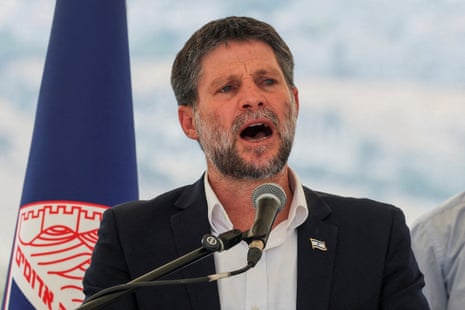
Meanwhile, Israel’s far-right Finance Minister, Bezalel Smotrich, stated that Israel has "no interest" in joining US military operations against Iran. This stance, reported by local media like Haaretz, aligns with previous reports that Washington had requested Israel to remain on the sidelines during earlier US-Iran negotiations. Smotrich emphasized that the current "limited conflict" between Iran and the United States is "the right and the best one for us," indicating Israel’s preference to avoid direct entanglement in the escalating US-Iran confrontation, despite its own deep-seated animosities with Tehran.
Gaza’s Evolving Landscape
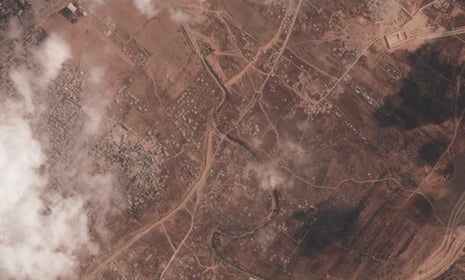
Further illustrating the fragmented and complex nature of the Middle East crisis, new satellite imagery analyzed by the Associated Press reveals the Israel Defense Forces (IDF) have constructed a 14-mile (23 km) earthen barrier, effectively cutting off half of the Palestinian territory it occupies from the rest of the Gaza Strip. This barrier, equivalent to more than half the length of the narrow strip, runs through areas where Palestinian communities have been demolished by the IDF. Notably, a portion of this barrier in southern Gaza extended by over 2 km (1.2 miles) in just two weeks in July, separating the Israeli-controlled ruins of Rafah from al-Mawasi, which hosts some of the largest Palestinian tent camps. The AP further reported that if construction continues, this segment will link up with a longer, 17-kilometer (10-mile) stretch running from Khan Younis to near Gaza City.
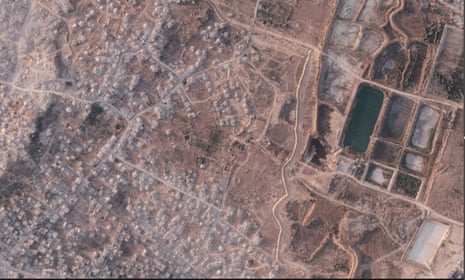
The IDF confirmed the construction of a physical barrier along the "yellow line," marking the boundary of Israeli-occupied land, telling the AP that it aimed to prevent infiltration and protect Israeli troops and nearby communities. This development profoundly alters the humanitarian and geopolitical landscape within Gaza, raising significant concerns about the long-term division and control of the territory, even as broader regional conflicts rage.
Economic Fallout and Future Outlook
The heightened instability has already sent ripples through global markets. Oil prices, after initially hitting their highest levels in over a month in the previous session, softened slightly. Brent crude futures eased by 0.4% to $88.87 a barrel, while US West Texas Intermediate crude for September delivery held steady at $82.47 a barrel. However, the sustained threats to the Strait of Hormuz and the Bab al-Mandeb strait, crucial arteries for crude oil and LNG shipments, maintain significant upward pressure on energy prices. Any further disruption could lead to dramatic spikes, impacting global economies already contending with inflationary pressures.
The current situation paints a grim picture of a region teetering on the brink of broader conflict. The interconnectedness of the various flashpoints – from the US-Iran proxy war, to the Houthi-Saudi confrontation, the fragile Lebanon-Israel truce, and the evolving situation in Gaza – underscores the inherent fragility of Middle Eastern stability. Diplomatic channels, while active, appear insufficient to contain the escalating military actions. The declarations of "full-scale war" and the direct targeting of vital maritime routes indicate a dangerous shift towards open confrontation, with profound implications for regional security, international trade, and global energy markets. The coming days and weeks will be critical in determining whether this dangerous escalation can be de-escalated or if the region will plunge further into a wider, more devastating conflict.
