
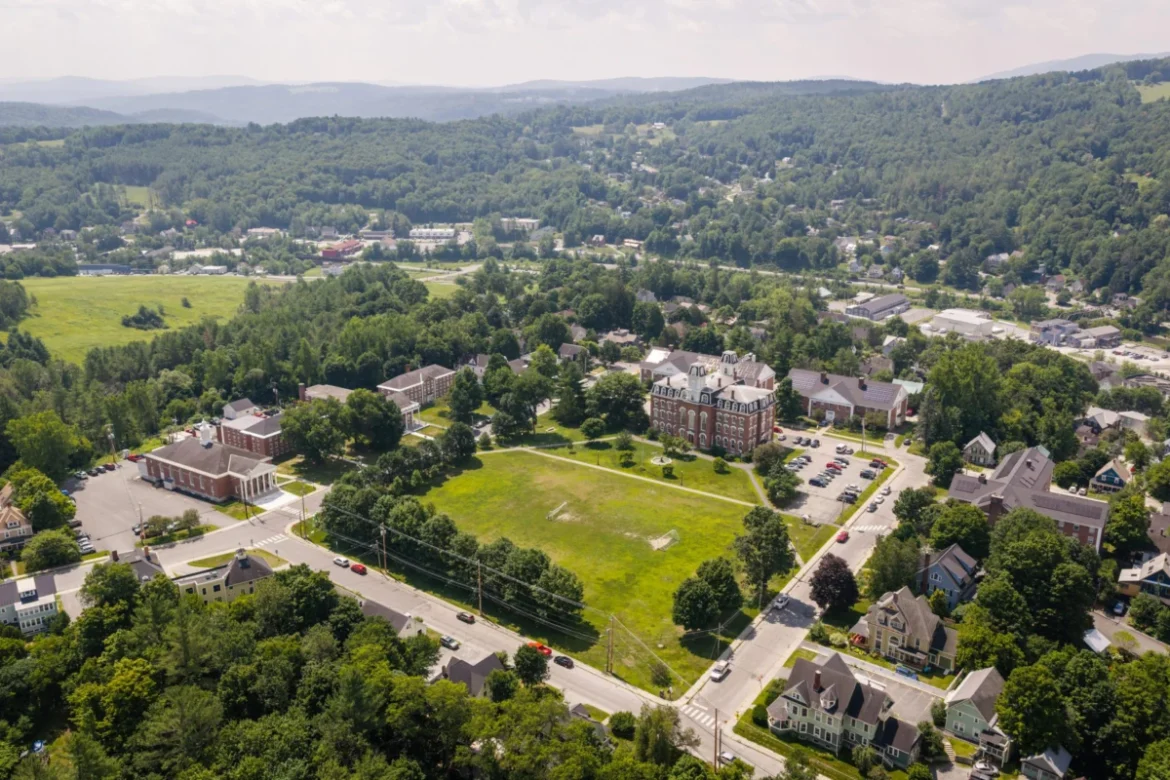
Perched on a scenic hillside overlooking the capital city of Montpelier, Vermont, a collection of 19th-century red-brick buildings with crisp white trim serves as the unlikely laboratory for one of the most radical experiments in American higher education. While the setting is quintessentially collegiate, the mission unfolding behind these historic facades is entirely focused on the future. A coalition of business leaders, government officials, and veteran educators is currently building the Greenway Institute from the ground up, aiming to disrupt a higher education business model that critics argue has become bloated, prohibitively expensive, and increasingly disconnected from the needs of the modern workforce.
The project, which is tentatively scheduled to open its doors next fall, is not merely a new school; it is a direct response to a "moment of mass extinction" in the sector. In Vermont alone, seven private colleges have shuttered in the last decade, mirroring a national trend of instability. Rather than attempting to patch the systemic failures of legacy institutions—a process many experts describe as agonizingly difficult—the founders of Greenway are betting that the only way to save the value of a degree is to abandon the current model entirely and start from scratch.
A New Philosophy for an Old Campus
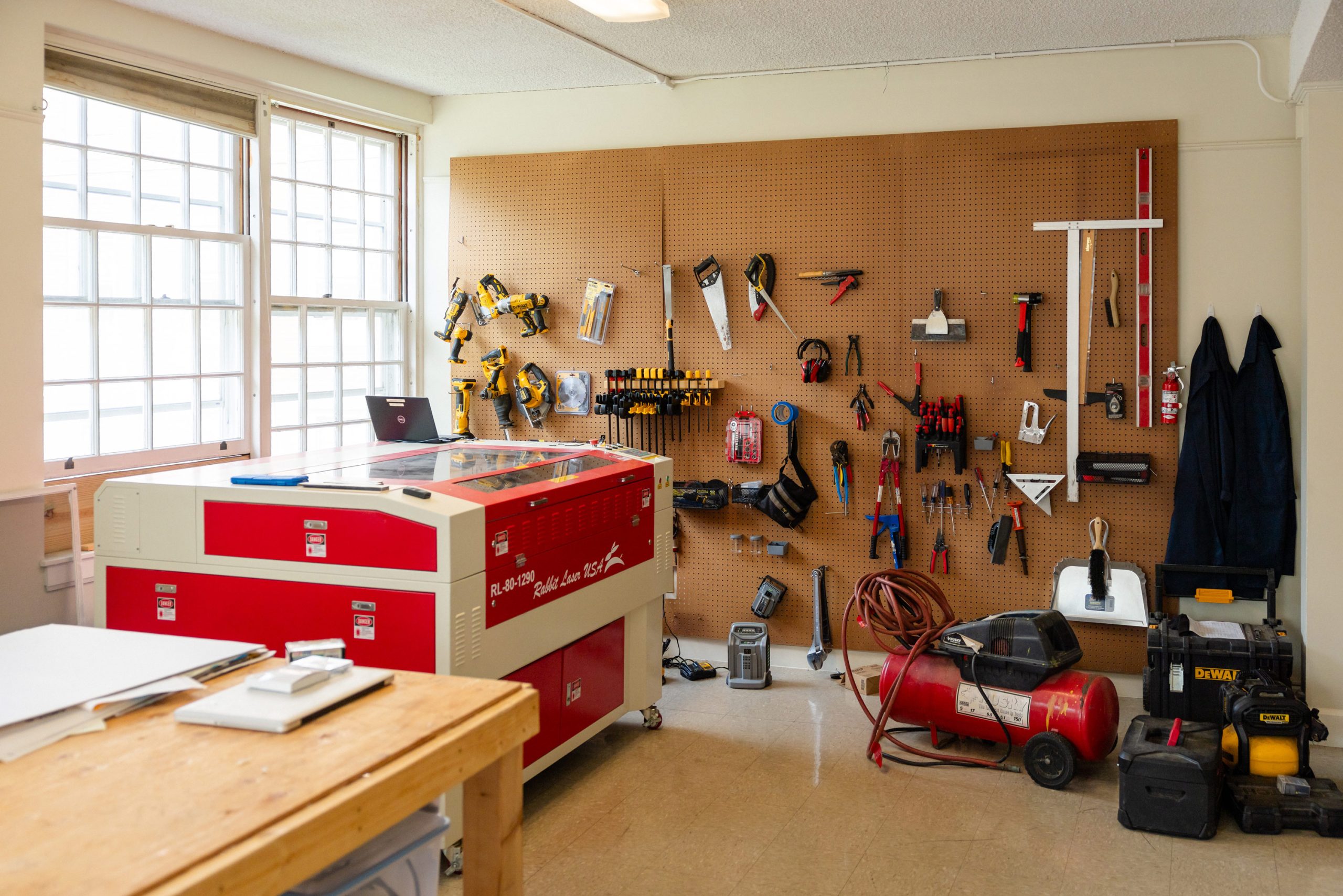
The philosophy behind Greenway is deceptively simple: prioritize high-impact, real-world training under the guidance of expert faculty mentors while ruthlessly eliminating the non-academic distractions that have contributed to the "amenities arms race" in American universities.
"It’s not fancy," said Mark Somerville, the founding president of the institute and a former provost of Olin College of Engineering. "It’s a place where you do have a meaningful relationship with your faculty members. But you also take out your own trash."
This lean approach extends to every aspect of the student experience. There are no expansive athletic departments, no climbing walls, and no sprawling student unions. Instead, students are expected to take responsibility for their daily lives—cooking their own meals in communal kitchens, managing their own schedules, and handling their own extracurricular logistics. The objective is twofold: reduce the cost of attendance to $25,000 or less per year and foster a level of personal maturity and professional readiness that many traditional college graduates currently lack.

The Problem with the Current Model
The urgency driving the Greenway project is rooted in hard data. Over the decade preceding the COVID-19 pandemic, spending on non-instructional services at U.S. universities grew four times faster than spending on actual instruction, according to research from McKinsey. Furthermore, a report from the building consulting firm Gordian indicates that from 2012 to 2021, colleges added physical facilities at a pace that far outstripped enrollment growth.
Troy McBride, co-founder of a Vermont-based solar panel manufacturer and chair of the Greenway board, believes the industry is failing to adapt to the 21st century. "Traditional colleges are stuck in the 1950s," McBride said. "We haven’t responded to the internet, let alone AI. We’re still memorizing things that don’t need to be memorized, and we’re not teaching skills and tools. We’re teaching facts, which is the least useful thing in these times."
Research increasingly supports the move toward work-based learning. Data from the University of Wisconsin-Madison and the Strada Education Foundation suggests that students who engage in work-based learning have a higher likelihood of securing employment, advancing in their careers, and commanding higher initial salaries. Yet, the same data reveals that fewer than half of students at public four-year universities participate in paid, work-based learning programs.

Chronology of an Innovation
The path to Greenway’s launch has been deliberate and data-driven:
- 2023: Greenway acquires its Montpelier campus from the Vermont College of Fine Arts, which had previously shifted to a remote-learning model following significant financial deficits.
- 2025: The institute conducts a "prototype semester," borrowing students from other institutions to test the model. These students earned academic credit by designing wind turbines and solar-powered traffic signals under faculty supervision rather than sitting for traditional lectures.
- January 2026: Greenway joins the Future Universities Alliance, an "innovation sandbox" organized by Duke University to support experimental higher education models.
- Late 2026: Renovations continue on the historic campus as the institute secures $4.5 million toward its $30 million capital goal, including a critical grant from the National Science Foundation shared with Elizabethtown College.
The Educational Roadmap
Greenway’s academic structure is built around a four-year cycle. The first two years are spent in a residential setting on campus, emphasizing communal learning and foundational engineering principles. The final two years are spent in real-world professional workplaces, where students gain hands-on experience while maintaining a connection to their faculty mentors.
This structure serves a dual purpose. By moving students off-campus for the final two years, the institute significantly lowers its overhead costs related to housing and dining. Educationally, it addresses a common critique from employers: that recent graduates struggle with basic professional life skills, such as time management and personal accountability. Annick Dewald, Greenway’s first faculty member, argues that providing too many services for students can actually be a disservice. "Employers have told me the hardest thing about fresh-from-college undergrads is getting them to show up on time… that to me is a product of how we view college or what services we provide."

The Challenges of Disruption
Despite the innovative nature of the model, the path ahead is fraught with regulatory hurdles. Greenway must wait until it formally opens its doors to begin the accreditation process, a multi-year endeavor that is a prerequisite for federal financial aid eligibility. For the time being, this means that students will not be able to utilize federal grants or loans, a significant barrier that the founders aim to mitigate through aggressive fundraising.
Furthermore, the scale of the operation is modest by design. The institute plans to cap enrollment at 500 students in Montpelier, with a goal of achieving a break-even point by 2031 with 370 students. While these numbers may seem small compared to massive state universities, the founders view them as necessary to maintain the quality and intimacy of the educational experience.
A Broader Impact on Higher Education
The rise of the Greenway Institute and similar entities—such as the emerging Polymath University, which models its program after an "ROTC for the private sector"—signifies a growing consensus that the status quo in higher education is unsustainable.

Rebecca Holcombe, a former Vermont secretary of education and co-founder of the institute, acknowledges that this model is not for every student. "It’s for kids who really know what they want to do," she said. "This is a great way to get there fast without having to pay for all the things that, frankly, you may never use or want to take advantage of."
For the higher education sector at large, the success or failure of Greenway will serve as a vital case study. As more institutions face existential threats, the question is no longer whether the system can continue as it has for the last half-century, but rather, as Holcombe noted, "If not this, then what?"
By stripping the college experience down to its core—mentorship, practical application, and community—the Greenway Institute is forcing a conversation that many established universities have been avoiding: whether the future of higher education lies in the expansion of prestige and amenities, or in the return to efficient, purposeful, and affordable learning. Whether this "start-from-scratch" approach can scale or be replicated remains to be seen, but the experiment in Montpelier marks a significant shift in the landscape of American post-secondary education.
