
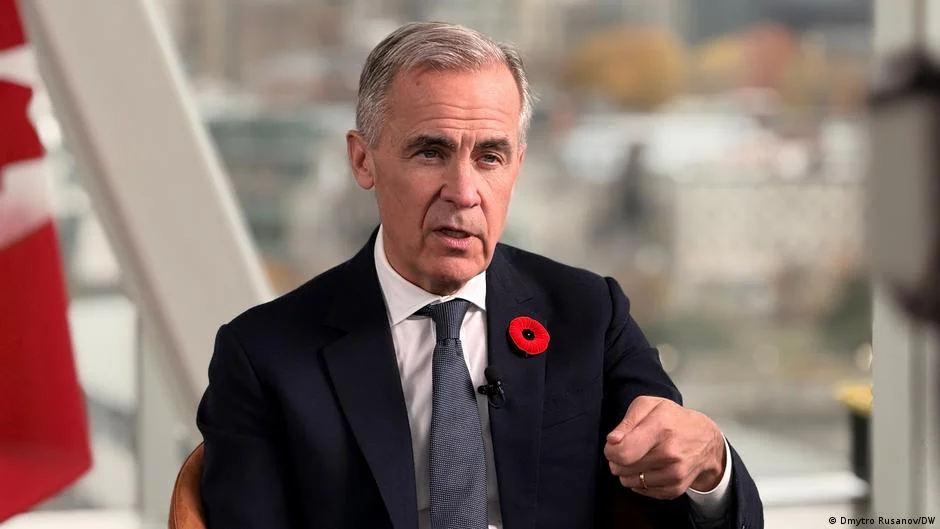
Canadian Prime Minister Mark Carney has signaled a transformative shift in Ottawa’s foreign and economic policy, positioning the nation toward a closer, formalized "associate membership" with the European Union. Speaking from Montreal on Friday, following high-level summits with European Commission President Ursula von der Leyen and European Council President Antonio Costa, Carney articulated a vision for Canada that prioritizes strategic diversification away from an over-reliance on the United States. This pivot comes as the Canadian government navigates an increasingly volatile relationship with the administration of US President Donald Trump, marked by trade frictions, protectionist rhetoric, and personal provocations.
The Montreal summit serves as the focal point for a broader geopolitical recalibration. As the global economic landscape faces mounting pressures from supply chain fragmentation, energy security concerns, and shifting trade alliances, Ottawa is seeking to anchor its future in a robust, multilateral framework with European partners. While the concept of "associate membership" remains a point of contention within the EU—notably facing resistance from the government of German Chancellor Friedrich Merz—Carney’s endorsement of the term highlights a desire for a status that transcends traditional free trade agreements.
A Chronology of Rising Transatlantic Tensions
The current push for deeper ties with Brussels is the culmination of several years of strained relations between Ottawa and Washington. Since the onset of the current US administration, the bilateral relationship has faced repeated stress tests:
- Mid-2025: Initial friction emerged regarding cross-border environmental and resource management policies, specifically involving the Great Lakes, which saw inflammatory rhetoric from the White House regarding water rights and regional nomenclature.
- Early 2026: Trade disputes intensified as the US administration threatened a series of broad-based tariffs on Canadian critical minerals and manufactured goods, citing national security concerns under Section 232 of the Trade Expansion Act.
- Mid-2026: Digital and cultural frictions rose, exemplified by erratic communication from the US executive branch, including the use of artificial intelligence-generated media to depict Prime Minister Carney in disparaging scenarios, which Ottawa largely chose to address through formal diplomatic channels rather than direct retaliation.
- October 2026: The Montreal Summit. Leaders from the EU and Canada convened to finalize frameworks for increased cooperation in high-technology sectors, marking the formalization of the "associate" dialogue.
Economic Dependency and the Case for Diversification
Canada’s economic geography is defined by its proximity to the United States. According to Statistics Canada, the US remains the destination for approximately 75% of Canadian exports. This concentration has long been viewed as a pillar of North American prosperity, but the recent era of protectionism has prompted a critical reassessment among Canadian policymakers.
Economists note that while the Comprehensive Economic and Trade Agreement (CETA) has been a success, it represents only the beginning of what is possible. By expanding cooperation into "Horizon Europe"—the EU’s key funding program for research and innovation—and strengthening ties in critical mineral supply chains, Canada aims to insulate its economy from the volatility of unilateral US trade actions.
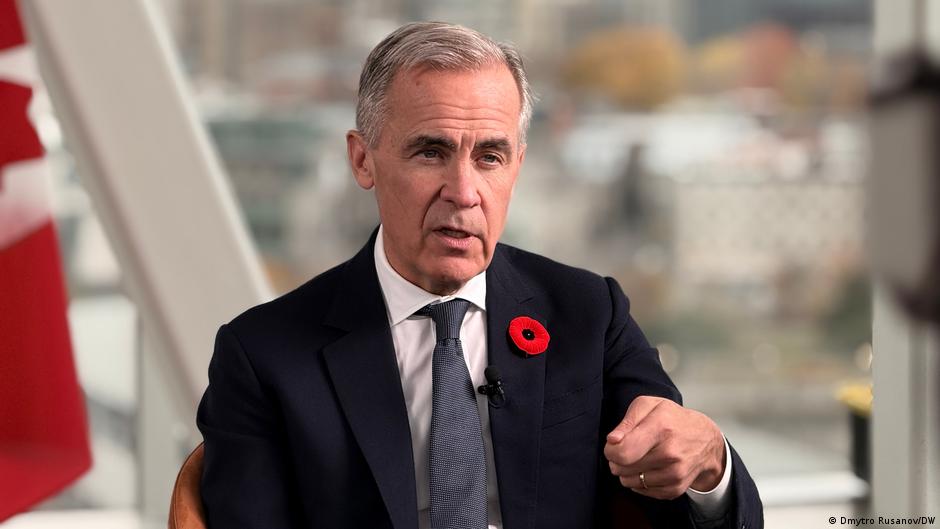
"We are not seeking to build a bloc against the United States," Carney stated in his interview with DW. "We are seeking to build a base of strength for Canada. The lesson we have taken is that we are too closely connected, and that vulnerability is not in the best interest of the Canadian people or our long-term economic sovereignty."
The "Associate Membership" Debate
The proposal for "associate membership" is legally and politically complex. The European Union has historically maintained strict criteria for membership, centered on geographical location and alignment with the acquis communautaire.
The status proposed by Ursula von der Leyen is intended to offer Canada a "privileged partner" designation. This would likely involve:
- Regulatory Alignment: A streamlined process for mutual recognition of standards in artificial intelligence, green technology, and pharmaceuticals.
- Institutional Cooperation: Regularized, high-level participation in EU ministerial councils regarding specific sectoral policies.
- Research Integration: Full access to EU-wide collaborative networks, such as Erasmus+ and large-scale space technology ventures.
While the European Commission sees this as a template for future relations with non-EU states, the German government remains wary. Analysts suggest that Berlin is concerned about "diluting" the European project or creating a precedent that could be exploited by other nations seeking the benefits of the EU single market without the accompanying political obligations.

Strategic Implications: Critical Minerals and Technology
A central pillar of the proposed partnership is the joint development of critical minerals—a sector where both Canada and the EU are desperate to reduce their dependency on Chinese processing and American price volatility.
Canada holds significant reserves of lithium, nickel, and cobalt, all of which are essential for the European automotive and renewable energy transition. By deepening the partnership, Canada positions itself as a "stable, democratic, and reliable" supplier for the European continent. This is not merely an economic strategy; it is a security one. In an era where "friend-shoring" has become the primary mechanism for mitigating supply chain risks, the Canada-EU axis provides a viable alternative to the more erratic trade environment fostered by current US policies.
Navigating the Trump Administration
When pressed on how to manage the ongoing, often personal, hostility from the Trump White House, Prime Minister Carney emphasized the importance of institutional stability over personal animus.
"The bonds between the Canadian and American people are deep and have survived political cycles before," Carney observed. His strategy, as articulated to the press, is one of "principled clarity." By refusing to engage in tit-for-tat escalations, and by focusing on the "bottom line" of international law and existing trade agreements, Canada aims to maintain a professional, if distant, relationship with the current US administration.
However, the reality of the situation remains sobering. Analysts at the C.D. Howe Institute have noted that no amount of European integration can fully replace the sheer volume of the US market. The integration with Europe is therefore a hedge against potential future shocks rather than a complete severance from the North American market.

Looking Ahead: A Transatlantic Rebalance
The meeting in Montreal concludes a week of intense negotiations that have set a clear trajectory for Canadian foreign policy. The "positive association" that Carney describes is an attempt to redefine Canada as a global player with multiple centers of gravity.
As the EU and Canada move toward formalizing this new status, the world will be watching to see how Washington responds. Will the US view this as a necessary evolution of a key ally, or will it trigger further retaliatory trade measures?
For now, the Canadian government appears to have made a strategic bet: that in a world of fractured alliances and resurgent nationalism, the security of a deeper partnership with the European Union outweighs the risks of angering a mercurial neighbor to the south. The success of this endeavor will depend on the ability of the EU to resolve its internal divisions regarding the "associate" label and the ability of the Canadian government to execute its transition without triggering a total breakdown in trade with the United States.
As Canada moves forward, the "Montreal Agenda" will likely serve as the foundational text for a new era of Canadian diplomacy—one characterized by a shift from the comfort of continental isolation to the complexities of a multi-polar, integrated global economy.

