
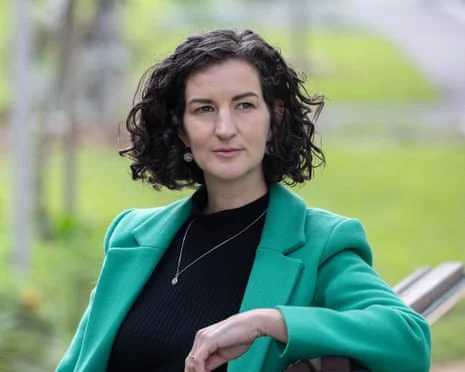
The Victorian Greens have unveiled a bold $70 million election commitment aimed at transforming Melbourne’s iconic Yarra River into a swimmable waterway over the next decade. The ambitious policy proposal seeks to reclaim a vital urban natural resource that has been restricted and largely closed to swimmers for more than half a century, following decades of heavy industrial pollution, urban runoff, and public health prohibitions.
Under the newly announced plan, the funding would be strategically partitioned to address both structural remediation and community-led conservation. Approximately $50 million would be directly allocated toward comprehensive infrastructure upgrades targeting pollution and stormwater management within the urban catchment zone. The remaining $20 million would be distributed as grants to empower community organisations, environmental coalitions, and First Nations groups dedicated to restoring the health of the river, its various tributaries, and the surrounding riparian land.
In addition to financial investments, the Greens’ proposal introduces a stringent regulatory framework. This includes legally binding legislative targets mandating that the entire length of the river must be certified swimmable by 2036, with select sections achieving safe water quality standards within five years. To ensure accountability, the government of the day would be legally required to publish transparent, public progress reports detailing water quality metrics and remediation milestones. Furthermore, the plan mandates tougher penalties and more rigorous enforcement mechanisms against industrial and commercial polluters. Once the waterway reaches safe swimming standards, the party plans to establish fully accessible swimming infrastructure along the riverbanks to accommodate individuals with disabilities.

Victorian Greens leader Ellen Sandell framed the proposal as an achievable vision for urban revitalization, drawing direct comparisons to international precedents. "Imagine a Melbourne where you can finish work on a hot summer’s day, head down to the Birrarung/Yarra and jump straight in," Sandell said. "Victorians used to swim in the Birrarung/Yarra. There’s absolutely no reason why we can’t again. Paris has done it in the Seine, we could do it here too."
The Historical Context of Yarra River Restrictions
Swimming in the Yarra River—historically known by its traditional Indigenous name, the Birrarung—was once a common recreational activity for Melburnians. However, rapid urbanisation, industrial expansion, and inadequate sewage and stormwater infrastructure progressively degraded the river’s water quality throughout the 20th century.
By the 1960s, public health authorities began implementing severe restrictions on swimming due to high levels of bacterial contamination and toxic runoff. Shortly thereafter, recreational swimming was completely banned downstream of Abbotsford. For generations, the river has been viewed primarily as a commercial and aesthetic corridor rather than a recreational asset, sharply contrasting with its central role in early Melbourne social life.

The Greens’ announcement follows a broader, growing momentum among local government bodies and water authorities to reintegrate the waterway into daily civic life. Earlier in October, a coalition of four inner-Melbourne councils joined forces with Melbourne Water to establish a long-term, collaborative pledge aimed at making the Yarra swimmable by 2050. Momentum has also been buoyed by international initiatives; in 2024, the Yarra City Council formally signed onto the international Swimmable Cities Charter. Created in the lead-up to the Paris Olympic Games—where events were held in the remediated Seine River—the charter seeks to establish urban swimming as a standard urban design principle for modern metropolitan areas.
Broader Economic and Political Backdrop in Victoria
The policy announcement arrives amid a complex political and economic landscape in Australia, where cost-of-living pressures, inflation, and federal-state fiscal responsibilities are dominating public discourse.
Concurrently, economic policymakers are grappling with persistent inflationary pressures. Federal data released in late October indicated that inflation remained elevated at 4.3% through September, prompting fierce debate among federal lawmakers. Liberal MP Andrew Hastie publicly warned Australians to prepare for potential interest rate rises, describing inflation as a "silent tax that is eating away at people’s wealth" and arguing that federal spending cuts represent the primary remedy for macroeconomic instability.

Assistant Treasurer Daniel Mulino defended the federal government’s economic strategy during media appearances, attributing lingering inflationary pressures to prolonged international conflicts—such as ongoing disruptions in the Middle East—which have kept global energy prices higher than previously forecasted. Mulino maintained that Australia has navigated the post-pandemic economic cycle more resiliently than many of its global peers, particularly regarding labor market stability.
At the same time, Australian foreign policy and domestic social cohesion have emerged as central themes in national debates. A recent YouGov survey commissioned by the Australia Institute revealed shifting geopolitical sentiments among the Australian public. The poll indicated that historic alliances are increasingly viewed through a lens of caution, with only half of surveyed Australians categorising the United States as a "friend," while 42% viewed the superpower as a potential "threat." Notably, demographic divides were stark, with younger voters displaying significantly higher levels of skepticism toward traditional foreign allies while showing higher levels of trust in regional neighbors such as Indonesia.
Domestically, federal Treasurer Jim Chalmers used an address at the Political Book of the Year awards in Canberra to decry the rising tide of political toxicity and abuse directed at public figures. Reflecting on an alleged physical attack against Indi MP Helen Haines outside her electorate office in Wangaratta—which left her recovering in hospital and resulted in criminal charges against a 43-year-old man—Chalmers targeted social media algorithms for monetising rage and exacerbating political polarization. He argued that digital platforms have created an "assembly line for mass-production" of hate, disproportionately impacting women in public life and undermining democratic discourse.
Implications of the Yarra River Remediation Strategy
The Greens’ $70 million proposal introduces a sharp acceleration of timelines compared to existing municipal targets. While local councils and Melbourne Water have previously targeted 2050 for a swimmable Yarra, the Greens’ legislative mandate of 2036 compresses the transformation window into a single decade.
Urban planning analysts note that achieving such a goal will require aggressive intervention upstream, tight coordination between state agencies and local municipalities, and sustained capital investment in green infrastructure. Runoff from sprawling suburban catchments remains one of the primary vectors for urban river pollution, meaning that the proposed $50 million investment in stormwater and catchment management will form the critical backbone of any successful remediation effort.
If successful, the transformation of the Yarra River could fundamentally alter Melbourne’s urban landscape, providing significant public health, environmental, and recreational benefits. However, the proposal’s ultimate viability will depend heavily on legislative negotiations, budgetary prioritisation in the upcoming state electoral cycle, and the political will to enforce rigorous environmental standards against commercial and municipal polluters over the next ten years.

