
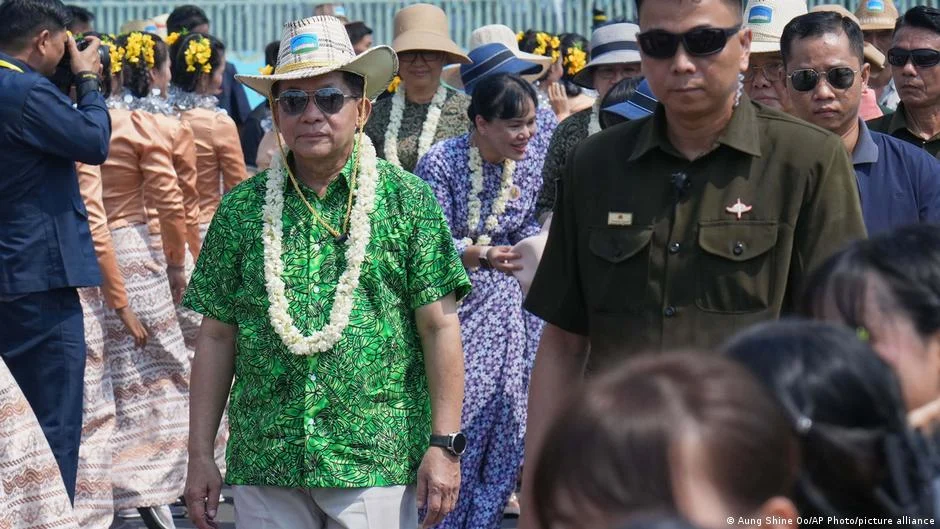
The United States has initiated a discreet diplomatic rapprochement with Myanmar’s military-backed government, marking a significant pivot in strategy after years of near-total isolation following the February 2021 coup. State Department representative Michael Vance has held two rounds of substantive talks with junta officials since September, with meetings confirmed in the administrative capital of Naypyitaw and, more recently, in Tokyo. This quiet shift, intended to address specific security and economic concerns, highlights a growing divergence between Washington’s pragmatic transactionalism and the European Union’s continued adherence to a strict policy of non-recognition.
The move comes at a pivotal moment in the Southeast Asian nation’s protracted civil war, which has claimed approximately 100,000 lives and left more than 4 million people internally displaced. As the military junta, led by Min Aung Hlaing—who recently solidified his position as president following controversial elections in 2025/2026—seeks to break its international isolation, the global consensus on how to handle the regime is beginning to fracture.
A Chronology of the Crisis and Diplomatic Shift
The current geopolitical landscape is defined by the legacy of the 2021 coup, which dismantled a decade of fragile democratic progress. To understand the gravity of the current diplomatic maneuvers, one must look at the timeline of the conflict:
- February 2021: The Tatmadaw, Myanmar’s military, ousts the democratically elected government, sparking nationwide protests and the eventual formation of the National Unity Government (NUG) and various People’s Defense Forces (PDFs).
- April 2021: ASEAN members propose the "Five-Point Consensus," a roadmap for peace that the junta ultimately fails to implement, leading to the exclusion of Myanmar’s military leadership from subsequent high-level regional summits.
- 2023–2024: The conflict intensifies, with ethnic armed organizations (EAOs) and anti-junta forces seizing significant territory in border regions, including key infrastructure and mining hubs.
- September 2025: Initial reports emerge of "quiet" backchannel diplomacy between U.S. diplomats and the military regime.
- June 2026: Min Aung Hlaing undertakes a series of high-profile state visits to India, China, and Russia, signaling that the junta is actively courting regional powers to bypass Western sanctions.
- October 2026: Human rights groups, including the Burma Campaign UK, express concern over the British Foreign Office’s interaction with military-appointed embassy officials, signaling a possible trend of European-level "normalization by stealth."
Washington’s Strategic Calculus: Scams and Rare Earths
The U.S. motivation for engaging with the regime is largely rooted in immediate, pragmatic national interests. Central to these talks is the proliferation of online scam centers—vast, transnational criminal operations that have become a significant source of illicit revenue for the junta and its affiliated border guard forces. These centers often employ trafficked foreign nationals and have become a major human rights and security concern for the U.S. and its regional allies.
Furthermore, the issue of imprisoned American businessman Adam Castillo remains a top priority for Washington. Beyond humanitarian and legal concerns, there is a burgeoning economic interest in Myanmar’s rare-earth mineral reserves. As the world transitions toward green energy, the demand for neodymium, praseodymium, and dysprosium has skyrocketed. Currently, China maintains a near-monopoly on the global rare-earth supply chain. Accessing alternative sources in Myanmar—or at least ensuring that these resources do not exclusively bolster China’s strategic position—is a growing imperative for U.S. policymakers.
However, analysts caution that the military’s actual control over these resources is tenuous. Much of the primary mining activity occurs in territories controlled by the Kachin Independence Organization (KIO) and other ethnic resistance groups. Consequently, any U.S. deal struck with the junta in Naypyitaw may have limited impact on the actual supply chain, potentially alienating the very groups currently in control of the mines.
The European Union’s Stance: Principles vs. Pragmatism
In contrast to the U.S. approach, the European Union maintains a firm policy of non-recognition. Brussels has continued to impose targeted sanctions on 105 individuals and 22 entities linked to the junta, renewing these measures for another 12-month cycle in April. An EU spokesperson reaffirmed this commitment to DW, stating that the bloc continues to reject the legitimacy of the military regime due to its ongoing "attack against its own population."
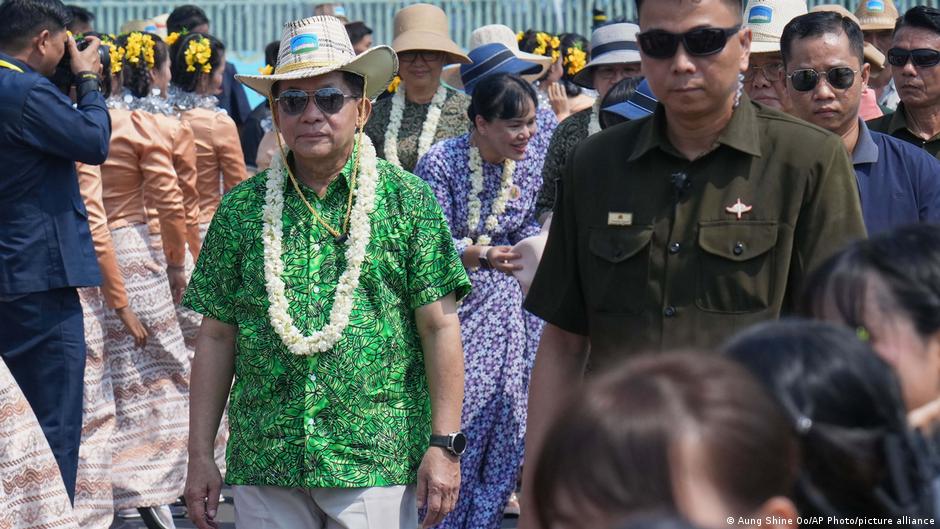
Despite this hardline political stance, the EU has stopped short of fully withdrawing Myanmar’s preferential trade access. The European market remains a vital lifeline for Myanmar’s garment sector, which employs hundreds of thousands of workers, the majority of whom are young women. Bilateral trade in goods reached approximately €4 billion in 2025, an increase from €3.4 billion in 2019, creating a complex paradox: the EU effectively subsidizes the survival of the civilian workforce while refusing to engage with the regime that governs them.
Regional Realignment and the ASEAN Dilemma
The Association of Southeast Asian Nations (ASEAN) is witnessing a subtle but notable internal shift. While the bloc officially remains committed to the Five-Point Consensus, several member states—most notably Thailand—have expressed growing frustration with the lack of progress. Thai Foreign Minister Sihasak Phuangketkeow has publicly welcomed the U.S. initiative, suggesting that regional powers may be moving toward a "new normal" in their relations with Naypyitaw.
This shift is not necessarily an endorsement of the junta but rather a reflection of the "exhaustion factor." The civil war has become a source of regional instability, driving refugee flows into Thailand and India and disrupting trade corridors. Many regional leaders have concluded that isolating the military has failed to force a return to democracy and, instead, has pushed the junta further into the orbit of China and Russia.
Implications and Future Outlook
The divergence in policy between the U.S. and the EU creates a difficult environment for international mediation. If Washington continues to pursue a transactional strategy while Brussels sticks to a values-based boycott, the international community risks presenting a fragmented front that the junta can easily exploit.
Kristina Kironska, an expert on the EU’s policy toward Myanmar, argues that if the EU abandons its principled stance simply to follow the U.S. lead, it risks losing the moral authority that has historically defined its foreign policy. Yet, she acknowledges that total isolation has yielded "relatively little" in terms of political change. The challenge for Brussels is to find a "third way"—a strategy that engages with stakeholders in Myanmar without granting the military the legitimacy it desperately craves.
One potential path, suggested by policy analysts like Sabe Soe of the Burma Centre Prague, involves a dual-track approach. This would include maintaining sanctions on top-tier military leaders and their business interests while simultaneously expanding economic and humanitarian engagement with areas under the administration of revolutionary and ethnic resistance forces. This would allow the international community to provide a counter-narrative to the junta’s control, offering support to the democratic aspirations of the population without recognizing the military’s political authority.
As the junta prepares for its next phase of governance, the coming months will likely test the unity of the Western coalition. If more governments follow the lead of the U.S. and move toward direct dialogue, the EU will face increasing pressure to justify its policy of isolation. Ultimately, the future of Myanmar’s political trajectory will be decided on the ground by its people and its fighters, but the international community’s willingness to coordinate its diplomatic engagement will significantly influence the severity of the conflict and the potential for a sustainable, long-term peace.

