
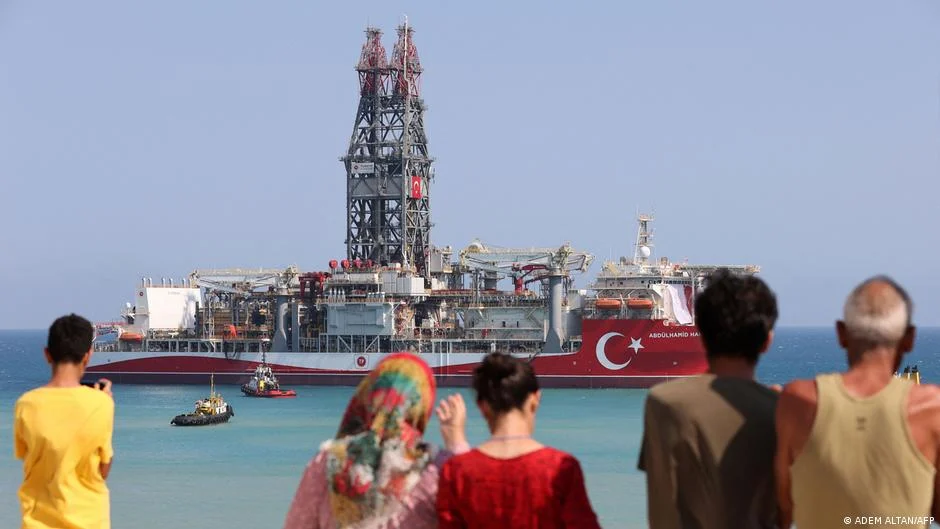
The political landscape of the Eastern Mediterranean underwent a significant transformation this Tuesday as the Libyan parliament, based in the country’s east, voted unanimously to ratify a maritime economic agreement with Turkey. This decision marks a historic reversal for the eastern legislative body, which had previously stood in staunch opposition to the memorandum of understanding (MoU) that Turkey first signed with the UN-recognized government in Tripoli in 2019. By aligning with Ankara on maritime boundaries, the eastern administration—long associated with powerful military commander General Khalifa Hifter—has effectively ended the internal Libyan split over the deal, presenting a unified, albeit contentious, front to the international community.
The agreement establishes a direct maritime corridor connecting the southern coast of Turkey with the northern coast of Libya. This corridor is designed to formalize the economic rights of both nations over vast tracts of the seabed, which recent geological surveys suggest contain natural gas reserves valued at several hundred billion US dollars. The deal seeks to pave the way for joint exploration and exploitation of these hydrocarbon resources, a move that places the two nations in direct confrontation with regional rivals who claim overlapping sovereignty.
A Chronology of the Maritime Dispute
The origins of the current impasse date back to November 2019, when Turkey signed a bilateral memorandum on maritime jurisdiction with the Tripoli-based Government of National Accord (GNA). At the time, Libya was embroiled in a brutal civil war, with General Hifter’s eastern-based forces attempting to capture the capital. The eastern government, along with Greece, Egypt, and Cyprus, denounced the 2019 deal as a violation of international law.
Following the military stabilization of Libya and the subsequent formation of unity governments, the political dynamics shifted. Turkey, having successfully pivoted from a purely military supporter of the west to a multifaceted power broker, launched a concerted diplomatic charm offensive toward the east.
- 2019: Turkey and the Tripoli-based GNA sign the initial maritime boundary agreement, sparking immediate outcry from Athens.
- 2020: Tensions peak as Turkish and Greek naval vessels shadow one another in the Eastern Mediterranean; the European Union condemns the Turkish-Libyan deal as illegal.
- 2021-2023: Turkey begins reconstruction efforts in Libya, with Turkish firms securing multi-billion dollar infrastructure contracts. Diplomatic channels between Ankara and the eastern Libyan leadership are reopened.
- 2024: Negotiations culminate in the eastern parliament’s formal adoption of the maritime pact, signaling a broader reconciliation between General Hifter and Ankara.
The Conflict of Legal Frameworks
The core of the dispute lies in the interpretation of the United Nations Convention on the Law of the Sea (UNCLOS). Greece, supported by the European Union, maintains that its islands—specifically Crete, Rhodes, and Karpathos—possess a full Exclusive Economic Zone (EEZ) that extends southward, effectively creating a continuous zone between Greece and Cyprus. Athens argues that under Article 121 of UNCLOS, inhabited islands are entitled to the same maritime rights as the mainland.
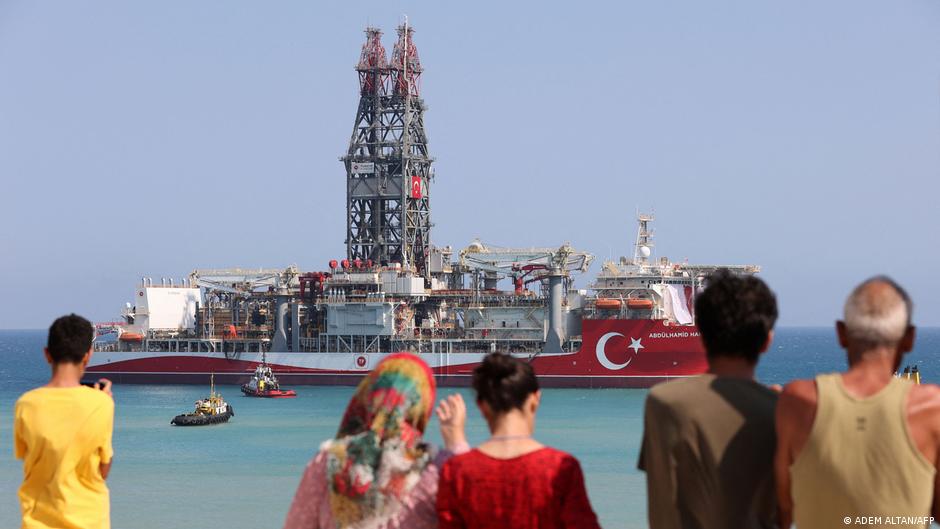
Conversely, Turkey has not signed UNCLOS and argues that the convention’s application in the Eastern Mediterranean is inequitable. Ankara contends that granting full EEZ rights to small islands located near the Turkish coast would effectively "imprison" Turkey within its own territorial waters, depriving it of access to the open sea and its associated continental shelf resources. Turkey asserts that maritime boundaries must be demarcated based on "equitable principles," prioritizing the extensive coastline of the mainland over the effect of islands.
The disagreement has reached the international stage, with Greece citing the 2022 ruling by the International Court of Justice (ICJ) in the case between Nicaragua and Colombia. In that instance, the court emphasized that fair demarcation must consider geographical conditions and the coastal configuration to avoid disproportionate results. Athens argues that this precedent supports its position that Greek islands cannot be ignored in maritime delimitation, while Ankara continues to advocate for bilateral negotiations that bypass the strictures of UNCLOS.
Official Responses and Regional Fallout
The reaction from Athens was swift and categorical. The Greek Foreign Ministry issued a statement via social media, reaffirming that the agreement is "null and void." The ministry underscored that the deal lacks any legal basis, as it infringes upon the sovereign rights of third states and ignores the established geography of the Mediterranean.
This position received full backing from Brussels. Kaja Kallas, the European Union’s High Representative for Foreign Affairs and Security Policy, stated that she had explicitly raised the issue of the Libyan vote with Turkish counterparts, stressing that the memorandum violates the sovereign rights of EU member states and is inconsistent with international maritime norms.
The geopolitical ramifications are significant. The agreement potentially undermines the EastMed pipeline project, a collaborative endeavor between Israel, Cyprus, and Greece intended to export natural gas to European markets. By drawing a line across the Mediterranean that intersects with the planned route of this pipeline, Turkey and Libya have introduced a physical and legal obstacle to the project. Turkey has explicitly signaled that any energy infrastructure crossing its claimed continental shelf must receive its authorization—a condition that the Greek-led alliance is highly unlikely to meet.
The Strategic Pivot: Turkey’s Expanding Influence
Beyond the immediate legal and economic arguments, the ratification of the pact marks a successful strategic pivot for Turkey. By securing an agreement with the eastern Libyan government, Ankara has effectively neutralized a previous source of friction and replaced it with a partnership.

Turkey’s role in Libya has evolved from that of a belligerent to a primary stakeholder. Today, Turkish state-owned oil company TPAO and the Libyan National Oil Corporation are coordinating on seismic survey plans. Furthermore, Turkish military training programs and hardware supplies have made Ankara an indispensable partner to General Hifter’s forces. This shift is viewed by analysts as a calculated move to diminish the influence of Egypt and Russia, both of which have historically held significant sway in eastern Libya.
For General Hifter, the deal is a strategic necessity. By endorsing the maritime agreement, he gains a powerful ally in Ankara and secures a potential stake in the future exploitation of offshore energy, which could bolster his political legitimacy and financial autonomy within the fragmented Libyan state.
Future Implications and Energy Security
The potential for escalation remains high. The Mediterranean is currently trending toward the formation of two distinct, competing geopolitical blocs. On one side stands the Turkey-Libya axis, which views itself as defending its regional rights against a perceived "containment" strategy. On the other side sits the alliance of Greece, Cyprus, Egypt, and Israel, which enjoys the diplomatic and political support of the European Union.
As these two blocs solidify, the risk of maritime friction increases, particularly if either side attempts to conduct exploratory drilling or seismic testing in the contested zones. The discovery of substantial gas reserves has turned the Eastern Mediterranean into a high-stakes arena where energy security and national sovereignty are deeply intertwined.
Ultimately, the Libyan parliament’s vote is more than a regional administrative decision; it is a signal that the status quo in the Mediterranean is no longer sustainable. Whether this leads to a new era of dialogue or a protracted period of naval posturing and diplomatic deadlock will likely depend on the willingness of external powers to mediate. For now, the region remains a volatile intersection of international law, energy competition, and shifting alliances, with the potential for further disruption to the stability of the Mediterranean basin. As the European Union continues to reject the legality of the pact, and as Turkey presses forward with its regional ambitions, the path to a peaceful resolution of these maritime boundaries appears increasingly narrow.

