
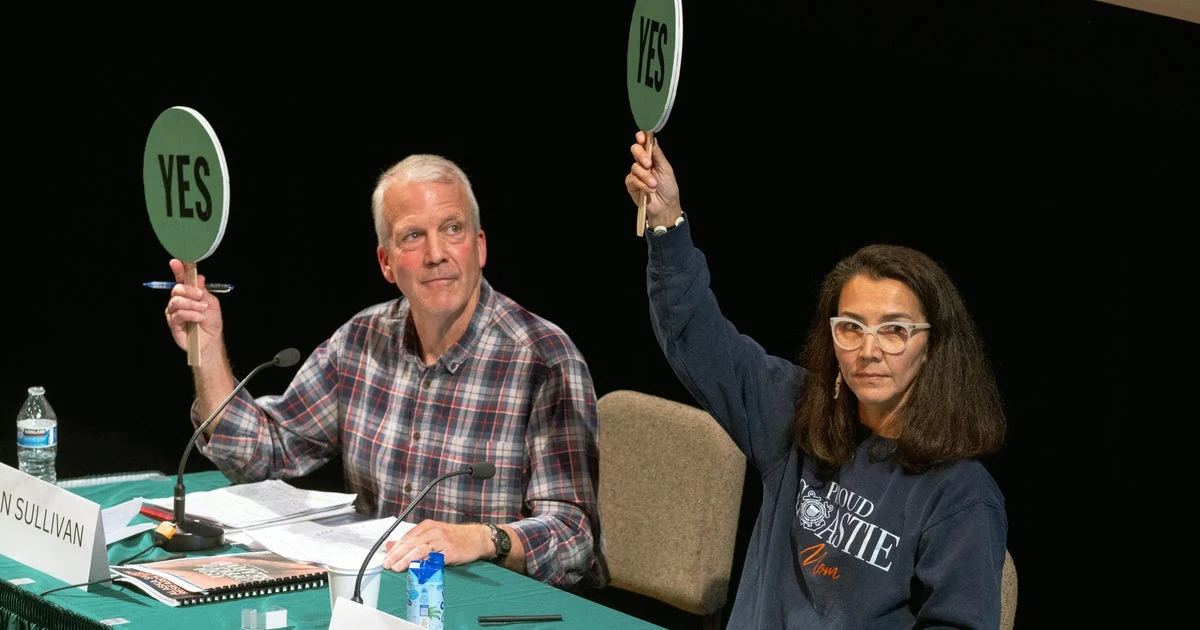
The United States Department of Justice, acting under the direction of the Trump administration, has filed a formal legal complaint against the State of Alaska, seeking to prevent the certification of the upcoming Senate election results should incumbent Republican Senator Dan Sullivan lose his seat. The litigation centers on the unusual presence of a second candidate named Daniel J. Sullivan on the ballot, a scenario that the administration contends is a deliberate attempt to manipulate voter intent and undermine the integrity of the electoral process in the Last Frontier.
The Alaska Senate race has become a focal point of national political tension, featuring a ranked-choice voting system that complicates the traditional binary choice often found in American elections. As voters prepare to head to the polls, they are presented with four candidates: the incumbent, Sen. Dan Sullivan; Democratic challenger Mary Peltola; Gerald Heikes; and a teacher named Daniel J. Sullivan. The lawsuit argues that the presence of the second Sullivan is not merely a coincidence but a calculated effort to siphon votes from the incumbent and confuse the electorate, potentially handing an unfair advantage to Peltola.
A Chronology of the Legal Conflict
The dispute over the ballot in Alaska has been simmering for months, evolving from a local administrative issue into a federal legal battle. The timeline of this controversy reflects the complexities of Alaska’s unique election laws and the limits of state versus federal oversight.
In early 2026, the Alaska Division of Elections initially moved to disqualify Daniel J. Sullivan from the ballot, citing concerns that his candidacy was specifically designed to confuse voters and disrupt the democratic process. However, this decision was met with immediate pushback. Daniel J. Sullivan’s legal team challenged the move in state court, arguing that the state lacked the statutory authority to bar a qualified candidate based on subjective assessments of their motivations or potential to cause confusion.
By June 2026, the Alaska Supreme Court issued a definitive ruling, overturning the Division of Elections’ decision. The court concluded that under existing Alaska law, there was no clear mandate to remove a candidate simply because their name might mirror that of an incumbent, nor did the state possess the power to probe into a candidate’s "private motivations." Following this judicial victory, Daniel J. Sullivan remained a fixture on the ballot, setting the stage for the current federal intervention.
The situation escalated significantly this past week when the Department of Justice filed its lawsuit. Attorney General Todd Blanche emphasized that the DOJ’s objective is not to disenfranchise voters or halt the voting process, but rather to ensure that ballots are preserved and scrutinized in a way that allows officials to later determine if widespread voter confusion occurred.
The Mechanics of Voter Confusion
At the heart of the government’s argument is the claim that the ballot design itself is inherently deceptive. A sample ballot included in the DOJ’s court filing reveals that the candidates are listed in a way that risks misleading the average voter. The teacher, Daniel J. Sullivan, appears first on the ballot under the name "Sullivan, Daniel J. Jr." with no party affiliation. Immediately following him is the incumbent, listed as "Sullivan, Dan S. (Registered Republican) Incumbent."
The Justice Department contends that in a ranked-choice system, where voters must rank their preferences, the potential for error is compounded. The government asserts that many of the incumbent’s supporters may inadvertently rank the wrong Sullivan, or worse, become so confused by the presence of three Republican-leaning or similarly named candidates that they fail to rank Senator Sullivan at all, thereby damaging his chances of defeating Peltola in the subsequent rounds of the ranked-choice tally.
"The Department of Justice does not seek to stop any ballot from being cast or to stop the certification of Alaska’s election," Attorney General Blanche stated on social media. "This litigation seeks to ensure that after Alaskans cast their ballots, they are preserved in a manner so that only Alaska’s governing officials have the information necessary to make a determination as to whether Alaskan voters were confused or misled."
Official Responses and Political Fallout
The response to the federal lawsuit has been sharply divided, mirroring the broader partisan fractures in the American political landscape. President Trump has been an outspoken critic of the situation, characterizing the presence of the two Sullivans as a "scam" and a form of "cheating." In a post on Truth Social, the President claimed that the candidacy of the second Sullivan was intended to undermine the Republican party, and he confirmed to reporters that he personally directed the Department of Justice to intervene.
Conversely, the move has been met with condemnation from Alaska’s own political establishment. Senator Lisa Murkowski, a Republican who often breaks with the national party, issued a blistering rebuke of the lawsuit. "Alaskans don’t need any help voting for their preferred candidates, and the State of Alaska has already handled this by clearly distinguishing the candidates on this year’s ballot," Murkowski stated, suggesting that federal overreach into state-level election administration is both inappropriate and unnecessary.
The campaign of Mary Peltola has similarly pushed back against the federal intervention. Spokesperson Harry Child described the lawsuit as a "despicable political threat to overturn an election," framing it as an attempt by outside bureaucrats to subvert the will of Alaskan voters. The campaign has pledged to fight the lawsuit, maintaining that the election is secure and that any attempt to challenge the certification based on a candidate’s name is a dangerous precedent.
Broader Implications for Election Integrity
The legal arguments presented by the Justice Department rely in part on the National Voter Registration Act (NVRA). The DOJ posits that the current ballot configuration violates the spirit of the act, which was designed to facilitate voter participation and ensure that the registration and voting processes are transparent and accessible. By allowing a candidacy that is allegedly "frivolous" and intentionally confusing, the government argues that Alaska is failing to uphold the integrity of its federal elections.
However, legal analysts suggest that the DOJ faces an uphill battle. Courts have historically been hesitant to interfere with state-run elections or to dictate who may appear on a ballot, provided those candidates meet the constitutional and statutory requirements for office. The Alaska Supreme Court’s previous ruling already established that the state’s election division overstepped its bounds by trying to regulate the ballot based on the potential for confusion.
If the DOJ were to succeed in its request for a post-election investigation, it would open the door to a new era of federal election oversight. Such an investigation would likely involve a massive auditing process to determine how many voters cast their ballots for the "wrong" Sullivan, and whether those votes were the deciding factor in the race. This could lead to protracted litigation, potentially delaying the finalization of the Senate seat for months.
Conclusion
As the election date approaches, the situation in Alaska serves as a high-stakes case study in the intersection of ballot design, state sovereignty, and federal oversight. The conflict highlights the vulnerabilities inherent in ranked-choice systems when they encounter unexpected candidate filings, and it underscores the escalating use of the federal judiciary to resolve political disputes.
For the voters of Alaska, the message from the candidates and the courts remains a source of frustration. While the state government maintains that the ballot is clear and the process is secure, the federal government insists that the very nature of the contest is compromised. As the legal filings continue to mount, the focus remains on whether the democratic process will be allowed to proceed without the intervention of federal agencies, or if the results of this Senate race will be subjected to a federal audit that could redefine the role of the Department of Justice in local elections for years to come.

