
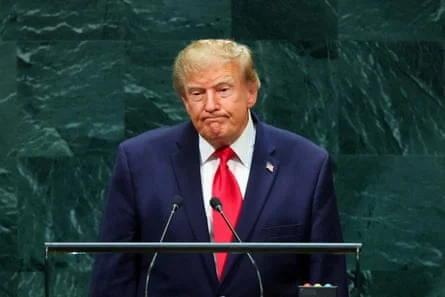
Iran has officially transmitted a high-stakes diplomatic proposal through Qatari mediators aimed at reopening the vital Strait of Hormuz and bringing an immediate halt to the grinding seven-month conflict in the Middle East. However, the initiative faces severe hurdles, with US President Donald Trump expressing deep skepticism and reportedly leaning toward maintaining military pressure after the upcoming US midterm elections.
The proposal, presented on the sidelines of the United Nations General Assembly in New York, outlines a strict seven-day timeline for de-escalation. According to Iranian Foreign Minister Abbas Araghchi, the plan relies on reciprocal concessions: a lifting of the US naval blockade on Iranian ports, the waiving of crushing economic sanctions on Iranian oil sales, and a comprehensive regional ceasefire that includes a cessation of hostilities in Lebanon.
Despite initial characterizations by some American officials describing backchannel discussions as positive and constructive, reports indicate that the White House remains unpersuaded. Intelligence and administrative insiders suggest that President Trump is unconvinced of Tehran’s long-term compliance and is weighing the political and strategic calculus of the impending November midterm elections before committing to any binding international agreement.
A Seven-Day Roadmap for De-escalation
Under the terms articulated by Araghchi during a press briefing outside the UN Security Council, the implementation phase of the Iranian initiative is designed to move at an accelerated pace.
"The seven-day timeline will start as soon as the United States accepts this plan," Araghchi told reporters. He detailed a structured chronological breakdown of the proposed transition:
- Days 1 through 3: Verification of the US naval blockade lift, the formal suspension of oil-related economic sanctions, and the implementation of agreed-upon regional ceasefires, including Lebanon.
- Days 4 and 5: Finalization of operational safety protocols for commercial shipping lanes in the Persian Gulf and the Gulf of Oman.
- Day 6: The official reopening of the Strait of Hormuz to international maritime traffic, allowing vital crude oil tankers and cargo vessels to resume normal transit without military interference.
- Day 7: The formal resumption of stalled bilateral and multilateral talks between Tehran and Washington regarding Iran’s contentious nuclear program and associated regional security concerns.
"If there is seriousness on the US side to come to a deal and reopen the Strait of Hormuz, everything is now prepared," Araghchi emphasized, noting that technical teams from both sides have already laid the groundwork for these incremental steps through intermediary channels.
Background Context and Chronological Development of the Conflict
The current military confrontation erupted on February 28, following a coordinated series of preemptive and retaliatory military strikes conducted by United States and Israeli forces against strategic assets within Iran. The campaign was ostensibly designed to degrade Iran’s conventional military capabilities, disrupt its missile development infrastructure, and curtail its nuclear enrichment advancements.
Since its inception, the war has evolved into an attritional struggle marked by alternating periods of fragile ceasefires and intense escalations. Thousands of military personnel and civilians have perished, while Iran’s economy—already severely battered by years of international sanctions—has experienced hyperinflation, currency depreciation, and critical shortages of essential goods.
The geopolitical ramifications of the war quickly extended beyond the immediate combatants. The closure of the Strait of Hormuz—a strategic chokepoint through which approximately a fifth of the world’s petroleum passes—has severely disrupted global energy supply chains, pushed crude oil prices to historic highs, and fueled inflationary pressures across industrialized economies.
Furthermore, the conflict has ignited a broader regional proxy war. Iran-backed factions throughout the Middle East have intensified their activities. In Yemen, the Houthi movement has continued to launch aerial drones and ballistic missiles targeting critical infrastructure in neighboring states, including a recent interception by the Saudi-led coalition over Riyadh. Simultaneously, Iraqi militias aligned with Tehran have launched attacks on vital transnational energy infrastructure, including a pipeline assault that temporarily removed significant volumes of Saudi crude from the international market. Along Israel’s northern border, relentless exchanges of fire between Israeli defense forces and the Lebanese militant group Hezbollah have kept the Levant on the brink of total war.

Political Divisions and Leadership Dynamics
The unfolding diplomatic maneuver has highlighted complex internal political dynamics within both Washington and Tehran.
In the United States, President Trump faces a difficult domestic political environment as the November midterm elections approach. High energy prices driven by the closure of the Strait of Hormuz have become a primary electoral vulnerability for the administration. While some economic advisors advocate for a negotiated de-escalation to lower fuel costs and tame inflation, hardline national security advisors argue that easing pressure prematurely would hand a strategic victory to Tehran and fail to dismantle Iran’s nuclear ambitions permanently. Consequently, anonymous administration sources indicate that Trump views the current diplomatic outreach as a tactical delay, anticipating that a renewed and intensified US bombing campaign may be necessary once the electoral cycle concludes.
Conversely, the Iranian administration under President Masoud Pezeshkian faces severe internal skepticism from the country’s entrenched military establishment and hardline factions. Pezeshkian, who represents a more moderate faction within the Iranian political hierarchy, has repeatedly asserted Tehran’s willingness to engage in good-faith negotiations. In a recent interview with CBS News on the program Face the Nation, Pezeshkian maintained that Iran remains open to resolving long-standing disputes over its nuclear dossier, provided that negotiations are conducted on an equitable basis.
"Iran is not seeking war, but will defend itself against pressure, threats, and attacks," Pezeshkian stated, reiterating that Tehran remains bound by its stated policy that "we’re not supposed to develop nuclear weapons."
However, analysts note that hardliners within the Islamic Revolutionary Guard Corps (IRGC) and the country’s clerical leadership remain deeply suspicious of American intentions. These factions view concessions as a sign of weakness and may actively seek to sabotage any diplomatic breakthrough that requires significant compromises on ballistic missile development or regional proxy support.
Regional Diplomacy and Third-Party Mediation
The intense diplomatic activity in New York underscored the vital role played by regional and international mediators. Qatar, which has historically maintained a unique diplomatic posture enabling direct communication channels with both Western capitals and the Iranian government, served as the primary conduit for transmitting the seven-day proposal.
In parallel, Iranian diplomatic delegations have engaged in direct, high-level consultations with regional rivals, including Saudi Arabia. These backchannel discussions reflect a shared realization among Gulf Cooperation Council (GCC) states that prolonged hostilities pose an existential threat to regional stability and economic development. The direct targeting of energy infrastructure—exemplified by recent drone strikes on Saudi pipelines attributed to Iran-backed networks in Iraq—has compelled Riyadh and its allies to press both Washington and Tehran for a sustainable maritime security framework.
Despite these multilateral interventions, structural distrust remains deeply entrenched. Previous diplomatic overtures have repeatedly collapsed due to unbridgeable disagreements regarding sequencing: Washington has historically demanded that Iran verifiably dismantle key elements of its nuclear enrichment infrastructure before the permanent lifting of economic sanctions, whereas Tehran insists on reciprocal, simultaneous actions backed by strict international guarantees.
Fact-Based Analysis of Broader Implications
The current standoff over the Strait of Hormuz carries profound global implications across multiple dimensions:
- Global Energy Security: As one of the world’s most critical maritime transit corridors, the prolonged closure of the strait threatens to trigger a global energy shock. Industrialized economies heavily reliant on Middle Eastern petroleum face the prospect of sustained high energy costs, which could tip fragile post-pandemic economic recoveries into recessionary cycles.
- Proliferation Risks: The failure of diplomatic channels to resolve the nuclear standoff risks accelerating Iran’s threshold status. Without a verified diplomatic framework, international monitors lose visibility over enriched uranium stockpiles, increasing the long-term risk of a nuclear arms race in the Middle East.
- Alliance Cohesion: The diverging strategic priorities between the United States and its regional allies—such as Saudi Arabia, the United Arab Emirates, and Israel—complicate the formulation of a unified policy. While Gulf states urgently seek de-escalation to protect domestic infrastructure and trade, Israeli leadership continues to advocate for decisive military action to permanently neutralize regional threats.
As the international community awaits an official written response from the White House, the fate of the Iranian proposal hangs in the balance. Whether diplomatic pragmatism will prevail over electoral politics and deep-seated mutual animosity remains to be determined in the critical days ahead.

